
Electric SUVs
Cybertruck vs Silverado EV 2026: Which Should You Buy?

The Cybertruck vs Silverado EV comes down to this: the Chevrolet Silverado EV is the better work truck, with more range per charge, a higher tow rating, and a familiar full-size electric pickup truck layout that any driver can operate on day one.
The Tesla Cybertruck is the better tech and performance truck, with faster acceleration, higher payload capacity, and native access to the Supercharger network for road trips. If you tow heavy loads regularly or manage a fleet, buy the Silverado EV.
If you road-trip often and already use Tesla products, buy the Cybertruck. I went through real towing test data, owner forum discussions, and current 2026 specs on both of these electric trucks to back up every point in this comparison.
Two Different Takes on the Full Size Electric Pickup Truck
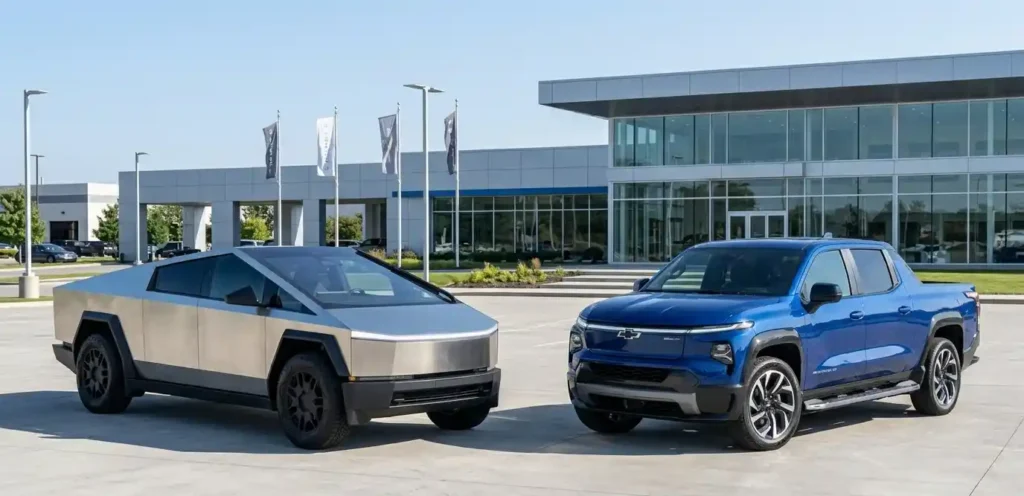
When I look at the Cybertruck vs Silverado EV side by side, the design philosophy explains everything before a single spec comes up. GM built the Chevrolet Silverado EV on its Ultium battery platform with contractors, fleet buyers, and traditional truck owners in mind.
As a Chevrolet electric truck, the electric Chevy Silverado is built to feel familiar. Any driver stepping out of a gas Silverado will feel at home within minutes, no learning curve, no surprises.
Tesla built the Cybertruck as something completely different. Stainless steel exterior, a large center screen controlling almost every function, and a design that turns heads at every job site. It handles real work without any problem.
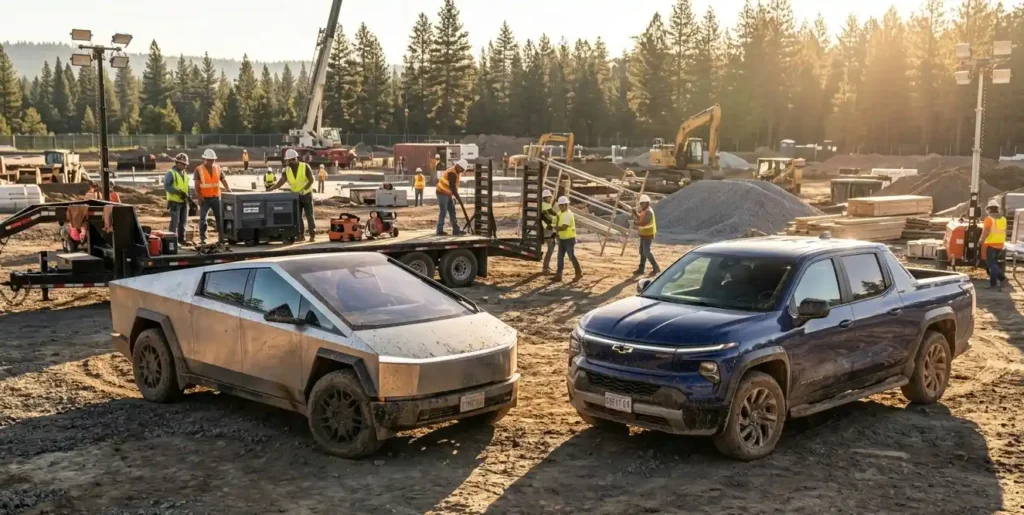
I have watched plenty of towing test videos of Cybertrucks pulling boats and campers with no issues. But buying one is also a statement in a way the electric Silverado never will be. That gap matters when you are spending $80,000 or more on a full-size electric pickup truck.
Both trucks moved past their older 2025 model year specs with updated 2026 configurations, so any older Cybertruck comparison article referencing previous figures is now outdated.
The Silverado EV got a range bump and new trim options for 2026 that changed the whole picture for buyers.
Cybertruck vs Silverado EV: 2026 Specs Compared
I pulled the most current 2026 numbers for this table because many articles are still using older data on the Chevy Silverado EV range. The Cybertruck vs Silverado EV specs below reflect the latest 2026 configurations.
| Spec | Tesla Cybertruck AWD | Chevrolet Silverado EV Max Range |
| Estimated Range | 320 miles | Up to 478 miles (LT / Trail Boss) |
| Battery Pack | 122.4 kWh | 215 kWh (Ultium) |
| Max Towing | 11,000 lbs | 12,500 lbs |
| Max Payload | Up to 2,500 lbs | Up to 2,100 lbs |
| 0 to 60 mph | 3.9 sec (AWD) | 4.1 sec (RST) |
| Peak DC Fast Charge | 250 kW | 350 kW |
| Starting MSRP | $81,985 | $55,395 |
| Frunk Volume | 7.1 cu ft | 10.7 cu ft |
| Curb Weight | 6,638 lbs | 8,800 lbs |
| Charging Network | Tesla Supercharger (NACS) | CCS1 / Electrify America |
| Bed Extension | 6 ft vault | Up to 10 ft 10 in (Midgate) |
The single number I keep coming back to in the Cybertruck vs. Silverado EV comparison is battery size. The Chevy Silverado EV carries roughly 215 kWh in its Ultium pack versus the Cybertruck’s 122.4 kWh.
That is close to a 100 kWh gap, and it explains every range and towing range advantage the electric Silverado holds.
The tradeoff is roughly 2,000 lbs of added weight, which is exactly why the Cybertruck wins on payload and short-distance quickness. Understanding that one tradeoff makes the rest of the Cybertruck vs Silverado EV comparison easy to follow.
Cybertruck vs Silverado EV Range: The Test Most Articles Skip
The 2026 Silverado EV Max Range delivers up to 478 miles per charge. The GM WT trim pushes that estimate toward 492 miles, putting the Chevy EV truck and Chevy electric truck among the longest-range electric pickup trucks you can buy right now.
The Cybertruck AWD manages roughly 320 miles on standard 20-inch wheels. That Cybertruck vs. Silverado EV range difference of over 150 miles is not a rounding error. It is a real gap that changes how you plan long trips.
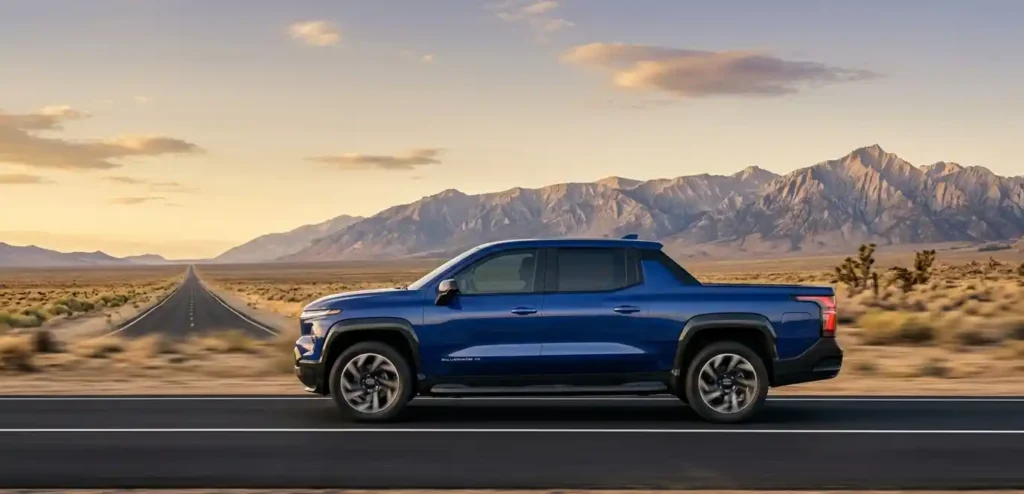
Tesla does sell an optional range extender pushing the Cybertruck toward 445 miles, but that adds cost to a truck already starting at $81,985.
Here is what I found that almost no Cybertruck vs. Silverado EV article covers: TFL Truck ran an independent towing test with the exact same trailer on both trucks over the same route.
The Cybertruck got about 85 miles of range with the trailer attached. The Silverado EV covered more than 220 miles with the same load. That is not a close result.
That is a completely different level of electric truck towing capacity. If you pull a camper, a boat, or a work trailer with any regularity, that single test result changes everything about this comparison.
Cybertruck vs Silverado EV Towing and Payload
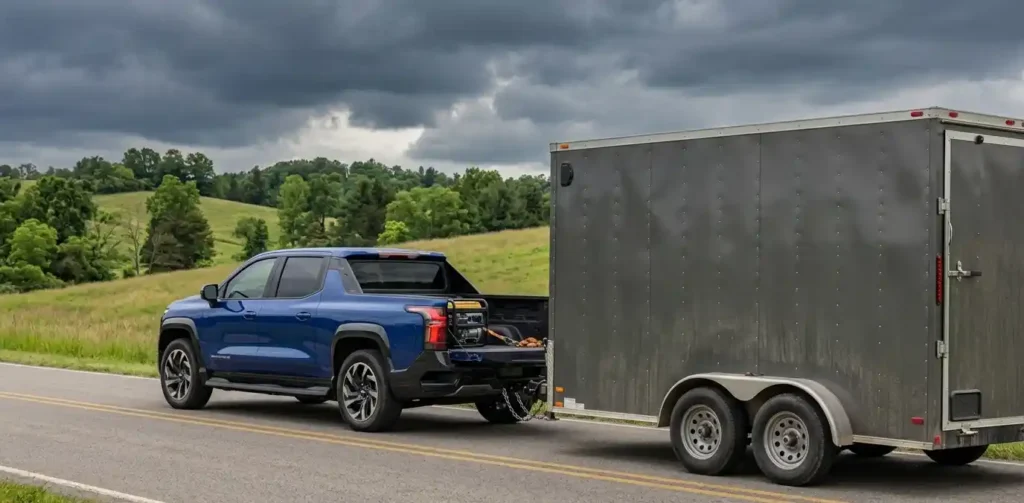
From what I have seen in testing data, the electric Silverado handles up to 12,500 lbs of towing on certain trims versus the Cybertruck’s 11,000 lbs.
As a Chevy Silverado electric truck and Chevrolet EV truck built for working buyers, it also pulls that weight much farther per charge. That towing range gap is the real story here, not the tow rating number.
The Cybertruck flips the result on payload, though, and I think this surprises most people. In the Cybertruck vs. Silverado EV payload comparison, the Tesla truck carries up to 2,500 lbs in the bed on qualifying configurations.
The Silverado EV Max Range trims land between 1,400 and 2,100 lbs because the large Ultium battery pack takes up a chunk of the weight budget.
If your work means loading the bed heavily rather than hitching a trailer, the Cybertruck’s lighter build is the better tool for that job.
The way I explain it: the Cybertruck vs. Silverado EV towing debate is really two separate questions. Load the bed for short runs, and the Cybertruck wins. When electric truck towing capacity over long distances matters, the Silverado EV wins, and it is not close.
Cybertruck vs Silverado EV Charging: Speed vs Network
Most comparison articles stop at charging speed. The network behind that speed matters just as much. The Silverado EV supports up to 350 kW DC fast charging. The Cybertruck peaks at 250 kW. On paper in the Cybertruck vs.
Silverado EV charging speed test, the Chevy Silverado electric wins. But charging speed alone does not tell the full story for buyers who actually travel long distances.
The Cybertruck ships with native NACS and full access to Tesla’s Supercharger network. Plug in the truck and charger; they connect automatically, and billing runs without any extra steps.
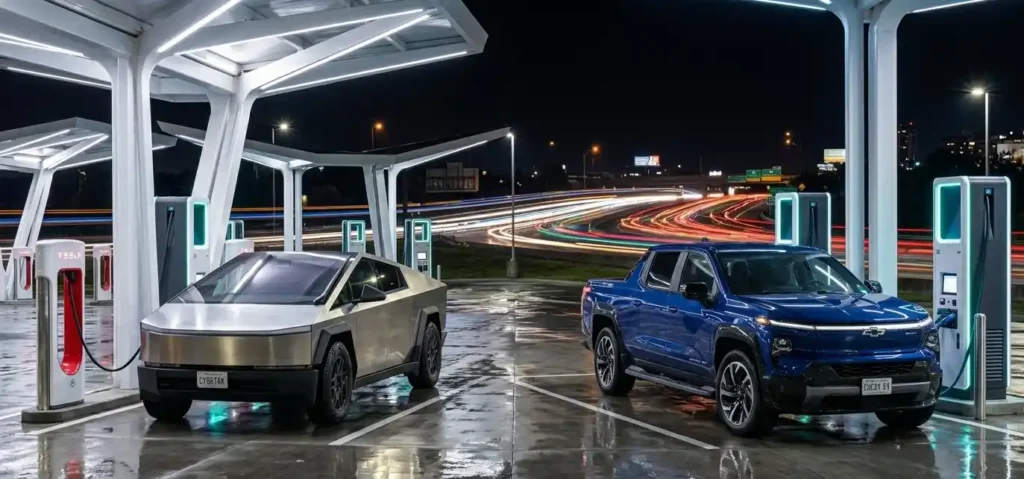
The Chevrolet Silverado EV uses CCS1 and depends on Electrify America, EVgo, and other public networks. These have improved a lot, but in the Cybertruck vs. Silverado
EV charging network comparison, station reliability still varies more on the Chevy side. GM is working toward NACS adapter support, but that is not fully in place yet.
If you charge at home most nights and use DC fast charging a few times a month, the Silverado EV’s 350 kW speed is a real benefit on those days.
If you road-trip across multiple states every month, the Cybertruck removes a layer of charging stress that Silverado EV owners still deal with in 2026.
Cybertruck vs Silverado EV Price: What Does $26,000 More Buy?
I think the price gap tells a clearer story than most articles admit. The Cybertruck vs. Silverado EV price difference is more than $26,000 at base trims. The electric Silverado starts around $55,395. The Cybertruck begins at roughly $81,985.
Both trucks climb well past $100,000 fully loaded. The Silverado EV price starting point, also called the Chevrolet Silverado electric or Silverado electric truck starting cost, puts certain trims within reach of federal EV tax credits.
The electric Silverado’s price advantage over the Cybertruck is one of the main reasons fleet buyers go with the Chevy. Always check the current IRS eligibility list before signing anything because the rules shift.
Here is what that extra money buys in the Cybertruck: faster 0-60 times, Supercharger network access, Tesla’s over-the-air software update system, stainless steel exterior panels, and higher bed payload on qualifying trims.
What the Silverado EV delivers for less: far more range per charge, a higher tow rating, a 10.7 cubic foot frunk, the Multi-Flex Midgate for extended cargo loading, and GM’s nationwide dealer network. In my view, neither list is a clean winner. They just serve different kinds of buyers.
Cybertruck vs Silverado EV Tech and Driver Assistance
The Cybertruck vs. Silverado EV tech gap is real. The Cybertruck runs Tesla’s software stack, which I consider the most mature over-the-air update system in any truck on sale in 2026. Nearly every vehicle function goes through the center screen.
Navigation auto-routes charging stops. Autopilot covers highway miles with minimal input. The learning curve is real coming from a conventional truck, but most owners report it feels natural within a week.

On the Silverado EV side of the Cybertruck vs. On the Silverado EV side of the Cybertruck vs Silverado EV tech comparison, the layout clicks faster for traditional truck buyers.
Native Maps and Google Assistant run on the screen, physical controls handle climate and audio, and Super Cruise hands-free driver assistance is available on higher trims.
MotorTrend named Super Cruise the top hands-free system over Tesla Full Self-Driving in an independent 2026 evaluation. Super Cruise with Trailering lets you drive ands-free while towing on compatible mapped highways, and Tesla has no equivalent for that right now.
Cybertruck vs Silverado EV Bed and Daily Cargo Use
The Multi-Flex Midgate on the Silverado EV is the most underrated feature in the whole Cybertruck vs. Silverado EV comparison, and I think most buyers overlook it.
Fold the rear seats, open the midgate, and the load floor extends from a 5-foot bed all the way to 10 feet 10 inches inside the cab. Full sheets of plywood slide in with the tailgate up.
The Cybertruck’s vault bed runs about 6 feet, and its tapered inner rails make loading flat materials flush along the sides harder than it should be.
In the Cybertruck vs. Silverado EV frunk comparison, I noticed the electric Silverado’s 10.7 cubic feet up front gives you more usable space than the Cybertruck’s 7.1 cubic feet for storing tools and gear separately from the bed.
Both trucks include rear-wheel steering and air suspension on relevant trims. The Cybertruck’s Powershare exports up to 11.5 kW for job-site tools or home backup.
The Silverado EV’s PowerBase outlets cover standard 120V and 240V work-site needs without hitting the same peak output.
Who Should Buy Which: My Final Take
After going through every angle of the Cybertruck vs. Silverado EV debate, here is how the decision breaks down by actual buyer type.
Cybertruck vs Silverado EV answer is different for each person based on how they work and drive, so I will be direct about each scenario rather than giving a vague “it depends” verdict.
Buy the Silverado EV if you are a contractor, fleet manager, or traditional truck owner who tows regularly in this Cybertruck vs. Silverado EV decision; wants a truck the whole crew can run without a training session; and needs the best electric truck towing capacity per charge.
The Chevrolet electric truck layout, the Multi-Flex Midgate, and GM’s service network all point toward the Silverado EV for working buyers.
Buy the Cybertruck if you already use Tesla products, road-trip often, and want the smoothest public charging experience in 2026.
When weighing the Cybertruck vs the Silverado EV for tech buyers, the Supercharger network, the software updates, and the higher payload on certain trims make the price gap worth it.
You are in toss-up territory if you pull a camper or boat a few weekends per year and split driving between suburbs and highways.
In that Cybertruck vs. Silverado EV scenario, my lean is this: go Cybertruck if Supercharger stations are thick along your usual routes; go Silverado EV if your trips take you through areas where public fast charging is still thin.
Wait on both if you have no home charging option, your area has sparse fast-charging coverage, or a five-year total ownership cost is your top priority.
A capable hybrid pickup may still be the smarter financial move while the EV truck market keeps developing. No other Cybertruck vs Silverado EV article I found says this plainly, but it is the honest answer for some buyers.
Frequently Asked Questions
Q: Which has better range, Cybertruck or Silverado EV?
A: The Silverado EV wins by a wide margin. Its larger Ultium battery pack is the reason, and that advantage is most visible when towing. The gap between the two trucks in real-world towing range is over 130 miles with the same trailer attached.
Q: Is the Silverado EV cheaper than the Cybertruck?
A: Yes, by more than $26,000 at base trims. That gap makes the Silverado EV eligible for federal EV tax credits on certain configurations, which widens the cost difference even further for qualifying buyers.
Q: Which electric truck has better towing capacity?
A: The Silverado EV leads on paper and holds that advantage in real-world testing too. The Cybertruck tows the same trailer a fraction of the distance the Silverado EV covers on a single charge, which is the number that actually matters on a job site or camping trip.
Q: Does the Cybertruck charge faster than the Silverado EV?
A: No, the Silverado EV has a higher peak DC fast charge rate. But the Cybertruck gets native Supercharger access from day one, and for most road-trippers, that network reliability matters more than peak kilowatts on a spec sheet.
Q: Which truck has better payload?
A: The Cybertruck wins this one. Its smaller, lighter battery leaves more weight budget for cargo, giving it a payload advantage over the heavier max-range Silverado EV trims. If loading the bed is your main job, that difference is worth noting.
Q: What is the best electric truck in 2026?
A: The Silverado EV is the better work truck. The Cybertruck is the better tech and performance truck. Neither is the universal winner. The right answer depends entirely on whether you spend more time at a job site or on a road trip.
Q: Is the Cybertruck good for long-distance towing?
A: Not compared to the Silverado EV. The real-world towing range gap between these two trucks is the largest differentiator in the whole comparison. For short hauls, it is fine, but for any serious long-distance towing, the Silverado EV is the stronger choice.
Q: Which is better for daily driving, Cybertruck or Silverado EV?
A: Depends on your setup. If you already charge at home and use other Tesla products, the Cybertruck fits right in. If you want a truck that any driver in your household can operate without switching habits, the Silverado EV is more immediately comfortable.
Conclusion
After going through every spec, every real-world test, and every owner discussion I could find, my honest take on the Cybertruck vs Silverado EV is this: both trucks are capable, but neither is right for everyone.
The Silverado EV is built for people who work a truck hard over long distances. The Cybertruck is built for people who want the most tech-forward driving experience available right now in a full-size electric pickup.
Pick the one that matches how your truck actually spends its days, not the one with the flashier spec sheet. That is the decision you will not regret.
