
Electric SUVs
BMW i3: 2027 Relaunch Brings 440-Mile Range
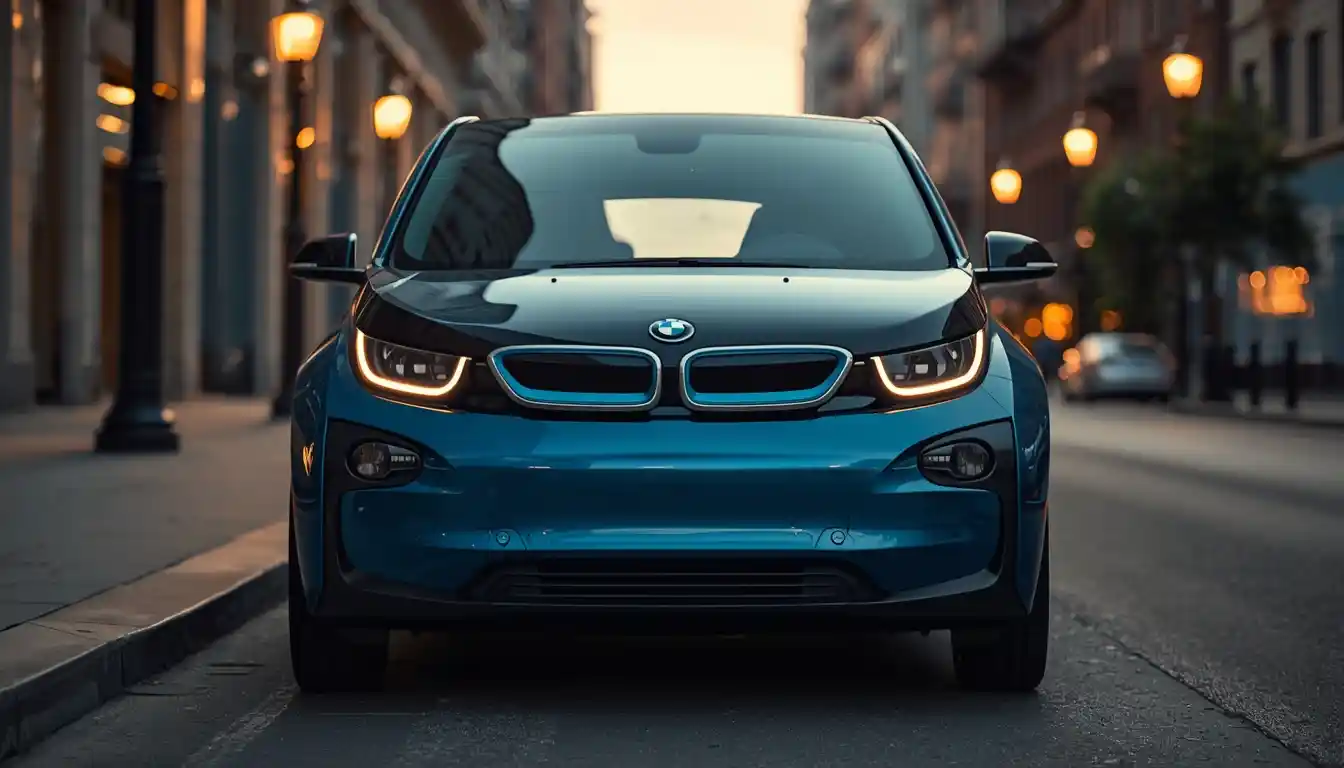
Let me save you hours of tab hopping right now. The BMW i3 question isn’t as simple as it looks, because there are two entirely different cars wearing the same badge. The first gen hatchback ran from 2013 to 2021, and you can buy one used for well under $20,000 today.
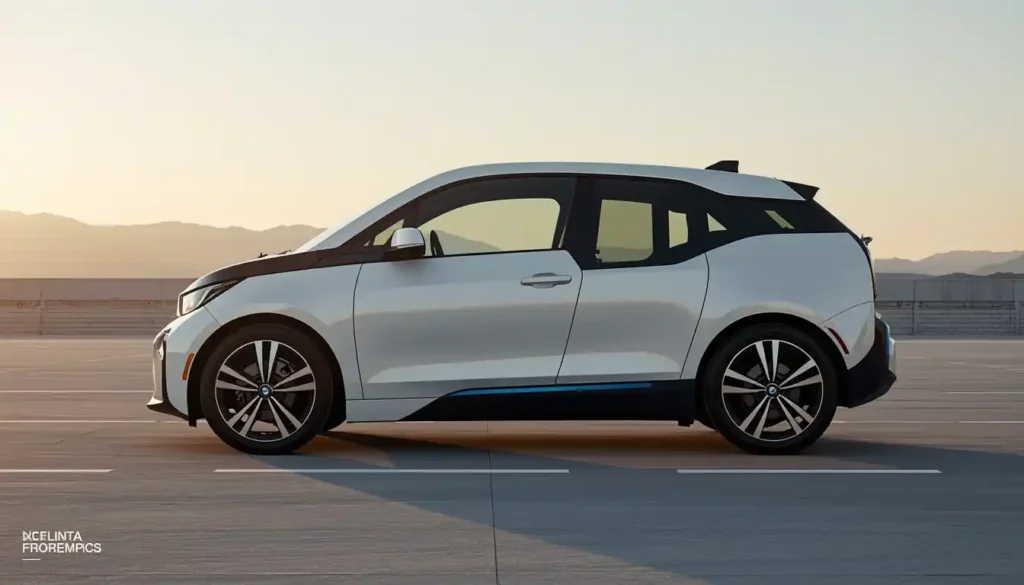
The 2027 BMW i3 sedan is brand new, starts around $53,000, and claims 440 miles of range. I’ve gone through every owner account, every spec sheet, and every competitor gap to give you one complete, straight-talking guide. No recycled press releases, no vague summaries.
What Is the BMW i3 and Why Does It Have Two Different Versions?
Back in 2013, BMW built the original i3 as a purpose built zero emission vehicle, not a gas car wearing an electric badge. It had a carbon fiber reinforced plastic passenger cell, an aluminum floor pan, rear-hinged back doors, and a rear-mounted electric motor.
That setup made it unlike anything else selling at a BMW dealership, or anywhere else for that matter. Over eight years, BMW sold more than 250,000 of them worldwide before pulling the plug after the 2021 model year.
Then in early 2026, BMW brought the i3 name back for a full-size electric sedan built on an entirely new Neue Klasse platform. Same name, different car, different buyer, different price.

Knowing which version you’re asking about changes every answer in this article, so keep that split in mind as you read.
BMW i3 Range by Battery Year: Actual Numbers, Not EPA Promises
Range is the first thing anyone searches for on any BMW i3 model, and the real answer depends on which battery generation is under the floor.
First Gen BMW i3 EV Range by Model Year
The original BMW i3 went through three battery upgrades over its production life, and each one changed what the car could actually do day-to-day. The 2014 to 2016 cars used a 22 kWh pack.
Real world range sat at around 81 miles on a good day. The 2017 to 2018 94Ah upgrade pushed that to roughly 114 miles. The final 2019 to 2021 120Ah version hit 153 miles on paper, but most owners in mixed daily driving saw 120 to 135 miles.
Cold weather takes a harder bite than BMW ever admitted in the brochure, and older 60Ah cars can lose 30% or more of their available range when temperatures drop below freezing.
Here’s a number worth keeping: one owner tracked a full year with the early i3, mixing his own fast driving with his wife’s calmer style, and averaged 85 miles per charge across all conditions.
That’s the figure that matters for planning, not the EPA number printed on the window sticker.
2027 BMW i3 Sedan Range: A Completely Different Conversation
The new BMW i3 sedan claims 440 miles of EPA-estimated range. BMW built this number on its Gen6 eDrive technology and an 800-volt battery architecture, and the preliminary test results back it up well enough to take seriously.
That figure puts the 2027 i3 ahead of the Tesla Model 3 Long Range, the BMW i4, and the majority of premium electric sedans you can buy today.
DC fast charging goes up to 400 kW, so a short stop at the right charger puts serious miles back on the battery. We’ll see how the real-world numbers land once customers actually take delivery in 2027.
BMW i3 Specs: Old Hatchback vs New Sedan Side by Side
These two cars share a name and nothing else. The specs make that very clear.
Original BMW i3 and i3s Horsepower and Performance
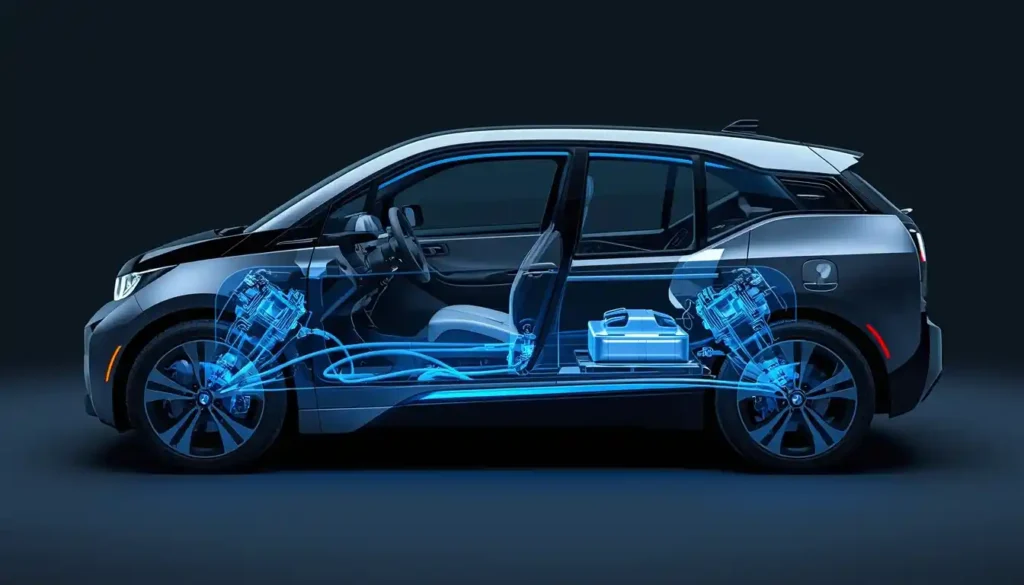
The standard first-gen i3 ran a single rear-mounted electric motor making 170 horsepower and 184 lb-ft of torque, sent to the rear wheels through a single-speed direct drive.
Zero to 60 mph took somewhere between 7.0 and 7.3 seconds depending on the year. The BMW i3s, which arrived in 2018, pushed output to 181 horsepower, dropped the ride height slightly, and fitted wider rear tires.
That version hit 60 in around 6.8 seconds and felt sharper off the line in a way you could feel immediately.
Weight was a real advantage. Without the range extender, the i3 weighed around 2,600 lbs. The Chevy Volt tipped the scales at 3,500 lbs. The Nissan Leaf came in at 3,300 lbs.
That weight difference showed up in how the car handled, and it came directly from the carbon-fiber-reinforced plastic body structure.
BMW split the car into two sections: an aluminum drive module carrying the battery, motor, and suspension; and the CFRP life module forming the cabin around the occupants.
It was a manufacturing approach no mass-market car had tried before, and it made the body far stiffer than the size of the car suggested. The catch is that CFRP damage costs a lot to fix.
BMW i3s Differences Worth Knowing
If you’re shopping used and driving character matters to you, the i3s is worth tracking down. The wider rear tires alone change how the car puts power down, and the firmer suspension makes the car feel more connected through corners.
It gives up a few miles of range in exchange, but for most urban drivers that tradeoff works fine.
2027 BMW i3 Sedan Horsepower and Motor Setup
The new i3 50 xDrive uses two motors, one on each axle, producing 463 combined horsepower and 467 lb-ft of torque with all-wheel drive as standard. The rear motor uses what BMW calls EESM, which stands for electrically excited synchronous motor.
Most electric motors use permanent magnets that run at a fixed field strength no matter the load. The EESM can change its magnetic field based on how hard the motor is working, which cuts wasted energy at part throttle and under light loads.
The front motor uses an asynchronous design with aluminum conductors instead of magnets, saving weight and production cost at the same time.
BMW says these two motors together cut energy losses by 40%, reduce total weight by 10%, and bring manufacturing cost down by 20% compared to older setups.
The “Heart of Joy” software controls all of it, including driving, braking, and energy recovery, and BMW claims it reacts ten times faster than the previous generation system.
An adaptive suspension is available as an option for buyers who want the car to adjust to different road conditions on its own.
BMW i3 Interior Then and Now: Two Different Worlds
Sit in the original i3 hatchback, then sit in the 2027 sedan, and you’d struggle to believe they carry the same badge. One feels like a design experiment that somehow made it to production.
The other feels like where BMW always wanted to end up: with an electric 3 Series. Both have genuine strengths, and both have things that’ll frustrate you if you go in blind.
What the First-Gen BMW i3 Interior Was Actually Like
BMW used Kenaf plant fiber for the door panels, open-pore eucalyptus wood for the dashboard trim, and recycled plastic surfaces throughout the original i3 cabin.
It looked like nothing else wearing a BMW badge, and it still holds up well today if you find a clean used example. Front seats were comfortable with good headroom. The rear seats were a different story.
Getting back there required the front door to be open first, thanks to those coach style rear hinged doors with no B-pillar. Adults under six feet fit reasonably well. Anyone taller found it tight.
The iDrive software was the weak link. Early versions were hard to read and harder to navigate, the menus were buried, and the screens were small by any modern standard. No Android Auto ever came to the original i3 in any year.
Apple CarPlay was a paid upgrade, not standard. And there was no sport driving mode, a choice that annoyed a lot of buyers who expected it from a BMW. That missing mode wasn’t an accident.
An earlier BMW test program called ActiveE had a launch mode, and the high-torque starts caused the output shaft splines to wear out prematurely on multiple cars. BMW replaced the motor in every test vehicle, an expensive lesson that quietly shaped the i3’s software limits from day one.
What the i3 offered instead were Comfort, Eco Pro, and Eco Pro+. That last mode cut the air conditioning and capped speed at 55 mph, a setting that caught more than a few drivers off guard when they hit the motorway on-ramp.
2027 BMW i3 Sedan Interior and Technology
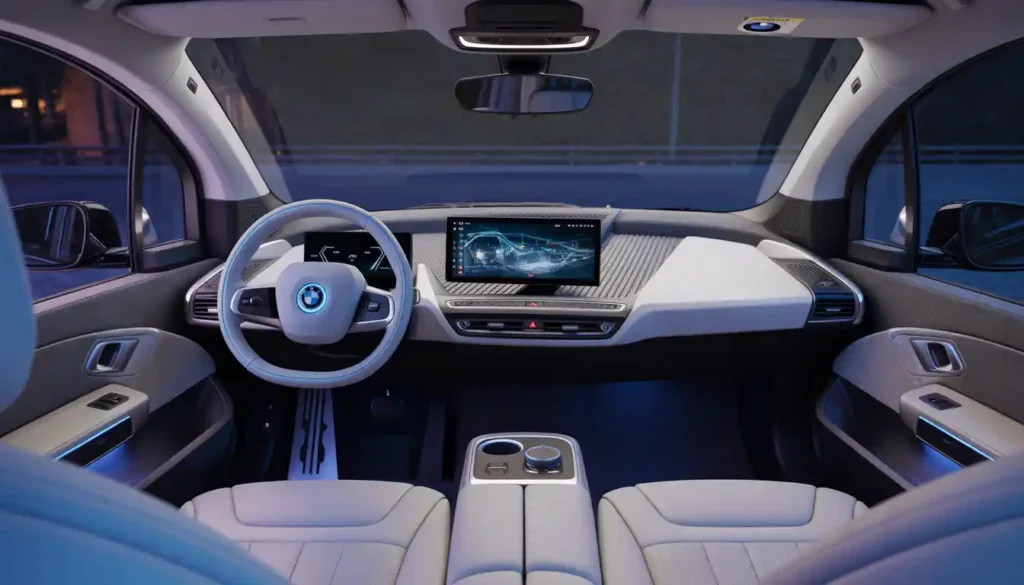
The new i3 is a much more driver-focused setup. The 17.9-inch central touchscreen tilts toward the driver, which sounds like a small detail until you actually use it and realize how much easier it makes reaching the corners of the screen.
BMW’s Panoramic Vision system projects information along the entire lower windshield from one A-pillar to the other. The left side shows driving data for the driver. The center and right sections can be adjusted and are visible to all passengers.
Drivers can move up to six widgets from the touchscreen to the panoramic display by dragging them with a finger and confirming with the steering wheel controls.
The optional Skyroof is a full length fixed glass panel. It doesn’t open, which is now the norm across most premium EVs. BMW used similar glass technology on the iX3, with UV protection, infrared coating, and low-emissivity treatment built in to cut heat and glare.
BMW Operating System X ties everything together, including wireless Apple CarPlay and Android Auto, ambient lighting, and personalization settings that save per driver profile.
BMW i3 Range Extender: The Most Misunderstood Feature in EV History
More confusion surrounded the BMW i3 REx than any other feature of the original car. The range extender is a 647cc two-cylinder engine taken from BMW’s C650GT scooter. It runs purely as a generator with no connection to the wheels.
When the battery drops to around 5 to 7% charge, the REx starts and produces just enough electricity to keep the car moving toward the nearest charging station.
Buyers who expected it to work like the Chevy Volt, letting them cover unlimited miles on the generator, ran into real trouble. On hills and at sustained highway speeds with the battery almost empty, performance dropped off in a way that surprised owners who hadn’t read the fine print.
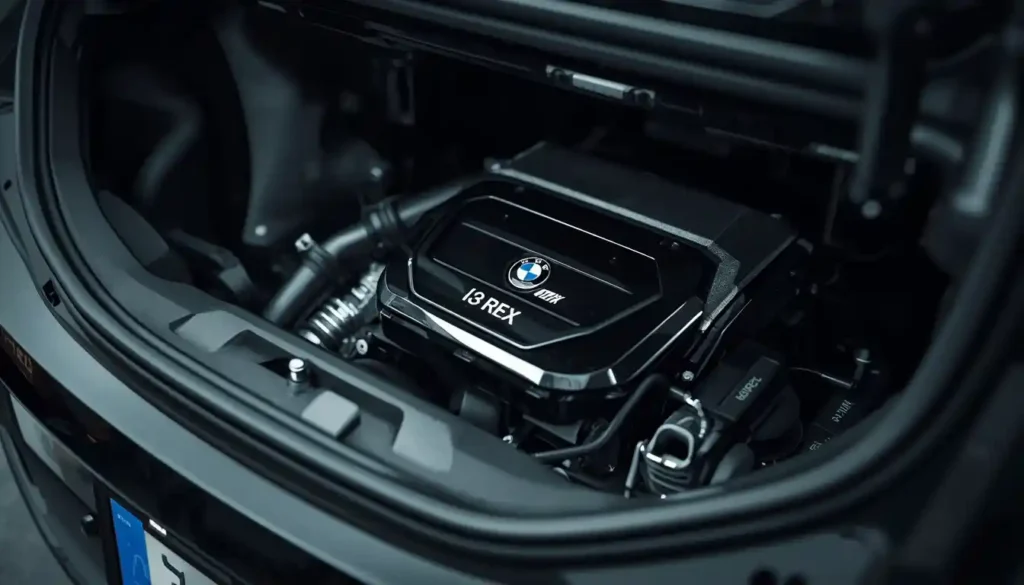
BMW later added a warning light that flashes below 2% charge, but the design never changed. The REx also adds weight and occasional engine noise and needs regular oil changes whether you use it or not.
Treat it as a breakdown prevention device, and it works well. Treat it as a long distance driving solution and you’ll be disappointed.
BMW i3 Problems: What Owners Found Out After the Test Drive
Most reviews of the original BMW i3 gloss over this section or bury the problems in diplomatic language. These are real issues from real owners.
Cold Weather Battery Failure and What Happens When You Hit 0%
Running the original i3 battery to zero in sub-zero temperatures caused a complete failure in at least one documented case. At minus 10 degrees Celsius after full depletion, the car’s electronics crashed entirely.
Exterior lights flickered. The car stopped responding to the charging cable, the key fob, and everything in the handbook. The 12V emergency recovery system that BMW said would activate when the charger was plugged in did not engage.
Roadside assistance had to apply external power directly to the 12V battery to restore function. After that, the car took 16 hours to reach a full charge. It also forgot every saved setting, and the tire pressure sensors stopped working until a dealer reset them.
The rule is blunt: keep the original i3 battery above 20% when temperatures drop. Never go to 0% in winter. Always check that your home charger has connected properly before going to bed.
Narrow Tires and the Rear Grip Problem
The base BMW i3 came with 155/70 R19 tires, a narrow size BMW chose to keep rolling resistance low and protect range. The cost was a weak grip under hard acceleration from a stop and constant small steering inputs needed to hold a straight line at motorway speeds.
Crosswinds made this worse. Owners who stepped up to higher trim models with 175/60R19 rubber on the rear found the car much more planted.
Winter tires, oddly, gave most owners better overall confidence than summer rubber, with the dynamic traction control doing solid work on slippery roads.
The 12V Battery Nobody Talks About
The 12V auxiliary battery in the original i3 is the single most commonly overlooked maintenance item on the used market. When it starts to fail, it throws up intermittent electrical faults that look like far bigger problems.
The repair itself is cheap. The diagnosis, if you don’t know what you’re looking for, is confusing and sometimes expensive. Check it before buying any used i3. If it hasn’t been replaced and the car has over 60,000 miles on it, budget for that job right away.
The infotainment system on older models also never learned to treat a driver’s home as a charging location.
The navigation kept flagging low-range warnings and pointed drivers toward public chargers in the wrong direction. Most owners gave up on the built-in nav within the first few weeks and just used their phone.
BMW i3 Price: What You’ll Pay Used and What the New One Costs
The original i3 dropped fast in value during its early years, and that drop is now your gain as a used buyer.
The 2014 to 2016 60 Ah cars start below $5,000, but limited range and uncertain battery life make them a poor bet unless you have a very short commute and can verify the battery’s health before buying.
The 2017-to-2018 94Ah models average around $19,000 to $20,000, which gives you a working car with decent range and often some battery warranty left.
The 2019 to 2021 120Ah models average $26,000 to $27,000 and give you the most usable range, the best infotainment, and the widest choice of colors and trims on the used market.
The 2027 BMW i3 sedan starts at around $53,000 in the United States. BMW set that number to sit above the outgoing gas 3 Series at roughly $49,000 and below the current BMW i4 at approximately $59,000.
That price ladder is not an accident. It keeps the i3 sedan from undercutting the i4 while giving gas 3 Series buyers a clear electric upgrade path. Confirmed pricing lands closer to the US launch date in 2027.
BMW i3 Alternatives and Competitors: How It Stacks Up
For the original BMW i3 EV, the fair comparisons were the Nissan Leaf, Chevy Bolt, and Chevy Volt. The i3 was lighter and more fun to drive than all three. But the Bolt’s 259-mile range made it far more usable for anyone who couldn’t charge every night.
The Volt’s real long distance gas capability gave it a flexibility the i3 REx could never match. Against the Tesla Model 3, the original i3 was outgunned on range from the very first day it went on sale.

The 2027 BMW i3 sedan plays in a different league. With 440 miles of claimed range, 463 horsepower, and 400 kW fast charging, it lines up against the Tesla Model 3 Long Range, the Mercedes EQE, and the Hyundai Ioniq 6.
Whether BMW’s EESM motor technology and “Heart of Joy” driver software live up to the claims on real roads, in real weather, with real owners, are the questions that matter now. That answer comes when deliveries start.
BMW i3 Charging at Home and on the Road
Charging the original i3 from a standard 120V wall outlet added about 4 to 5 miles of range per hour. That’s enough if you drive very little, but most owners found it too slow for daily life.
A Level 2 BMW Wallbox at 240V was the fix, giving a full overnight charge from the typical daily depletion. Public DC fast charging worked, but the first gen i3’s maximum charge rate was slow by today’s standards, another area where newer EVs have left it behind.
The 2027 BMW i3 sedan accepts up to 400 kW from a DC fast charger, one of the highest rates of any car on sale anywhere. A NACS port is standard, and a CCS adapter comes in the box.
The car preconditions its battery automatically when you put a DC charger into the navigation as a destination, so the pack is at the right temperature for fast charging before you pull in.
Bidirectional charging is also standard, which means the car can push power back to a home wallbox setup or to the grid depending on your local infrastructure. That feature has real value for anyone with solar panels at home.
BMW’s North American public charging network runs through more than 180,000 points across Electrify America, Shell Recharge, IONNA, EVgo, ChargePoint, and Tesla Superchargers. The My BMW App handles routing, session management, and payment across all of them in one place.
Should You Buy a Used BMW i3 or Wait for the 2027 Sedan?
If you drive under 100 miles a day and charge at home every night, a used BMW i3 120Ah in the $20,000 to $27,000 range is hard to argue against. The driving feel is sharper than anything else near that price in the EV segment.
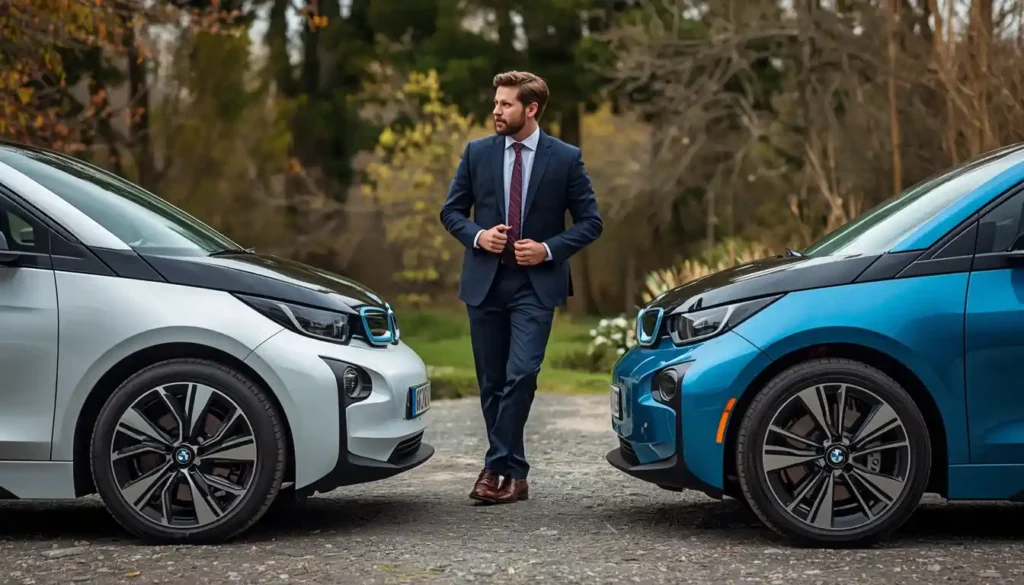
The build quality holds up. Before you sign anything, get a battery State of Health report, check the 12V battery replacement history, and on REx models confirm the small engine has been serviced.
If your trips regularly run past 120 miles, or you want technology that doesn’t ask you to plan around it, the 2027 BMW i3 sedan is worth waiting for.
The numbers BMW is promising change how you think about owning an electric car day to day. Whether real-world driving backs those numbers up is what 2027 will settle.
FAQ
Q: What is the real-world range of the BMW i3?
A: The 2021 BMW i3 120Ah averages 120 to 135 miles in actual daily driving, below the 153-mile EPA figure. Cold weather and highway speeds pull the number lower. The 2027 BMW i3 sedan targets 440 miles based on preliminary EPA testing. Real-world figures come after deliveries start in 2027.
Q: Why did BMW stop making the original i3?
A: BMW completed their last production run of the first-gen i3 in December 2019 due to the high costs associated with producing carbon fiber chassis parts from imported material and weak North American market demand.
After the end of I3 production, BMW has been producing new electric vehicles based on current platforms (such as the i4 and i5), rather than developing brand new platforms that are exclusively for EVs.
Q: Is the BMW i3 reliable enough for daily driving?
A: The electric drivetrain on the first-gen i3 holds up well in daily use. Three things to check before buying used: the 12V auxiliary battery, the rear door sensors, and, on REx models, the service history of the range extender engine. A car with a remaining BMW battery warranty is worth paying a bit more for.
Q: What does the BMW i3 range extender actually do?
A: The BMW i3 REx is a 647cc two-cylinder engine running as a generator.It is not attached to the wheels and cannot make the car move by itself. It starts when the battery gets very low and produces enough electricity to reach a charging station. It’s a breakdown prevention device, not a long-haul driving tool.
Q: How much will the 2027 BMW i3 sedan cost?
A: BMW puts the 2027 i3 starting price at around $53,000 in the United States. That number sits above the outgoing gas 3 Series and below the BMW i4. Confirmed pricing comes closer to launch, with US deliveries starting in 2027.
Q: How does BMW i3 regenerative braking work?
A: On the original i3, lifting off the accelerator puts the motor into generator mode, which slows the car and pushes energy back into the battery. The effect is strong enough that city drivers rarely need the actual brake pedal.
The 2027 BMW i3 sedan’s “Heart of Joy” system pushes this further, handling almost all normal deceleration through regeneration and using friction brakes only for hard stops.
Q: Is the 2027 BMW i3 the same car as the old hatchback?
A: No. The only shared element is the badge. The original BMW i3 was a compact electric hatchback with carbon fiber construction, built from 2013 to 2021.
The 2027 BMW i3 is a full-size electric sedan on the Neue Klasse platform with different dimensions, different motors, different ranges, and a different target buyer. Treating them as the same car leads to the wrong buying decision every time.
