
Volkswagen
VW ID. Buzz Problems: Real Range Falls 60 Miles Short
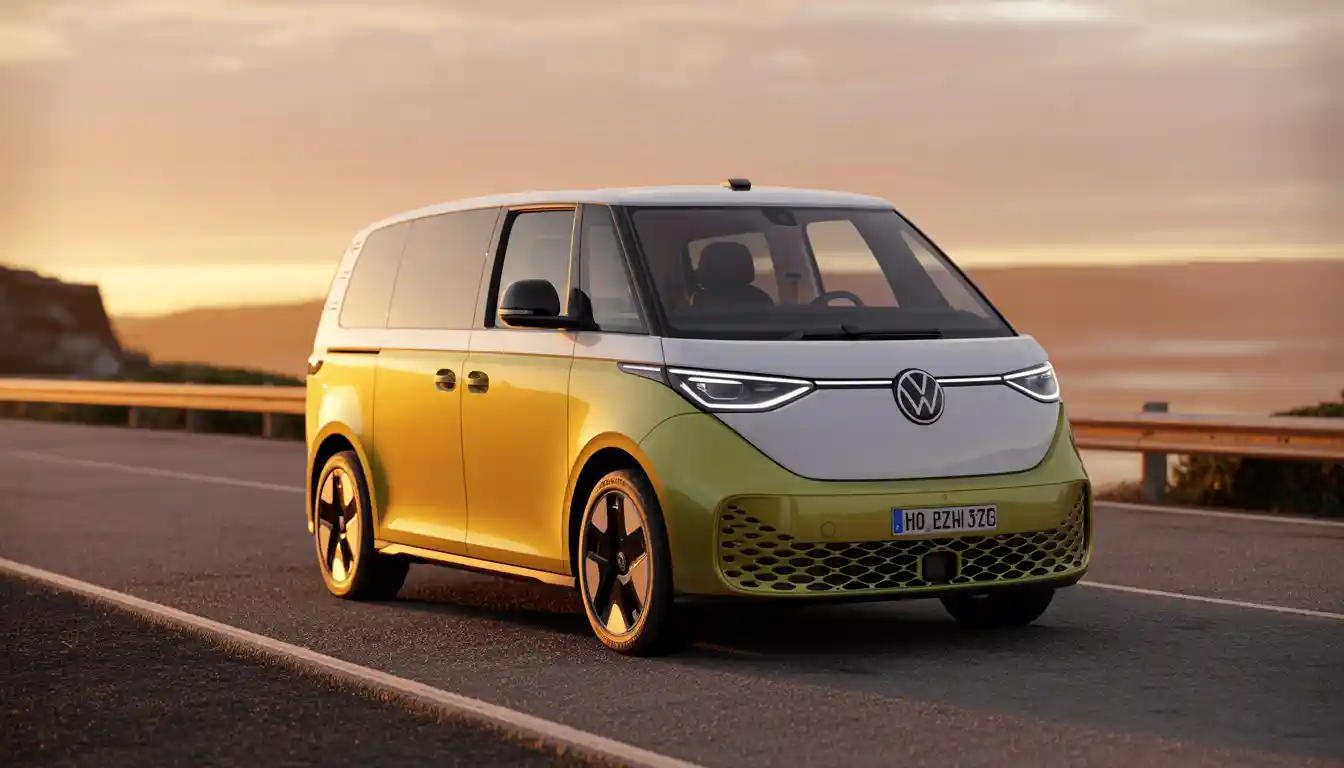
After going through NHTSA filings, VW owner forums, and independent road test data from Car and Driver and The Autopian, here’s what the 2026 picture actually looks like: The VW ID.
Buzz still has documented software failures breaking scheduled charging, two federal safety recalls from its first US model year that buyers need to verify, real highway range sitting 40 to 60 miles below the EPA-rated 234 miles, and dealer service waits that stretch up to two months.
These aren’t first-month teething problems anymore; it’s been over a year, and most of these issues are still unresolved for many owners.

As of April 2026, these problems are documented across US and European owner communities and verified through federal recall filings. Whether you’re buying new, buying used, or already own one, read this before your next decision.
VW ID. Buzz Software Problems: The Biggest Complaint
Ask for any ID. Buzz owner: What frustrates them most in 2026? Software still comes up before anything else. The van runs on VW’s MEB platform, the same architecture that spent two-plus years generating complaints in the ID.4 and ID.3 VW carried that code into the Buzz without resolving the underlying issues first, and owners are still paying that price.
Scheduled home charging remains the top complaint heading into 2026. You set your off-peak window, and it works for a few days, then you wake up to a full-price charge or no charge at all. A significant number of owners still report their van randomly dropping the saved home location, forcing them to rebuild the charging profile from scratch before every session.
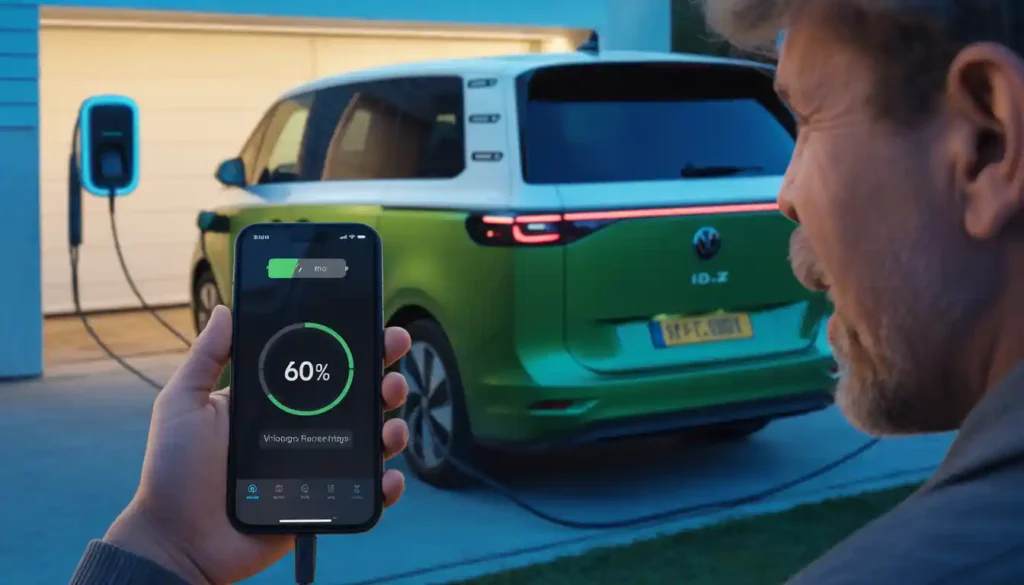
The VW app piles on by showing battery status that is hours out of date. You check your phone; it says 80 percent. You get to the van, and it stopped charging at 60.
VW has pushed several OTA-style updates through 2025 and into 2026 that improve some of this, but each meaningful fix still requires a physical dealer visit. How painful that process gets is its own section below, and it hasn’t improved much since launch.
Sluggish Infotainment and Touch Controls
The center screen still lags under everyday use in 2026; this hasn’t been patched out. Climate controls remain buried behind touch sliders with no physical knobs to grab while you’re driving. Car and Driver flagged this in their instrumented test as a genuine frustration, not a minor preference issue, and owner reports from early 2026 confirm it hasn’t changed.
Instrumented testing recorded wind noise at 70 mph, hitting 70 decibels loud for a premium family van at this price. The brake pedal still has that soft, spongy feel that takes real adjustment if you’re coming from any other modern vehicle. On a van that now starts at $61,545, neither of those should still be part of the conversation in 2026.
Regenerative Braking With No Real Settings
You still get one option in 2026: “B” mode. That’s the entire regen system. It won’t bring the van to a complete stop, and there’s nothing to customize.
If you’ve spent time in a Tesla Model Y, Hyundai Ioniq 5, or any EV with real one-pedal driving, you’ll feel this gap every single day in city traffic. VW hasn’t addressed it in any update through early 2026 at this point; it’s safe to say it’s not coming.
VW ID. Buzz Recalls: Two Campaigns You Must Know
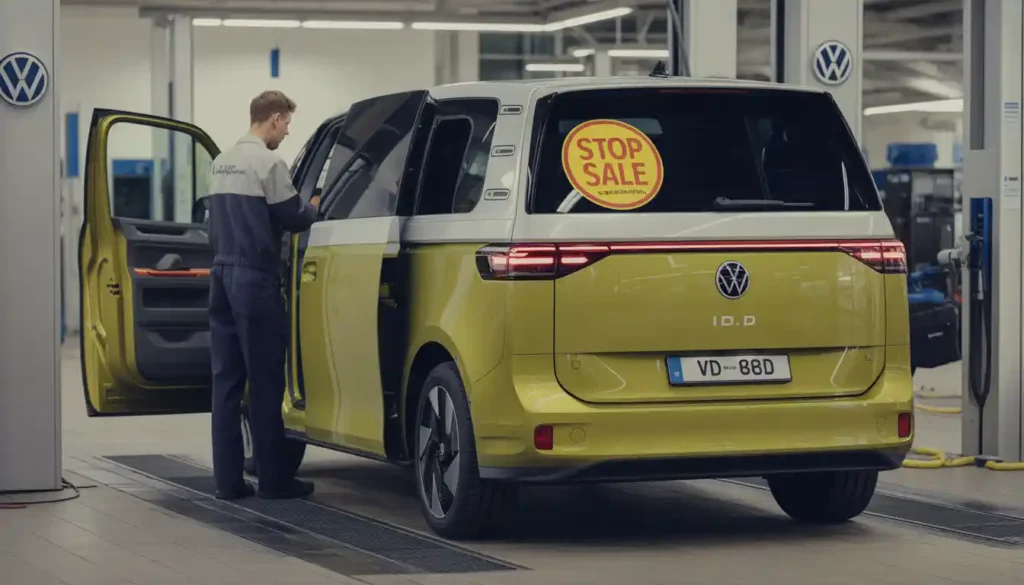
Two safety recalls hit the 2025 Volkswagen ID. Buzz is in its first US model year, and as of 2026 these are the first things any used buyer needs to verify. Both triggered federal stop-sale orders and affected the same early production window. Don’t skip this step.
Recall 1: Brake Warning Light Showed Wrong Symbol (NHTSA 25V233000)
This one covered 5,637 units built between September 9, 2024, and February 11, 2025. The instrument cluster was showing the brake system warning in the wrong color and the wrong symbol because of a coding error deep in the cluster data container.
VW sent dealer notification letters by June 6, 2025, and the fix is a free software update. A wrong brake warning during an actual brake problem means a driver might not react correctly. NHTSA treated it as a formal safety recall for good reason.
Recall 2: Third-Row Bench Seated Three But Was Built for Two
The rear bench on early US models was wide enough for three passengers, but only had two seatbelts and was engineered for only two. Dealers fixed this by bolting fixed trim pieces on both sides of the bench, physically narrowing the seat to two clear positions.
The job takes about an hour and costs you nothing. The stop sale order on dealer inventory only lifted after every unit on the lot had the trim pieces installed. If you are looking at a used ID. Buzz, ask the seller or dealer for written confirmation that the work is done.
High Voltage Battery Recall in Europe: Keep Watching Your VIN
In March 2026, VW recalled nearly 100,000 EVs across Europe over high-voltage battery module faults with a documented fire risk. As of April 2026, the US NHTSA campaign specifically covers ID.4 units and the ID. Buzz is not yet included in the US filing.
But here’s why you should still pay attention: the ID. Buzz shares the same MEB battery layout and comes off the same Hanover production line as the affected vehicles.
Keep checking your VIN at NHTSA every few weeks. If this campaign expands to US Buzz owners, you want to know before you park in an enclosed garage overnight.
Real-World Highway Range vs. EPA Rating: The Gap Is Real
The 2025 ID. Buzz, the current model available in the US as of 2026, since VW skipped a 2026 model year, is rated at 234 EPA miles for the rear-wheel-drive version and 231 miles for the all-wheel-drive. Those numbers come from mixed city and highway driving. Take the van on an actual road trip, and the story changes fast.
The Autopian drove from North Carolina to Savannah and got 170 to 190 miles of real highway range per charge. Each stop at a public fast charger ran $40 to $45. Car and Driver’s instrumented test at 75 mph landed at 190 miles.

Cold weather cuts the number further, and after a full winter cycle of ownership data in 2025-2026, this is confirmed as not speculative. Owners across Ohio, Michigan, and the northern US states report the cold-weather drop is significant. Battery preconditioning softens the hit but doesn’t cancel it.
This is the hardest problem to argue away, especially now that a full year of real ownership data backs it up. The Autopian tested it on an actual road trip and put it plainly: the van is almost perfect for road trips, except it can’t actually do road trips at highway speeds without frequent stops.
When you are spending a minimum of $61,545 on a van sold as a family adventure vehicle, a 40 to 60-mile gap between the sticker number and reality is something Car and Driver’s road test confirmed.
The Kia EV9 gives you more range, better reliability scores, and more flexible cargo space at a similar price point.
Fast Charging Speed and Network Coverage
When a good charger is available, the ID. Buzz performs well. This electric van supports DC fast charging up to 200 kW and goes from 10 to 80 percent in about 26 minutes. The problem is finding that charger on a road trip.
Non-Tesla networks are still thinner than the Supercharger network across most of the US and Europe. The ID. Buzz gained NACS compatibility through a software update, but some owners found Tesla charging unreliable until a specific dealer update was applied. Plan stops every 150 miles, not every 200.
VW Dealer Wait Times: The Problem No One Writes About
This is the VW ID. Buzz problem that barely shows up in professional reviews, but owner forums treat it as one of the worst parts of ownership.
One owner documented three separate faults within the first 72 hours: an electronic child lock error, a key fob failure, and a persistent tire pressure warning. His VW dealer’s response in 2025 was to come back in two months.
He posted a direct comparison to his previous Tesla ownership: identical software issues resolved remotely or in person within 24 to 48 hours. Nothing about this has improved heading into 2026.
There is a structural reason for this. The ID. Buzz comes from VW’s commercial vehicle division, not the passenger car side. VW dealers who know the ID. 4 Inside Out sometimes do not have the right tools or training for Buzz-specific repairs.

The brake recall update (90A2) made this obvious. Forum members reported their van sitting at a dealer for four straight days while technicians fought corrupted update files and server connection drops.
In Canada, owners filed formal complaints with VW in December 2024 and were still waiting for resolution in January 2025, over a month of zero movement on a safety-related recall repair. Forum posts from early 2026 suggest the service backlog situation hasn’t meaningfully improved at many dealers.
Used buying guide rule: ask for the full service record and confirm every open recall is closed on the VIN before you hand over a deposit.
Everyday Livability Issues That Add Up
None of the following is catastrophic. However, these issues accumulate quickly, especially on a van priced over $61,000.
Cargo Space Behind the Third Row
VW’s claim of best-in-class rear legroom is accurate. What the brochure leaves out is that the cargo area behind the third row is roughly half the size of a standard minivan.
A family of seven loading for a weekend road trip will discover this trade-off the hard way on their first pack. The rear seat folding and sliding mechanisms are still fussier than they need to be. This hasn’t been addressed mechanically, and owners in 2026 still flag it regularly, especially those swapping car seats in and out.
Price Against What You Actually Get
The 2025 ID. Buzz starts at $61,545 for rear-wheel drive. The all-wheel-drive version with two-tone paint, which most buyers actually want, runs around $70,000. The federal EV tax credit expired for this vehicle at the end of 2024 and hasn’t been reinstated as of April 2026.
VW sits at 25th out of 30 brands in recent reliability rankings. As of early 2026, dealers are sitting on leftover 2025 inventory and running meaningful discounts, which tells you something about demand.
Resale reality check for 2026: EV depreciation across the board has been steep, and the ID. Buzz is not immune. If you buy at full price today and sell in two to three years, expect to take a significant loss.
The discount deals on 2025 inventory that dealers are offering right now actually reflect this; the market has already priced in that depreciation pressure.
No Camping Mode, No Power Outlet in the Cargo Area
A van built around adventure marketing should ship with a camping mode and an always-on 110V outlet in the back. The ID. Buzz has neither. The Ford F-150 Lightning and other EVs in this price range include power outlets as standard.
InsideEVs called it a missed opportunity for a van sold entirely on road trip and adventure imagery. As of April 2026, VW’s North American CEO has mentioned a camping-focused variant in active discussions for the 2027 model, but nothing is officially confirmed or spec’d out yet.
Is the 2027 VW ID. Buzz Worth Waiting For?
VW skipped the 2026 model year for the US market entirely. This was confirmed by VW Group’s North American CEO at the New York Auto Show in April 2026. Production on the 2027 ID. Buzz is scheduled to begin in summer 2026, with US deliveries expected by early fall 2026. It’s about 5 to 6 months from now.

That gap gives VW a genuine window to sort the software issues, work through the recall service backlog, and respond to what US owners documented in year one. Whether they actually use that window well is something we’ll know when the 2027 specs are published, probably late summer 2026.
Here’s the honest bottom line as of April 2026: buy a discounted 2025 only if both recalls are confirmed closed on NHTSA.gov, you already have Level 2 home charging set up, and most of your driving stays local. In that scenario, the van genuinely delivers comfortable, spacious, and enjoyable driving around town.
But if highway road trips are your primary reason for wanting this van, wait for the 2027 specs before writing a $60,000-plus check on a vehicle with a documented range gap that owners are still living with right now.
How to Fix the Most Common VW ID. Buzz Problems
Some of these have fixes you can act on right now in 2026 without waiting for the next software release or a dealer appointment.
Scheduled charging keeps failing: go into the VW app, delete your saved home location completely, and rebuild it from scratch.
This clears the corrupted profile data and works for most owners. If it fails again within a week, ask your dealer to push the latest software version and confirm it is installed cleanly.

Open recalls: check your VIN at NHTSA.gov or call 1-800-893-5298. Both recall repairs are free.
When you book the dealer visit, call ahead and specifically ask whether the update files for 90A2 are already downloaded on their diagnostic system. That one question has saved owners days of unnecessary waiting.
Highway range anxiety: stop planning stops at 200 miles. Plan at 150 miles per leg instead. Turn on battery preconditioning before you arrive at the DC fast charger to get closer to the 200 kW peak rate. In cold weather, add one extra buffer stop per driving leg.
Frequently Asked Questions
Q: What are the most common VW ID. Buzz problems?
A: Software that breaks scheduled home charging; two safety recalls on the brake warning light and third-row seat; real-world highway range 40 to 60 miles below the EPA figure; and VW dealer wait times that can stretch to two months.
Q: Is the VW ID. Buzz reliable in 2026?
A: Based on over a year of real ownership data, reliability remains a concern. VW ranks 25th out of 30 brands in recent surveys. The ID. Buzz shares its MEB software platform with the ID.4, which Consumer Reports ranked among the least reliable EVs in 2024 and 2025.
Most documented failures involve software and charging systems rather than mechanical components, but that distinction doesn’t help much when your van won’t charge correctly on a Tuesday morning.
Q: How do I check for open VW ID. Buzz recalls?
A: Enter your VIN at NHTSA.gov or call VW at 1-800-893-5298. Both are free.
Q: Does the ID. Buzz qualify for the federal EV tax credit in 2026?
A: The federal EV tax credit for the ID. Buzz wrapped up at the end of 2024, and as of April 2026, there’s no sign of it returning. Worth checking your state’s energy office or DMV, though; quite a few states still run their own EV rebate programs independently, and some of them are genuinely worth the five minutes it takes to look.
Q: What is the real-world highway range?
A: Between 170 and 190 miles at 70 to 75 mph based on independent road tests. The EPA 234-mile rating reflects mixed driving, not sustained highway speed.
Q: Will the 2027 VW ID. Buzz fix the current problems?
A: VW skipped the US 2026 model year entirely. Production on the 2027 ID. Buzz restarts in summer 2026, with US deliveries expected by early fall 2026, confirmed by VW’s North American CEO at the April 2026 New York Auto Show.
Software improvements are expected based on first-year US feedback, but full specifications haven’t been released yet. Hold off on judgment until those specs drop.
Q: How long does a recall repair take?
A: The seat trim fix takes about an hour. The brake light software update has caused multi-day waits at some dealers. Call ahead and ask if update files are already on their system.
Q: Is the ID. Buzz worth buying in 2026?
A: It depends entirely on how you’ll use it. A discounted 2025 unit with both recalls confirmed closed, Level 2 home charging already installed, and primarily local driving? Yes, it makes sense. The van genuinely delivers in that use case. For highway road trips as the primary purpose, the Kia EV9 offers more real-world range, better reliability data, and comparable pricing. If you can wait 6 months, the 2027 specs will tell you whether VW actually fixed what needed fixing.
James Carter reports on electric vehicles and automotive technology. This piece is built on NHTSA recall filings, hands-on road test data from Car and Driver and The Autopian, and ongoing owner conversations in the VW ID. Talk forums.
