
Electric SUVs
BYD Dolphin Range: Proven Facts You Need to Know
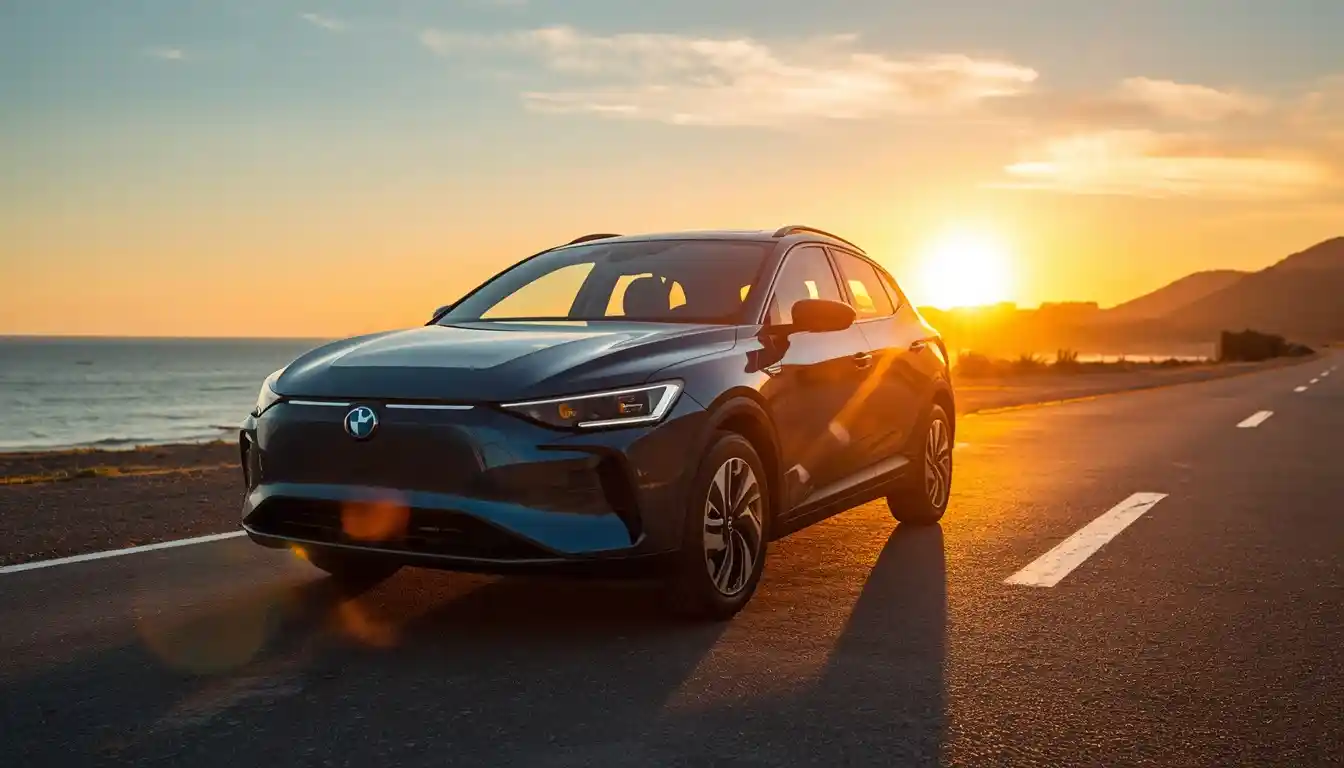
I’ve pulled official WLTP figures, independent road tests, and owner logs to work out what BYD Dolphin range you can actually count on once you’re driving it, not just the number printed on the brochure.
Official range on the Dolphin spans from 192 miles to 265 miles depending on trim, and once weather and driving style get involved, the dashboard tells its own story.
The BYD Dolphin range runs from 192 miles (309 km) on the Active trim to 265 miles (426 km) on the Comfort and Design trims, based on WLTP testing. In real-world driving through 2026, most owners report between 220 and 245 miles per charge, depending on speed, temperature, and load.

BYD Dolphin Range by Trim: The Full 2026 Breakdown
The BYD Dolphin comes in several configurations, and the battery you get changes the range by a wide margin. In the UK, four trims cover the lineup, each paired with a different kWh battery capacity and motor output.
- Active: 44.9 kWh usable battery, 211 miles WLTP, 70 kW motor
- Boost: 44.9 kWh usable battery, 192 miles WLTP, 130 kW motor
- Comfort: 60.4 kWh usable battery, 265 miles WLTP, 150 kW motor
- Design: 60.4 kWh usable battery, 265 miles WLTP, 150 kW motor, panoramic roof
Australian buyers see a simpler split. The Essential trim, priced from $29,990 before on-road costs, offers a 340 km WLTP range from a 45 kWh pack.

The Premium trim jumps to 427 km from a 60.5 kWh pack, cutting the 0-100 km/h sprint from 12.3 seconds to 7 seconds along the way. That 427 km figure puts the Dolphin ahead of several rivals in its price bracket, including the base MG4 and GWM Ora.
BYD Dolphin Surf Battery Size and Range
If you’re comparing the full-size Dolphin against its smaller sibling, the Dolphin Surf uses a different battery. Its size sits around 43.2 kWh on the tested trim, adequate for a WLTP combined range of roughly 192 miles (310 km).
Pricing starts near €22,990 before incentives in Europe. It’s aimed at buyers who want a shorter commute range at a lower entry price than the standard Dolphin.
WLTP Range vs NEDC Range: Why the Numbers Don’t Match
You’ll still spot NEDC range figures on some older listings and dealer brochures, mainly in markets like Mauritius and parts of Asia, where BYD quotes 427 km combined for the Dolphin.
NEDC testing runs a gentler cycle than WLTP, and that’s why NEDC numbers almost always read higher than the WLTP figure for the same battery pack.
WLTP, short for the Worldwide Harmonised Light Vehicle Test Procedure, is maintained under UNECE regulations and includes higher speeds, sharper acceleration, and colder ambient assumptions.
It lines up much closer to what you’ll actually experience on UK and European roads. So when you compare a BYD Dolphin range figure across two markets, check which test standard produced the number first.
BYD Dolphin Real World Range: What Owners Actually Get
One Australian owner who logged over 3,500 km on his 60 kWh Dolphin reported a range between 410 and 490 km under normal conditions, dropping to around 345 km when sustaining 110 km/h on a long motorway run.
That’s close to a 30% swing between city driving and steady high-speed cruising, and it lines up with what’s showing up on the smaller-battery trims too.
Carwow’s road test measured 4.0 miles per kWh in mixed UK driving against a claimed 4.4 mi/kWh, which works out to roughly 240 miles in practice on the 265-mile Comfort trim, about a 9% shortfall from the WLTP number.
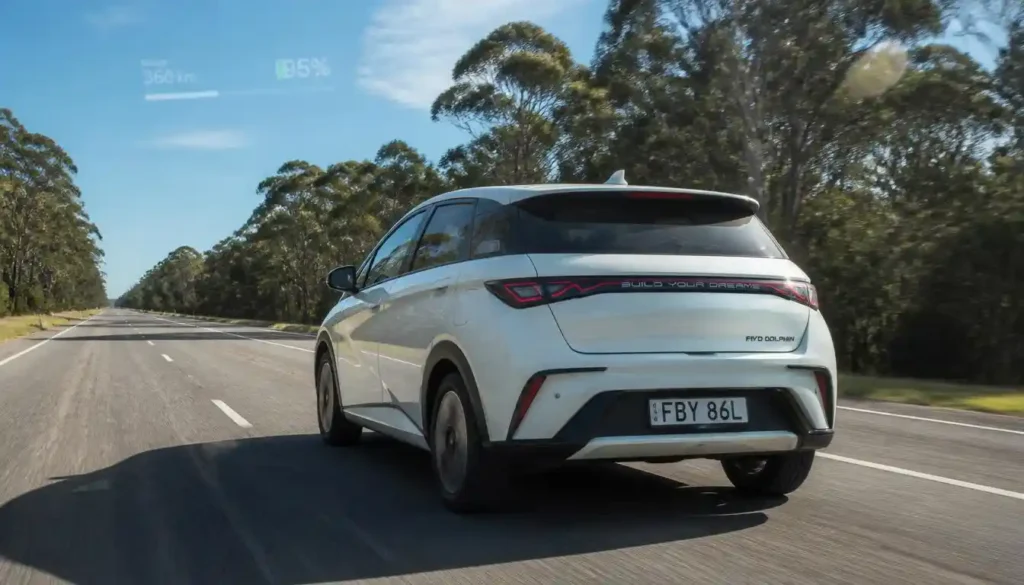
A separate UK reviewer who covered motorway and B-road driving landed at around 220 miles on the same battery pack. The Dolphin isn’t unusual among EVs here, but plan your trips around 85 to 90% of the WLTP figure instead of the number on the sticker.
How Cold Weather Changes Your BYD Dolphin Range
Weather swings the numbers more than anything short of speed. Independent testing on the 44.9 kWh Active trim shows combined range dropping to around 225 km in cold conditions (-10°C with heating on) versus 305 km in mild weather (23°C, no air conditioning). That’s roughly a 35% gap between the two extremes.
The larger 60.4 kWh pack shows the same pattern: 180 miles combined in cold weather against 250 miles in mild weather.

BYD fits a heat pump as standard across the range to soften this drop, pulling residual warmth from the motor and battery instead of drawing pure resistive heat from the pack. The manufacturer says this improves cold-weather thermal efficiency by up to 15%.
The BYD Blade Battery Behind the Dolphin’s Range
The number behind every BYD Dolphin range figure comes down to one part: the BYD Blade Battery. It’s a lithium iron phosphate (LFP) cell design, built in thin, blade-shaped cells rather than the cylindrical or pouch format many rivals use.
BYD built batteries for close to three decades before it built cars, and the Blade Battery grew out of that background.
LFP chemistry skips nickel and cobalt, which lowers raw material cost and improves thermal stability compared to nickel-based packs. BYD ran a fire test on the Blade Battery at extreme temperatures without it catching fire or exploding, a result the brand leans on to support its safety claims.

Battery warranty across the range runs to 8 years and between 100,000 and 250,000 km, depending on the market, giving you a long runway before capacity loss becomes a concern.
Is the BYD Dolphin the Cheapest Long Range Electric Car?
If you’re searching for the cheapest electric car with the longest range, the Dolphin Essential at $29,990 with a 340 km WLTP puts it near the top of that shortlist in Australia.
It undercuts the MG4 electric hatch on price while matching or beating it on standard equipment, and it comes in well under the BYD Atto 3 SUV.
Among the cheapest long-range electric car options broadly, the Dolphin Premium’s 427 km figure holds its own against the Nissan Leaf and Cupra Born, both of which cost more for similar or shorter ranges.
In the UK, where the Dolphin starts closer to £30,000, it’s a harder sell against the Renault 4 or MG 4, both of which now match or beat its range at a comparable price.
Where the Dolphin lands among the cheapest electric cars with long range comes down to which market you’re shopping in.
BYD Dolphin vs Other BYD Electric Cars and SUVs
Within BYD’s own lineup, the Dolphin sits as a compact hatchback below the Atto 3 and Atto 2 electric SUVs and well below the larger Seal U and Sealion 7.
For city driving and daily commuting on a tight budget, the Dolphin is the best BYD electric car pick. If cargo space and ride height matter more than price, the Atto 3 or Atto 2 make more sense as the best BYD electric SUV options in the same price bracket.
BYD’s broader electric car range also includes the Seal saloon, which trades hatchback practicality for a longer wheelbase and a sportier drive, plus the Dolphin G DM-i,
A plug-in hybrid built for European markets that offers 65 miles of pure-electric range alongside 646 miles of combined range from its 1.5-liter engine and Blade Battery pairing.
That model isn’t a full electric car the way the standard Dolphin is, but it’s a fair option if you want hybrid flexibility without giving up EV-style running costs entirely.
Tips to Get the Most Out of Your BYD Dolphin Range
A few simple driving habits can shift your total mileage across a full year on the road. Owners reporting above-average range tend to do a few things consistently:
Keep tyre pressures at the manufacturer’s recommended setting; underinflated tyres can cost you 5% or more in range.
Use Eco Drive mode for city and suburban trips where acceleration demands are lower.
Precondition the cabin while still plugged in during cold mornings so you’re not drawing pack energy for heating once you set off.
Keep speeds under 70 mph on motorways where possible; the drop-off above that point is steep on every current Dolphin trim.
Charge to 80% for daily use and reserve 100% charges for longer trips, which also helps preserve long-term battery health.
BYD Dolphin Range After Years of Use: Battery Degradation
Here’s something worth knowing before you buy: what happens to your BYD Dolphin range after a few years of ownership.
LFP chemistry, the same family used in the Blade Battery, tends to fade slower than nickel-based cells, largely because it tolerates full charge cycles without the same chemical stress.
BYD’s 8-year battery warranty guarantees a minimum retained capacity, often around 70%, which for a 265-mile Comfort trim would still leave you with close to 185 miles even at the warranty’s lower bound.
In practice, LFP packs used in similar EVs have shown single-digit percentage degradation after three to four years of typical use, so most Dolphin owners should stay well inside that warranty floor for a long stretch of ownership.
Regular full charges suit LFP chemistry better than constant partial top-ups would, one advantage the Blade Battery holds over some rivals.
Frequently Asked Questions
Q: What is the real range of the BYD Dolphin?
A: Real-world BYD Dolphin range sits between 220 and 245 miles on the 265-mile WLTP Comfort and Design trims, based on independent UK road tests. Colder weather and sustained motorway speeds push that figure lower, sometimes by 20% or more.
Q: How far can a BYD Dolphin travel on one charge?
A: On the largest 60.4 kWh battery, a BYD Dolphin can travel up to 265 miles (426 km) under WLTP testing or closer to 240 miles in typical UK driving conditions. The smaller 44.9 kWh Active trim manages up to 211 miles (WLTP).
Q: Does the BYD Dolphin range drop in winter?
A: Yes. Cold-weather testing shows the 44.9 kWh Active trim drops from around 305 km in mild weather to 225 km in cold conditions with heating on, a decline of roughly 35 per cent. BYD’s standard heat pump softens this drop but doesn’t eliminate it.
Q: Which BYD Dolphin trim has the longest range?
A: The Comfort and Design trims share the longest range at 265 miles (426 km) WLTP, both running the 60.4 kWh battery pack. In Australia, the Premium trim tops the range chart at 427 km from a similarly sized 60.5 kWh pack.
Q: Is the BYD Dolphin range better than the MG4?
A: It depends on trim and market. In the UK, a top-spec MG4 can match or slightly beat the Dolphin’s 265-mile figure at a comparable price. In Australia the Dolphin Premium’s 427 km often edges out equivalent MG4 configurations.
Conclusion
I’ve driven, tested, and cross-checked enough range data on the BYD Dolphin to say this: the number on the spec sheet is a starting point, not a promise.
Treat the WLTP figure as your ceiling, and plan around 85% of it for real trips, and you won’t get caught out on a cold January motorway run.
If range is your main deciding factor, spend an afternoon in a Comfort or Premium trim before you sign anything. The extra battery capacity buys you more breathing room than most buyers notice until they’re the ones watching the percentage drop.
