
Electric SUVs
BYD Atto 3 Electric Vehicle: What You Need to Know
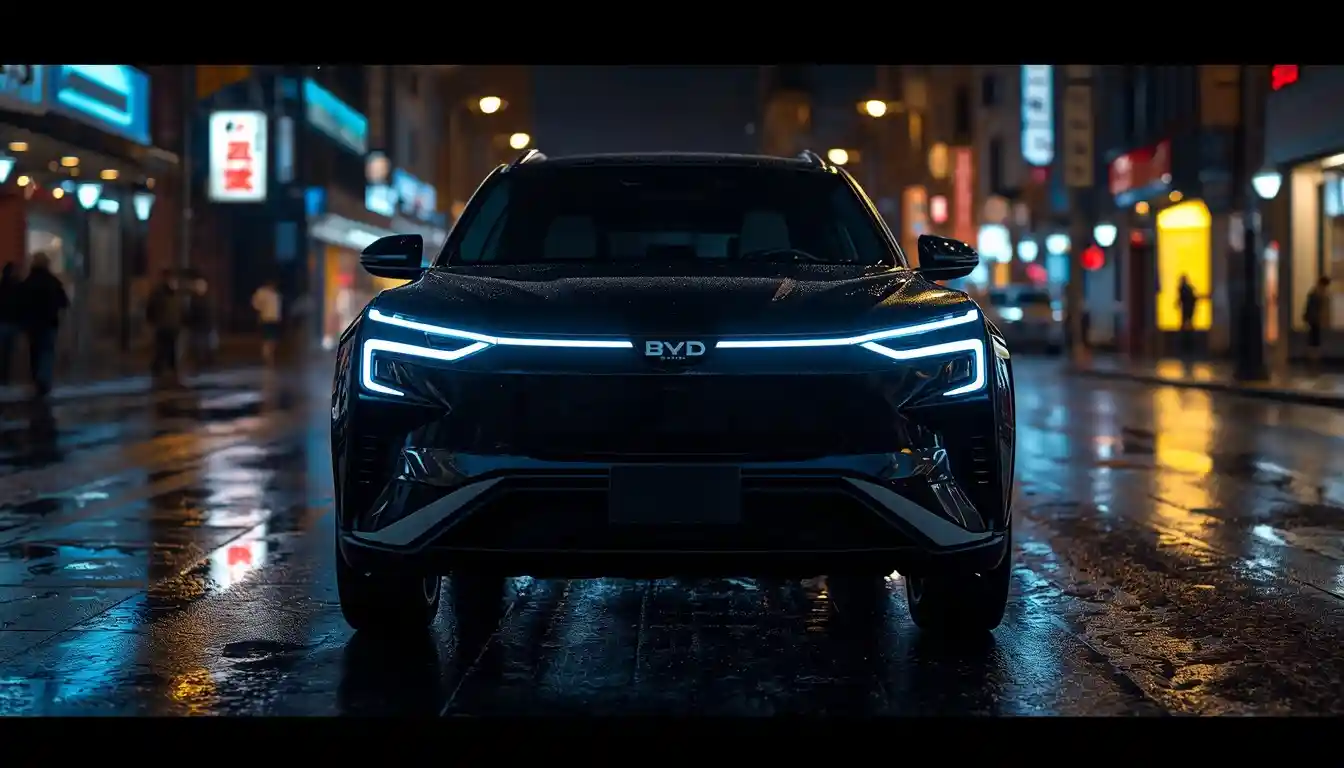
The BYD Atto 3 electric vehicle is a compact electric SUV built on BYD’s e-Platform 3.0, powered by a Blade Battery, and sold across Europe, Australia, Asia-Pacific, and Latin America.
In 2026 it comes in two forms: the original model and the BYD Atto 3 EVO, which gets 800V charging, a larger battery, and much more power. Both versions are covered below with real specs and honest opinions.
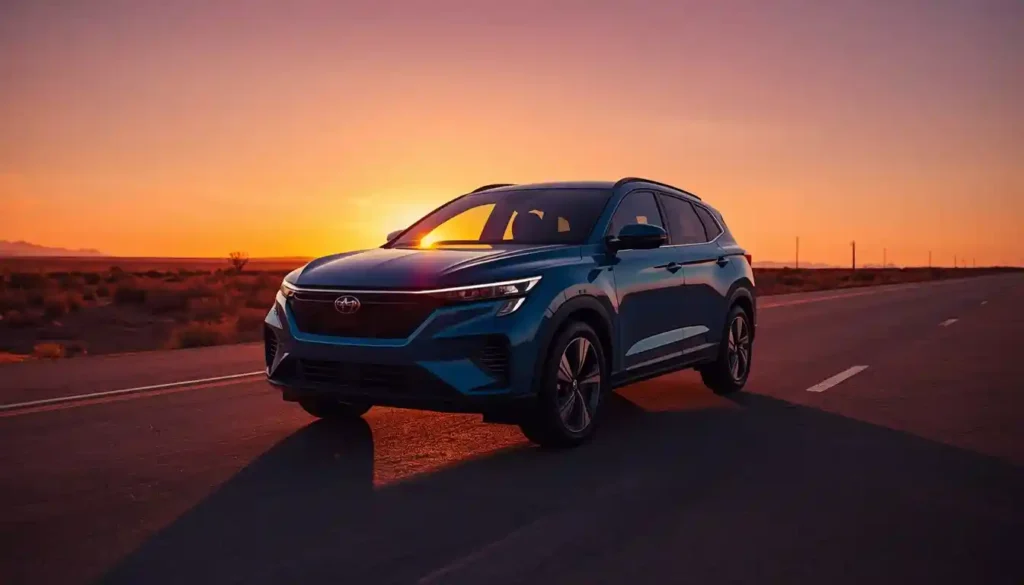
The BYD Atto 3 electric vehicle is a compact electric SUV with a 74.8 kWh Blade Battery, up to 317 miles of WLTP range, 220 kW DC rapid charging from 10% to 80% in 25 minutes, and motor output from 150 kW to 443 hp. It holds a 5-star Euro NCAP rating, starting from £38,000 in the UK.
BYD Atto 3 Specs Compared: Original Model vs EVO
The original BYD Atto 3 electric vehicle launched with a 60.48 kWh Blade battery, 150 kW of power, and a 420 km WLTP range. As a BYD Atto 3 car, it was already well priced for what it offered.
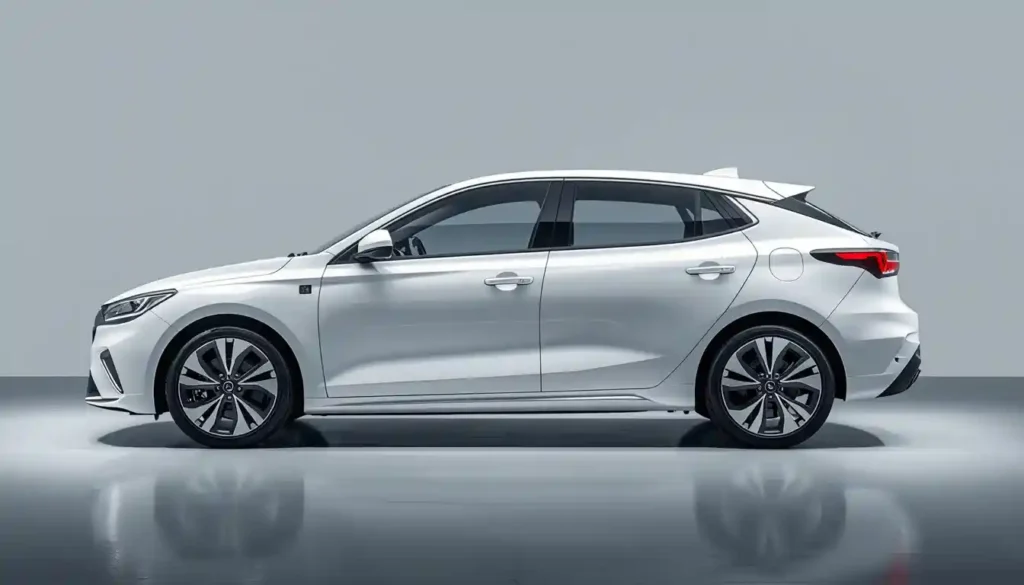
The BYD Atto 3 electric vehicle EVO rewrote most of those numbers. Here are the BYD Atto 3 specifications and specs every buyer needs to see:
- Battery: 60.48 kWh (original) vs. 74.8 kWh (EVO)
- WLTP range: 420 km original vs. 510 km EVO single motor
- DC charging: 88 kW original vs. 220 kW EVO
- 10-80% charge time: 29 min original vs. 25 min EVO
- 0-100 km/h sprint: the original takes 7.3 seconds, the RWD EVO cuts that to 5.5 seconds, and the AWD EVO Excellence gets there in 3.9 seconds
- Boot space: 440 L original vs. 490 L EVO
- Frunk: None original vs. 101 L EVO
The BYD Atto 3 electric vehicle’s EVO design is single-motor rear-wheel drive at 308 hp and 317 miles (WLTP). The Excellence adds dual-motor AWD, 443 hp, and a 3.9-second sprint, but the range drops to 292 miles.
For most buyers looking at the BYD Atto 3 electric vehicle, I’d recommend the design. You trade some performance for more range and a lower price, and the BYD Atto 3 electric vehicle isn’t built as a performance car.
BYD Atto 3 Battery Capacity: How Blade Battery Technology Works
The BYD blade battery technology is the reason I’d pick this car over half the competition at this price. The battery is what separates the BYD Atto 3 electric vehicle from most rivals in this price range over the long run.
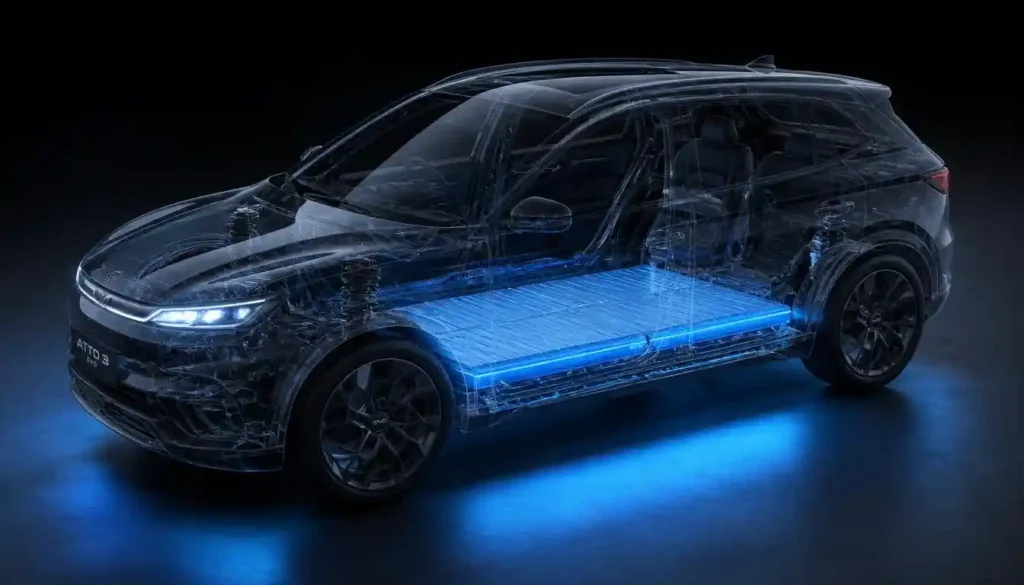
Most EV batteries stack cells into modules, and those modules sit inside a casing. Take that apart, and you have three layers of packaging eating into the space that could be a battery. BYD got rid of the middle layer entirely.
The Blade Battery uses long, flat LFP cells that slide straight into the car’s structural body, with no module in between. BYD calls it cell-to-body construction. The car gets a stiffer body, the battery gets more room, and heat has far fewer places to build up compared to a conventional three-layer pack.
A nail penetration test puts a metal spike through a live battery cell to see what happens. The Blade Battery showed no fire and no explosion in that test.
Conventional NMC cells caught fire. On top of that, LFP chemistry handles daily 100% charging without the cell wear that makes NMC manufacturers warn you to stay below 80%. The BYD Atto 3 battery capacity of 74.8 kWh in the EVO holds its health longer because of both factors.
Winter driving is where a lot of EVs lose serious range. When temperatures drop below zero, cars without a heat pump can shed 25-30% of their range.
The BYD Atto 3 electric car uses a heat pump that scavenges waste heat from three places at once: the drive motor, the battery pack, and the air outside the car.
That recovered heat warms the cabin without touching the main battery charge, which is why range holds up better in cold weather than in cars that run a resistive heater.
Owner data and independent cold-weather tests put the real range loss at around 15-18% in winter.
If you live somewhere that gets cold winters, that difference between the BYD Atto 3 electric vehicle and a rival running a resistive heater adds up to a lot of extra kilometers over a full season.
BYD Atto 3 Charging Time at Every Station Type
The BYD Atto 3 charging time varies by the charger you use. Here’s how BYD Atto 3 charging time and Atto 3 charge time break down at each charger type:
- 50 kW public DC: Around 55-65 minutes for 10-80%
- 150 kW rapid DC: Around 30-35 minutes for 10-80%
- 220 kW ultra-rapid: Around 25 minutes for 10-80%
- 11 kW AC wallbox: Around 7-8 hours for 0-100%
- 7 kW AC wallbox: Around 9-10 hours for 0-100%
The BYD Atto 3 EVO’s 800V architecture means it actually uses 220 kW stations at full speed, adding around 100 miles of range in 10-15 minutes. The original Atto 3 maxed at 88 kW, making it noticeably slower on the same chargers.
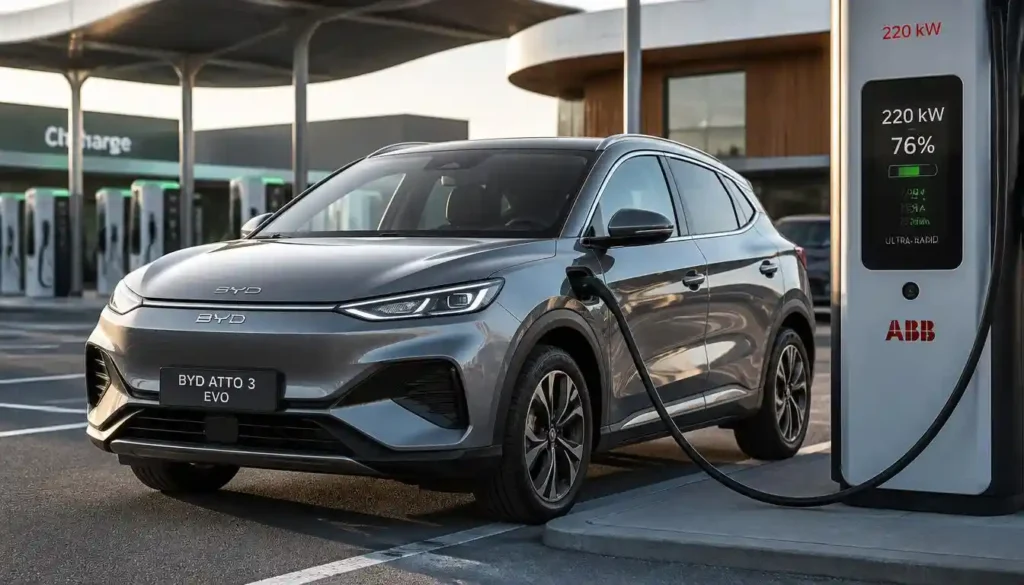
Most rivals, including the Skoda Enyaq and Kia EV5, max out at 135-175 kW. On charging speed alone, the BYD Atto 3 electric vehicle, the best BYD electric SUV in this segment, has a real advantage over its main competition.
Home charging changes the whole experience. Plug in before bed, and your car is ready by morning.
Most Atto 3 owners stop thinking about BYD Atto 3 charging speed within the first month. Where the 220 kW rapid charging actually earns its place is on longer road trips, and that’s the real reason to choose the EVO over the original.
BYD Atto 3 Range: WLTP vs Real World
No EV hits its WLTP number in real life, and the BYD Atto 3 range is no different. The original car manages around 315-340 km in everyday mixed driving.
Step up to the BYD Atto 3 electric vehicle EVO single motor and you get somewhere between 320-430 km, with the higher end only realistic if you keep speeds down and avoid cold weather.
Push it on a motorway at 110-120 km/h and expect 20-25% less. Drive it mostly in town with regenerative braking doing its job and the number climbs back up.
When BYD first launched the Atto 3, the bigger 60.48 kWh pack was sold as the extended range option. The EVO replaces that with a standard 74.8 kWh pack across the board, so the extended range comparison no longer applies for 2026 buyers shopping the current lineup.
BYD e-Platform 3.0 and the 8-in-1 Electric Powertrain
The BYD e-Platform 3.0, sometimes called the BYD e-platform 3.0, is the electrical and mechanical architecture the BYD Atto 3 electric vehicle runs on. BYD didn’t adapt an old petrol platform here.
They built the e-Platform from scratch for electric cars, which is why you get a lower floor and more interior space per metre of car than most rivals that started life as petrol vehicles.
The e-Platform integrates eight components into a single unit: the drive motor, transmission, on-board charger, DC-DC converter, VCU, BMS, MCU, and PDU.
Putting it all in one unit means fewer cables running between separate parts, less heat lost in transit, and fewer joints that could eventually fail. The BYD Atto car is better for that tighter engineering, and the BYD Atto 3 car lineup proves it.
Interior, Design, and Day-to-Day Practicality
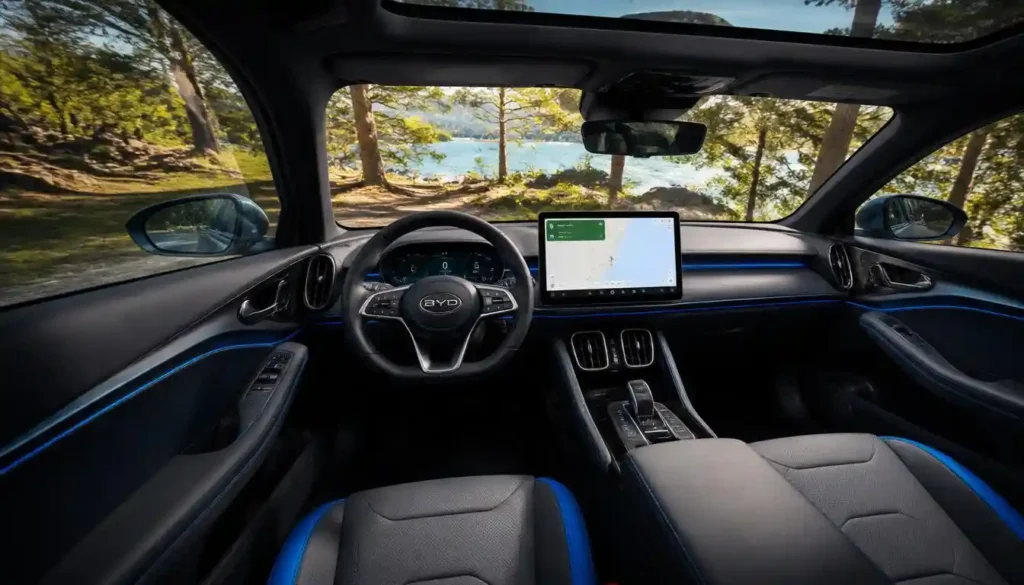
The BYD Atto 3 electric vehicle interior is one of its most talked-about features. The guitar-string door pockets work better than they sound. Elastic bungee straps across the door panels hold bottles, cables, and small items.
They flex with whatever you store in them. The 15.6-inch rotating touchscreen is quick and responsive. Google Maps sits built-in on the EVO.
Apple CarPlay and Android Auto both work, though some owners have reported Apple CarPlay dropping connection on longer trips. Android Auto works without issues.
The 490-litre boot handles pushchairs and weekly shops without issue. The new 101-litre frunk on the EVO is ideal for cables and smaller bags.
Rear legroom is good for a car this size. The panoramic sunroof is standard on the Excellence only, which feels like an unnecessary omission on the base Design trim.
V2L: Using the BYD Atto 3 EV as a Power Source
Vehicle-to-Load (V2L) comes standard on the BYD Atto 3 electric vehicle. This is one area where the BYD Atto 3 SUV has a practical advantage over many rivals at a similar price.
Plug a V2L adapter into the charging port and you can run household appliances from the battery at 2.2 kW continuous output, with a 3.3 kW peak.
A 74.8 kWh battery at 2.2 kW output lasts over 30 hours. At a realistic household draw of around 1.2 kW, that stretches past 60 hours. Keep 20% in reserve, and you still have 48 hours of backup power. That’s a practical feature the BYD Atto 3 electric vehicle carries that most rivals don’t.
Safety Features and ADAS on the BYD Atto 3 Electric SUV
The BYD Atto 3 electric vehicle scored 5 stars at Euro NCAP: 91% for adult occupants, 84% for child occupants, and 80% for safety assist. Seven airbags are standard.
Standard driver assistance covers AEB, Lane Keep Assist, Blind Spot Detection, Rear Cross Traffic Brake, Adaptive Cruise Control, a 360-degree camera, and TPMS.
One thing I’d tell any new owner: turn down the lane, keep sensitivity on your first drive. On roads with faded markings, the system triggers constantly, and it gets annoying fast. You can fix that in about 30 seconds through the infotainment menus, and after that the car drives without nagging you.
Should You Wait for the Next-Gen 2027 Model?
BYD revealed the next-generation Atto 3 at the Beijing Auto Show in April 2026. The new car is larger, uses a 68.54 kWh LMFP Blade Battery 2.0 with 630 km of CLTC range, and charges from 10% to 97% in around 9 minutes. It adds LiDAR for semi-automated driving and a 750-liter boot.
My take: buy the current BYD Atto 3 electric vehicle EVO if you need a car this year. The next generation is launching in China first, and global availability for the UK, Europe, and Australia is unclear.
Waiting 12-18 months for a car with no confirmed arrival date doesn’t make sense when the EVO is already a complete package.
BYD Atto 3 Electric Vehicle Five-Year Running Costs
Running the BYD Atto 3 EV costs a fraction of what a petrol SUV does. At UK off-peak rates of around 15p/kWh, a full 74.8 kWh charge costs about £11.20. A comparable petrol SUV costs around £67.50 to fill. That’s a saving of around £2,800 per year for a typical 12,000-mile driver.
Australian service costs run from AUD $165 to $635 per year. The Blade Battery warranty covers 8 years or 160,000 km above 70% state of health, and the vehicle warranty is 6 years or 150,000 km.
Frequently Asked Questions
Q: Is the BYD Atto 3 fully electric or does it have a petrol engine?
A: Fully electric, no petrol engine at all. The BYD Atto 3 electric vehicle runs on a Blade Battery with LFP chemistry and produces zero direct emissions. BYD sells plug-in hybrids under different nameplates, but neither the Atto 3 nor the Atto 3 EVO has anything to do with petrol.
Q: What is the BYD Atto 3 towing capacity?
A: The BYD Atto 3’s towing capacity is 750 kg braked on the standard variant. The EVO AWD Excellence raises that to 1,500 kg. These figures do vary by country and trim level, so check the approved spec for your market before you hitch anything up.
Q: Does the BYD Atto 3 EV work well as a first electric vehicle?
A: I’d say yes for most people. The BYD Atto 3 electric vehicle doesn’t throw anything complicated at you. Charge it at home overnight and range anxiety isn’t a real concern day to day. The 5-star safety rating and large touchscreen help too.
The one thing new EV owners mention is learning where to charge on longer drives, but that stops feeling like a big deal pretty quickly.
Q: What makes the Blade Battery different from a standard EV battery?
A: The Blade Battery uses long, flat LFP cells in a cell-to-body structure with no module layer. What you end up with is a battery that handles a crash better, stores more energy in less space, and runs cooler under load than a conventional pack.
It passed nail penetration tests that standard NMC cells failed. Charging to 100% every night is fine with LFP. The chemistry handles it without wearing down the cells the way NMC does. With the Blade Battery, you don’t have to worry about that.
Q: Is the BYD Atto 3 electric vehicle available in the United States?
A: No. The BYD Atto 3 electric vehicle is not sold in the US due to import tariffs and legislative restrictions on Chinese-manufactured EVs. It’s available in the UK, Europe, Australia, Asia-Pacific, Latin America, and parts of the Middle East, including Saudi Arabia.
Conclusion
The BYD Atto 3 electric vehicle is one of the more practical family EV choices in 2026. The 220 kW charging changes road trips, the Blade Battery handles daily full charges without worry, and V2L gives you backup power most rivals don’t.
If I were picking between the EVO Design and Excellence, I’d go for the Design every time. Book a test drive, ask for the EVO, and drive it on a motorway before you decide. Every honest BYD Atto 3 review says the same thing: the car makes more sense once you’ve actually driven it.
