
Affordable Electric SUVs
Volkswagen ID.4 Limited 2026: See Range, Specs, Value
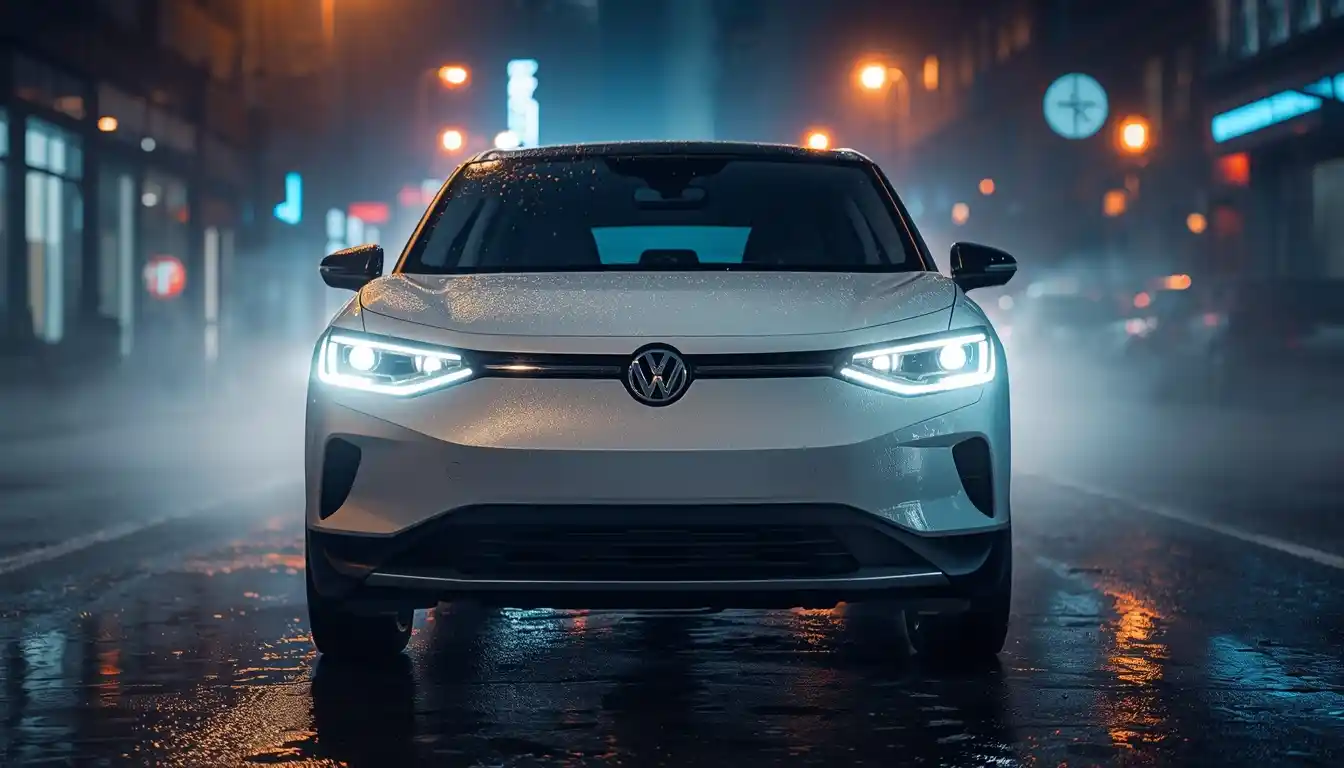
The 2026 Volkswagen ID.4 Limited starts at $39,995 as the most affordable trim in the lineup. It runs a 62kWh battery, a single rear motor with 201 horsepower, and an EPA-estimated 206 miles of range.

For daily commuters under 80 miles, those numbers work without any real compromise. The question is what you give up compared to the Pro and whether a competing EV at the same price does the job better. Here’s what to know before you decide.
What Is the VW ID.4 Limited and Why Does It Exist?
VW slots this as the entry-level trim in the 2026 ID.4 range. It was called the “ID.4 Standard” in 2025, then renamed. VW also pulled it from the main online configurator, so you won’t find it by building a car at vw.com.
It moves through select dealer lot inventory instead of the build-and-order channel. VW positions it as a price-floor option for buyers who want an electric SUV without spending mid-$40,000s. For 2026, two additions stand out on this trim.

Every trim now ships with a standard NACS charging port, opening access to Tesla’s Supercharger network via the separately sold VW-approved NACS DC adapter. VW also made the 2-in-1 mobile EV charging cable standard on all trims this year.
2026 Volkswagen ID.4 Limited Specs
A 62 kWh battery drives a rear-mounted single motor making 201 hp and 229 lb-ft of torque. The EPA range is 206 miles. Fuel economy comes in at 115 MPGe city and 98 MPGe highway. DC fast charging tops out at 100kW.
Curb weight is 4,317 lbs., and towing capacity is 2,200 lbs. Standard gear includes 19-inch alloy wheels, stone leatherette and cloth seating, a 12-inch infotainment display, driver-assistance suite.
That covers adaptive cruise control, automatic emergency braking with pedestrian detection, blind-spot monitoring, lane-keeping assist, and rear cross-traffic alert.
ID.4 Trim Comparison: Limited vs S Limited vs Pro
If you’re deciding between trims within the ID.4 family, this table shows the key differences at a glance.
| Feature | ID.4 Limited | ID.4 S Limited | ID.4 Pro |
| Starting Price | $39,995 | $46,520 | $45,095 |
| Battery | 62 kWh | 62 kWh | 77 kWh usable |
| EPA Range | 206 miles | 206 miles | 291 miles |
| Horsepower | 201 hp | 201 hp | 282 hp |
| DC Fast Charging | 100 kW | 100 kW | 175 kW |
| Infotainment Screen | 12 inch | 12 inch | 12.9 inch |
| Heated Front Seats | Yes | Yes | Yes |
| Ventilated Seats | No | Yes | No |
| Panoramic Roof | No | Yes | No |
| Wireless Charging | No | No | Yes |
| NACS Port (2026) | Yes | Yes | Yes |
| DRIVE Suite | Standard | Standard | Standard |
The Pro costs more than the S Limited but gives you a far better range and charging speed. The S Limited sits between them in price but keeps the smaller battery. Your daily driving distance should decide which trim makes sense.
ID.4 Limited vs ID.4 Pro: Where the Money Goes
Step up to the Pro, and five things change. Battery capacity goes from 62 kWh to 77 kWh usable. Range climbs from 206 miles to 291 miles. Horsepower goes from 201 hp to 282 hp.
DC fast charging speed rises from 100 kW to 175 kW, which cuts a 10-80% charge from roughly 50 minutes to 28-30 minutes. And the starting price difference runs $5,000 to $6,500, depending on configuration.

The Pro adds a 12.9-inch Discover Pro Max touchscreen, wireless device charging, 10-color ambient lighting, dual-zone climate control, and an auto-dimming rearview mirror.
Home overnight charging plus a daily distance under 120 miles, and you won’t feel the difference. If road trips or public fast charging are regular parts of your routine, the 100 kW charging ceiling on the Limited adds real wait time at every stop over the year of ownership.
ID.4 Limited vs ID.4 S Limited: Same Motor, Better Cabin
The Volkswagen ID.4 pro limited and S Limited share the same 62 kWh battery and 201 hp powertrain. Range and charging speed are identical between them.
The S Limited, which starts around $46,520, adds a panoramic fixed glass roof, power-adjustable front seats with memory, ventilated seats, a heated steering wheel, 30-color ambient lighting, illuminated logos, V-Tex leatherette surfaces, and a hands-free power liftgate.
Buyers who want a more upscale feel without jumping to the larger Pro battery should look at the S Limited. Buyers focused on the lowest entry price should stay with the base Limited.
Is 206 Miles Enough Range for Real Life?
For most American drivers, yes. U.S. Department of Transportation data shows the average driver covers about 37 miles per day.
At that pace, its 206-mile range covers five to six days without a charge. Plug in at home overnight on a 240V Level 2 charger, and you start every morning with a full pack.

Road trips are where things get tighter. At 75mph, real-world highway range drops to around 175-190 miles in mild weather. In cold weather below freezing, that falls further to 140-155 miles per charge.
Building stops around 130-mile intervals in winter keeps this trim moving without stress. Road trips are doable, but expect more stops than a pro owner would make.
Charging the 2026 ID.4 Limited: Times and Options
On a 240V Level 2 home charger, charging from empty takes about 6 hours. Starting from a typical 30-40% depleted state after a day’s driving, overnight charging takes under 4 hours.
At public DC fast chargers, the 100kW cap adds roughly 70-75 miles of range per 20 minutes. The Pro at 175kW adds closer to 120 miles in the same window.
The 2026 NACS port opens Tesla Superchargers to this trim for the first time. You need to set up a Tesla app account once, and then it works at any compatible Supercharger location.
The 2-year Electrify America Pass+ membership included with every new 2026 ID. 4 covers DC fast charging at Electrify America stations, with Plug & Charge handling the connection automatically.
Interior Quality: The Honest Version
Some lower-panel plastics feel thin. That’s a fair expectation at $39,995, and buyers should know it going in. Front seats hold up on long drives, and the cabin stays quiet at highway speeds. Wind and road noise are better managed than most buyers expect at this price.

The 12-inch touchscreen handles nearly every car function. There are no physical knobs for volume or climate. New owners find this frustrating for a week or two, then stop noticing.
The 5.3-inch digital gauge cluster directly in front of the driver shows speed, charge level, range, and navigation prompts without requiring a look at the center screen.
Safety Ratings and Driver Assistance
NHTSA gave the ID.4 five stars for safety. IIHS awarded it a Top Safety Pick designation in its most recent testing. IQ. DRIVE comes standard at no extra charge. Travel Assist pairs adaptive cruise control with active lane-centering on the highway.
It won’t steer without driver input, but it cuts fatigue on long highway runs. Front and rear parking sensors and automatic high-beams are also standard.
Depreciation and Long-Term Ownership Costs
KBB puts the 5-year cost-to-own for the S Limited at $71,211, with depreciation accounting for roughly $34,600 of that figure.
Entry trims depreciate faster than mid-range variants across most vehicle categories, and the ID.4 limited follows that same pattern. The residual value after five years lands around $12,000-$14,000.
The IRA Clean Vehicle Credit of up to $7,500 applies here because the ID.4 is assembled in Chattanooga, Tennessee. Income caps and vehicle price thresholds apply. Check current requirements at IRS.gov before purchasing.
That credit, if you qualify, closes a real share of the gap between entry and mid-range trims.
Who Should Buy the ID.4 Limited
This VW ID.4 limited trim makes sense for drivers covering under 80 miles daily who have Level 2 home charging access, want a quiet and comfortable compact SUV, and don’t want to spend $46,000 or more on the Pro trim.
It delivers on ride comfort, cabin noise, and daily EV usability without asking you to pay for a range you won’t use.
Skip the Limited if you drive over 150 miles regularly without access to a charger, take frequent road trips where charging stop time matters, or rely mainly on public DC fast charging.
That $5,000-$6,500 price gap shrinks fast when you count extra minutes at 100kW chargers over years of ownership.
ID.4 common problems: Before buying, it helps to know the most reported ID.4 common problems owners have flagged.
ID.4 Limited vs Competitors: Same Price Range
Three EVs compete directly with the Volkswagen ID.4 Limited in the $36,000-$41,000 bracket. The Chevrolet Equinox EV starts at $36,795 and delivers 319 miles of EPA range from its base trim, which is 113 more miles than this entry trim for $3,200 less.
The Ford Mustang Mach-E starts at $39,840 with 240-280 miles of range and sharper steering feedback. The Hyundai Ioniq 5 starts at $36,600 and uses 800V charging architecture that outpaces the ID.4 lineup at every trim level for fast charging speed.

The Limited counters with a quieter highway cabin, a smoother ride than the Equinox EV, US assembly for federal tax credit access, and a more polished interior feel than the Mach-E at the same price.
Range-per-dollar favors the Equinox EV by a wide margin. Ride comfort and cabin refinement favor the Limited. Which matters more depends on how you drive.
ID.4 Limited vs Competitors: Quick Comparison
Here’s the 2026 Volkswagen ID. 4 Limited stacks up against its closest rivals in the same price range.
| Vehicle | Starting Price | EPA Range | Horsepower | DC Fast Charge | Assembly |
| Volkswagen ID.4 Limited | $39,995 | 206 miles | 201 hp | 100 kW | USA (TN) |
| Chevrolet Equinox EV | $36,795 | 319 miles | 213 hp | 150 kW | USA (MX) |
| Ford Mustang Mach-E | $39,840 | 240-280 miles | 266 hp | 150 kW | Mexico |
| Hyundai Ioniq 5 | $36,600 | 245-318 miles | 225 hp | 350 kW (800V) | USA (GA) |
The ID.4 Limited trails in range and charging speed at this price point. Where it wins is ride refinement, cabin noise at highway speeds, and a more polished interior feel than the Mach-E or Equinox EV at the same price.
Best electric SUVs under $40,000: The ID.4 Limited isn’t the only strong option see how it compares against the best electric SUVs under $40,000 on the market today.
Frequently Asked Questions About the VW ID.4 Limited
Q: What is the range of the 2026 Volkswagen ID.4 Limited?
A: EPA testing puts the 2026 VW ID.4 Limited at 206 miles on a full charge. At 75 mph highway speeds, real-world range falls between 175 and 190 miles in mild weather. Cold temperatures below freezing can bring that down to 140-155 miles per charge.
Q: What is the difference between the ID.4 Limited and ID.4 Pro?
A: The Limited uses a 62 kWh battery with 201 hp and 206 miles of range. The Pro uses a 77 kWh usable battery with 282 hp and 291 miles of range. The Pro charges at 175 kW DC versus the Limited’s 100 kW and adds a 12.9-inch screen, wireless charging, dual-zone climate, and ambient lighting. The price gap is $5,000-$6,500.
Q: What is the difference between the ID.4 Limited and ID.4 S Limited?
A: The battery, motor, range, and charging speed don’t change between these two trims. The S Limited adds a panoramic roof, power front seats with memory, ventilated seats, a heated steering wheel, illuminated logos, and V-Tex leatherette seating. The S Limited starts around $46,520 versus $39,995 for the base limited.
Q: Does the 2026 VW ID.4 Limited have NACS charging?
A: Yes. VW built the NACS port into every 2026 ID.4, so the Limited can plug into Tesla Superchargers with the separately sold adapter.
Q: Is the ID.4 Limited eligible for the federal EV tax credit?
A: VW builds the ID.4 in Chattanooga, Tennessee, which puts it in the running for the IRA Clean Vehicle Credit of up to $7,500.
Q: Why is the ID.4 Limited not on VW’s website configurator?
A: VW pulled the Limited from its online configurator. You won’t find it by building a car on vw.com. Dealer lot inventory is the only way to get one.
Q: How long does it take to charge the 2026 VW ID.4 Limited?
A: A 240V Level 2 home charger fills the battery from empty in about 6 hours. At a public 100kW DC fast charger, getting from 10% to 80% takes around 45 to 50 minutes.
Conclusion
The 2026 Volkswagen ID.4 Limited does one thing well: it puts a comfortable, quiet, well-built electric SUV in your driveway for $39,995.
You don’t get the longest range on the block, and 100kW charging won’t win any speed contests against the Ioniq 5 or Equinox EV. But if your daily drive stays under 80 miles and you charge at home overnight, those gaps never show up in real life.
Where buyers get tripped up is buying the Limited, expecting Pro-level capability. It isn’t that car. It’s the entry point, priced and specced accordingly.
Know that going in, and the limitation makes a lot of sense. Push past its limits regularly, and you’ll wish you spent the extra $5,000 on the Pro.
