
Electric SUVs
Audi S e-tron GT: Real Range, Price, and Full Specs

The Audi S e-tron GT is a four-door Audi electric sedan and electric grand tourer starting at $127,700. As a luxury EV sedan at this price, it delivers 670 horsepower, covers 0-60 mph in 3.3 seconds, 300 miles of EPA rated range, and 10-80% in about 18 minutes at 320 kW.
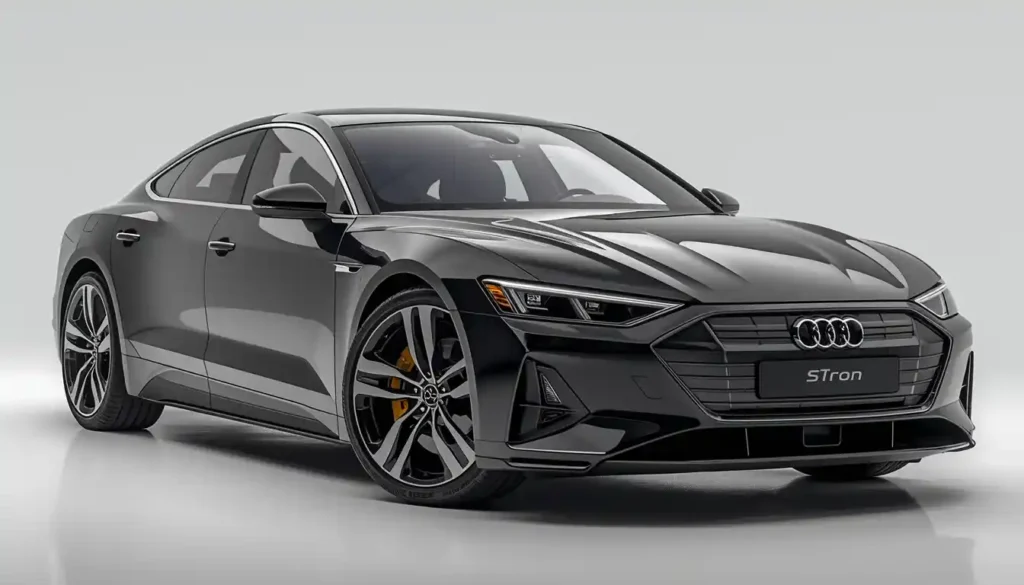
That is the direct answer most people come here for. This review of the Audi e-tron GT goes further: real world range figures; cold weather numbers no one publishes; an honest look at the RS e-tron GT price gap; a plain English Audi S e-tron GT vs. Taycan comparison; and a clear answer on who should skip this car entirely.
What Is the Audi S e-tron GT?
The Audi S e-tron GT is a four-door electric saloon, or electric sport sedan in US terms, built on the J1 platform shared by Audi and Porsche for the Taycan. Around 40 percent of the parts between these two cars are identical, but they drive very differently.
The Porsche is set up as a sports car: sharp, stiff, and focused. This Audi e-tron GT is set up as a GT, meaning grand touring comfort, long-distance pace, and silence at speed come first. Think of them as siblings with completely different priorities.
Audi updated the entire e-tron GT family, replacing the older quattro base model with the more powerful S. The base car before was the Audi e-tron GT quattro. The base car before was the Audi e-tron GT quattro, which used a smaller battery and slower charging than the current S model.
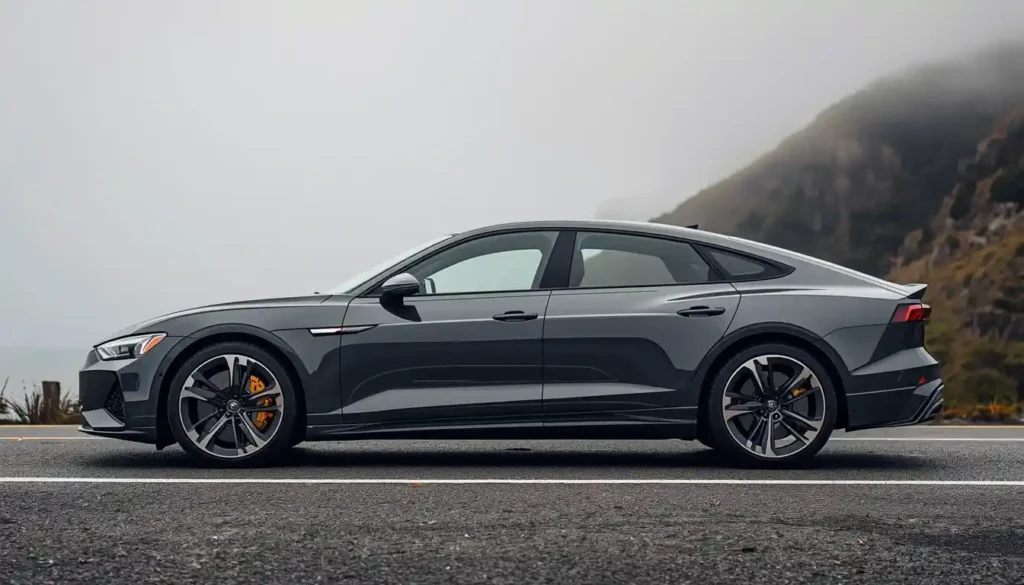
If you are looking at an Audi e-tron GT used, the 2026 model offers 97 kWh battery capacity and 320 kW charging, a clear step up from earlier versions. The Audi Quattro e-tron all-wheel-drive system carries across every model year.
Audi S e-tron GT Specs: Horsepower, Battery, and Top Speed
The Audi S e-tron GT runs a dual-motor EV setup with one permanent-magnet synchronous motor at each axle. The Audi quattro all-wheel drive system manages traction across all four wheels.
The Audi e-tron GT’s horsepower is 670 hp with launch control active. The full Audi e-tron GT specs place it among the fastest electric sedans at this price. The Audi e-tron GT’s top speed is 152 mph, electronically governed.
The 105 kWh gross battery (97 kWh usable) powers both motors through an 800-volt EV architecture. Curb weight is 5,126 lb.
What makes this Audi electric car unusual among electric performance cars is the two-speed gearbox on the rear axle. Most EVs use one fixed ratio. This car drops into first gear for maximum off-the-line torque, then shifts into second at around 65 mph for highway efficiency.

You can feel that shift as a light mechanical nudge. It means the car does not run out of power at higher speeds the way single-speed EVs sometimes do. The Audi e-tron GT’s 0-60 time of 3.3 seconds with launch control is Audi’s official claim.
Autocar independently tested it and recorded 3.1 seconds. For the Audi RS e-tron GT 0-60, the figure drops to 2.4 seconds in the more powerful RS variant.
E-Torque Vectoring, Air Suspension, and All-Wheel Steering
The S e-tron GT uses e-torque vectoring plus on the rear axle, applying individual braking force to each rear wheel during cornering. This helps the car rotate more precisely into bends than its 5,126 lb weight suggests possible.
The adaptive air suspension keeps the car flat and comfortable in normal use, then hardens noticeably in dynamic mode.
All-wheel steering, now standard on the 2026 S model, reduces the turning circle and makes low-speed maneuvering much easier. Together, these systems explain why the car handles as well as it does at this size and weight.
Audi S e-tron GT Range: Real Numbers vs EPA Ratings
The Audi e-tron GT range for the 2026 S model is 300 miles EPA on 20-inch wheels and 294 miles on 21-inch wheels. You can verify official EPA figures.
These are US figures. UK WLTP testing returns 374 miles, which uses a different test cycle in less aggressive conditions. Do not compare the two numbers directly.
For real-world Audi S e-tron GT range in everyday driving, Autocar recorded 2.8 miles per kWh on a mixed route, working out to 270-280 miles per charge.

Car and Driver’s highway range test of the RS performance returned 280 miles against a 278-mile EPA estimate, making it one of the few EVs that actually beat its own EPA number in testing.
After eight years of ownership, Edmunds estimates the electric sedan range will fall to around 255 miles based on a 1-2% annual degradation rate.
GeoTab’s battery longevity data shows the vast majority of premium EV batteries outlast the useful life of the car, so long-term range loss is manageable rather than catastrophic.
Cold Weather Range: The Number Nobody Publishes
Every electric car loses range in cold weather. The Audi e-tron GT comes with a heat pump as standard, which warms the cabin far more efficiently than resistive heating. Even so, the battery needs thermal conditioning in the cold, and that pulls energy.
Owners in cold climates report a winter range of 180 to 220 miles per charge, depending on temperature and driving speed. For city commutes, that’s workable. For a winter road trip, plan charging stops every 150 miles rather than 250.
The 320 kW DC fast charging speed means a 15-minute stop adds around 130 miles back, so the cold-weather penalty is manageable if you plan around it.
Audi S e-tron GT Charging: DC Fast, Level 2, and Level 1
The Audi S e-tron GT has two charging ports, one on each front wing. That dual-port setup is one of the practical details most reviewers skip. It means you can pull into a public charger from either direction without the cable being too short.
For the Audi e-tron GT charging at home on a standard 120V outlet, expect 4-5 miles of range added per hour, which is fine for short daily commutes topped up overnight. A Level 2 home wallbox at 240V takes roughly 15.5 hours for a full charge from empty.
At a public 320 kW DC fast charger, the Audi S e-tron GT battery goes from 10% to 80% in about 18 minutes, covering around 174 miles in that window. The 800-volt EV architecture is what makes that speed possible.
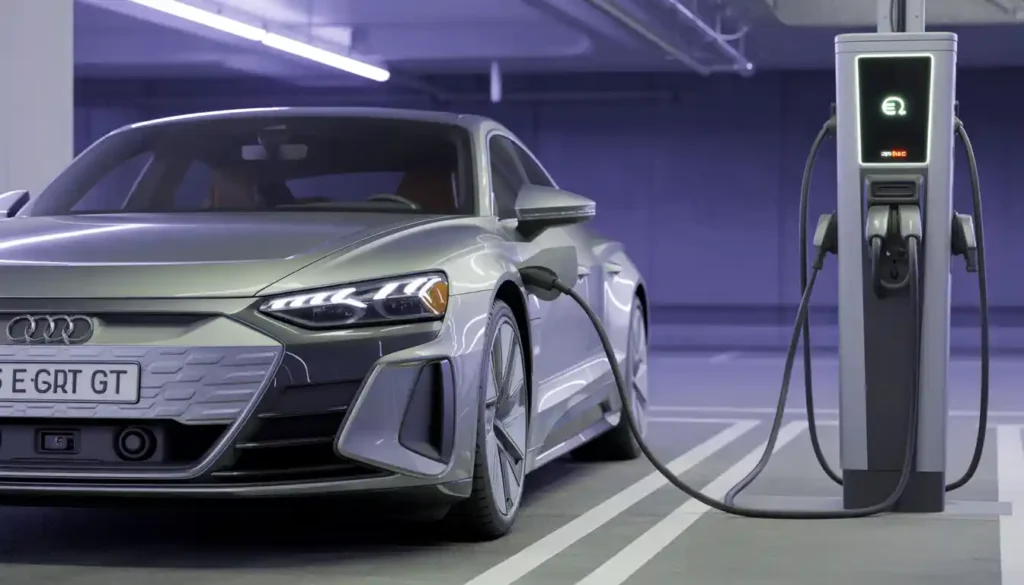
Most 400-volt EVs cannot draw anything close to 320 kW. The current battery also holds near-peak charging speed for longer than older e-tron GT models did, which matters when you stop twice in a day on a long trip.
Installing a Level 2 home wallbox typically costs $500 to $1,600, depending on your electrical panel.
Audi S e-tron GT MPG and Efficiency Rating
The Audi S e-tron GT’s mpg equivalent, officially called MPGe, is 91 MPGe city and 88 MPGe highway on 20-inch wheels. MPGe measures how many miles an EV travels on the same energy as one gallon of petrol.
A score of 91 means the car covers 91 miles on that energy equivalent. For context, the Lucid Air scores over 130 MPGe. The Tesla Model S gets about 100 miles per gallon equivalent.

The 91/88 figure for the Audi electric car is solid for a 670-hp dual-motor EV at this weight, but it’s not a range or efficiency leader. The Audi e-tron GT mpg figure matters most when calculating monthly charging costs: Edmunds puts that at around $84 per month versus $252 for the average petrol car.
Audi S e-tron GT Design: GT Coupe Body on a Four-Door Saloon
The Audi S e-tron GT body style is technically a four-door saloon with a conventional boot. But the fastback roofline, wide rear haunches, and raked tail give it the proportions of a two-door Audi GT coupe.
Audi calls this a Gran Turismo body style, which is where the GT in e-tron GT literally stands for that. It is an e-tron sedan with coupe proportions. Many buyers searching for an Audi GT coupe or the Audi e-tron GT saloon end up here.
The e-tron GT, Audi’s electric sedan, wears that silhouette better than most dedicated coupes. Dimensions are 196.7 inches long, 77.3 inches wide, and 54.9 inches tall.
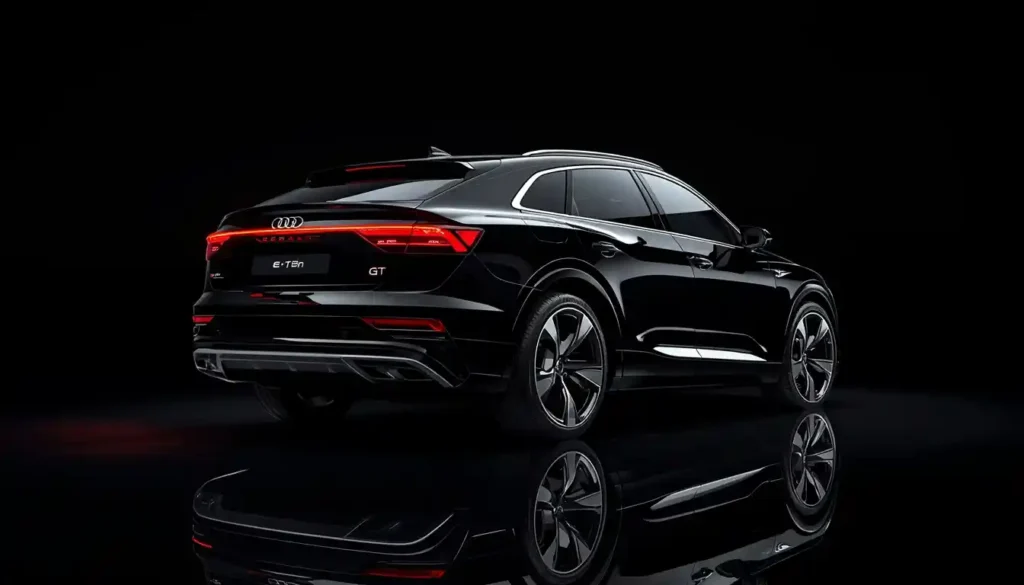
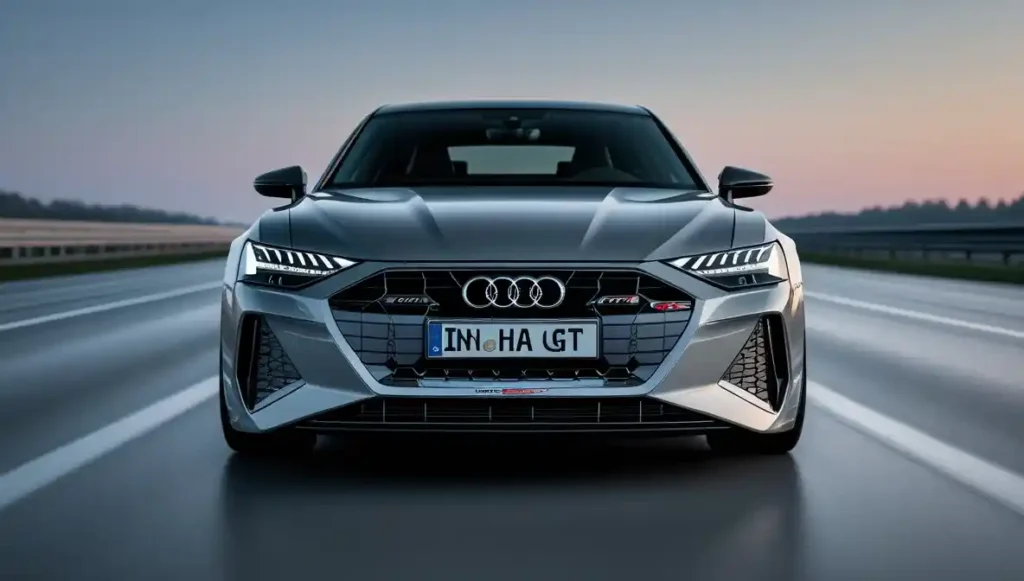
The front uses a wide hexagonal grille surround with large air intakes and angular LED headlights. S models get triangular silver inserts in the front air dam, a visual cue borrowed from Audi’s petrol-powered S models.
The e-tron GT RS variants carry more aggressive L-shaped inserts instead. A pop-up rear spoiler deploys automatically above a set speed. The Audi S e-tron GT weighs 5,126 lb and does not look or feel like a family sedan, despite having four doors and seating for five.
Audi S e-tron GT Interior and Cabin Quality
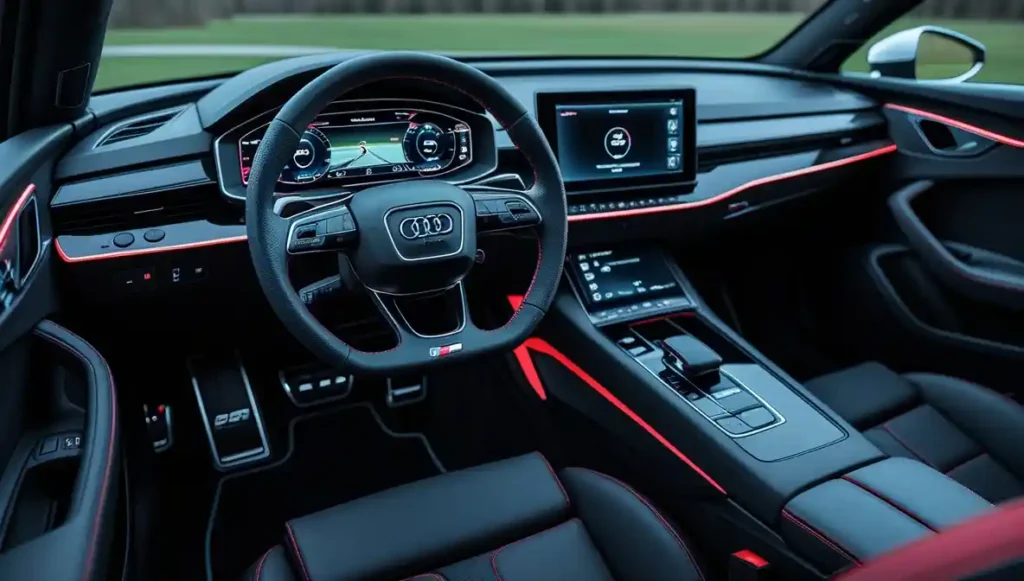
The driver sits low inside the audi e tron gt interior, close to the floor, which pushes the seating position toward sports car rather than executive saloon. A 12.3-inch digital instrument cluster dominates the driver’s view, paired with a 10.1-inch central touchscreen for media and navigation.
Unlike many rivals that have gone fully touchscreen, the S e-tron GT keeps physical buttons for climate and drive mode adjustments. That matters on the move: changing temperature or switching drive modes takes one press rather than three menu taps.
The Audi e-tron GT interior’s standard equipment includes the Bang Olufsen audio system with 16 speakers, a premium audio setup that comes on both the Premium Plus and Prestige trims at no extra cost.
Wireless Apple CarPlay, Android Auto, and smartphone charging are all standard. The Prestige adds a heads-up display projecting navigation and speed data onto the windscreen, plus the optional smart panoramic roof.
The rear seat is the main compromise. The sloping roofline reduces headroom for anyone taller than 5’10”. There is enough space for grown-ups to sit comfortably in the seats at the very back on the sides.
The middle rear position is tight. Boot space is 9.2 cubic feet behind the rear seats, with another 2 cubic feet in the front trunk. Edmunds fit 14 carry-on bags with the rear seats folded. For two adults on a trip with normal luggage, it works. For a family of four with gear, it’s too small.
Smart Panoramic Roof with Variable Transparency
The optional smart roof uses polymer-dispersed liquid crystal technology, switching from clear to frosted at a button press with four opacity levels.
On hot days it blocks glare without cutting the open feel of a full glass roof. It comes standard on the Prestige trim and costs extra on the Premium Plus.
2026 Audi S e-tron GT Price and Trims
| Feature | Premium Plus | Prestige |
| Starting Price | $127,700 | $137,000 |
| Horsepower | 670 hp | 670 hp |
| EPA Range | 300 miles | 300 miles |
| Battery | 97 kWh | 97 kWh |
| All-Wheel Steering | Standard | Standard |
| Bang and Olufsen Audio | Standard | Standard |
| Smart Panoramic Roof | Optional | Standard |
| HD Matrix LED + Laser Light | Not included | Standard |
| Head-Up Display | Not included | Standard |
| Black Optic Package | Standard | Standard |
The Audi 2026 e-tron GT price starts at $127,700 for the Premium Plus trim. The Prestige starts at $137,000. Both trims run the same 670-hp dual-motor EV powertrain, the same 97 kWh Audi e-tron GT battery, and the same 300-mile EPA range.
For 2026, all-wheel steering, sport direct steering, and the Black Optic exterior package are now standard on both trims, which makes the Premium Plus a better value than it was last year.
The Prestige adds HD Matrix LED headlights with Audi laser light, the smart panoramic roof, a head-up display, and animated lighting sequences.
Edmunds tracked real Audi e-tron GT price data and found buyers paying around $124,788 on average for the Premium Plus, roughly $3,000 under MSRP.
If you want the full luxury package in one spec, choose the Prestige. If you want the same driving experience for $9,300 less, the Premium Plus is the better buy.
Audi S e-tron GT vs RS e-tron GT: Which One to Pick
| Spec | Audi S e-tron GT | RS e-tron GT Performance | Porsche Taycan 4S |
| Starting Price | $127,700 | $170,500 | ~$125,000 |
| Horsepower | 670 hp (launch control) | 912 hp (launch control) | 590 hp (launch control) |
| 0-60 mph | 3.3 seconds | 2.4 seconds | 3.8 seconds |
| EPA Range | 300 miles | 278 miles | ~280 miles |
| DC Charging Speed | 320 kW | 320 kW | 270 kW |
| Battery (usable) | 97 kWh | 97 kWh | 97 kWh |
| Top Speed | 152 mph | 153 mph | 155 mph |
| Drive | AWD (quattro) | AWD (quattro) | AWD |
The RS e-tron GT costs at least $170,500. The Audi RS e-tron GT price is $43,000 above the base S. For that, you get 912 hp instead of 670, a 0-60 time of 2.4 seconds instead of 3.3.
RS-specific front and rear bumpers, carbon fiber exterior options, 21-inch forged wheels as standard, carbon-ceramic brakes standard, and two RS-specific drive modes, including a push-to-pass boost.
The Audi RS e-tron’s 0-60 of 2.4 seconds puts the RS among the quickest production cars sold anywhere in the world. Car and Driver tested it at 2.1 seconds, so the car beats its own claimed time.
For most daily use, the Audi S e-tron GT is the pick. A 3.3-second 0-60 already puts the S in supercar territory. The extra 242 horsepower in the RS is something you only feel on a track.
Both Car and Driver and Edmunds recommend the S model for everyday buyers. The RS e-tron GT vs. the standard S comes down to whether the RS badge is worth an extra $43,000 to you. For most people, it is not.
The Audi e-tron RS, Audi GT e-tron RS, Audi e-tron RS GT, e-tron RS GT, Audi RS GT e-tron, and RS GT e-tron all refer to Audi’s most powerful car. Buy the Audi e-tron GT RS if the performance statement specifically matters to you.
Audi S e-tron GT vs Porsche Taycan and Other Rivals
The Audi e-tron GT vs. Taycan comparison is the one most buyers ask about first. The Porsche Taycan starts at $108,050, but that’s the single-motor rear-wheel-drive entry model.
The Taycan 4S, the direct comparison to the Audi S e-tron GT, starts around $125,000. For about the same cost, the Taycan is easier to control and gives better steering feel. How does the RS e-tron GT compare?
Taycan Turbo comparison is even closer, but the Audi still costs less and ships with more standard kit. For long motorway driving, the Audi wins on comfort. For country road driving or track days, the Taycan is more involving. Resale values also favor the Porsche.
The Tesla Model S starts around $95,000, offers more range, and has access to the largest public charging network in the US. The cabin quality does not match the Audi. The Lucid Air starts at $72,400 and claims up to 480 miles of EPA range, the highest figure among luxury sedan EVs by a large margin.
Software reliability and resale values have been ongoing concerns with Lucid. Among luxury electric sedans and full-size luxury sedan EVs in this bracket, the BMW i5 M60 and Mercedes AMG EQE are credible options at lower price points, but neither keeps up for straight line pace.
For buyers coming from a petrol Audi RS6 or Audi GT RS model, the e-tron GT is the most natural electric upgrade in the Audi RS performance and Audi e-tron sedan lineup. The RS performance Audi range now starts at the S e-tron GT.
Audi S e-tron GT Reliability and Warranty
The Audi S e-tron GT warranty, also called the Audi e-tron GT warranty, covers 4 years or 50,000 miles for the basic warranty and 8 years or 100,000 miles for the battery.
Audi added three years of complimentary scheduled maintenance across the 2026 lineup under the Signature Care program. As of April 2026, there have been no recalls reported for the 2026 Audi e-tron GT.
The used market also offers a useful look at how well the car holds its value. Earlier pre-facelift models tend to sell for lower prices, suggesting they do not retain value as well as the Porsche Taycan.
If you are browsing for a used e-tron GT, listings are fairly common. CARFAX alone shows hundreds available at any given time. For buyers considering a new 2026 model, it is reasonable to start negotiations around $2,000 to $4,000 below MSRP, based on recent sales data.
Monthly energy costs for the Audi e-tron GT run around $84, according to Edmunds, compared to $252 for the average US petrol car. That saves roughly $2,000 per year.
GeoTab’s battery data shows the vast majority of premium EV batteries outlast the useful life of the car. The Audi e-tron GT 2026 comes with no reported recalls and a clean early reliability record.
Who Should Buy the Audi S e-tron GT in 2026
The Audi S e-tron GT works best for buyers who cover long motorway distances regularly, want serious performance that doesn’t announce itself, can charge at home overnight, and are stepping up from a petrol Audi GT or RS model.
If you are considering whether to buy an Audi e-tron GT versus staying with petrol, the energy cost savings and the driving experience both make a strong case.
The Audi S e-tron GT is one of the best grand tourer EVs on sale right now as a luxury electric car, and this Audi e-tron GT review reflects that in every section above.
Skip this car if you are not the right buyer. It is wrong for you if you regularly carry four tall adults, and every inch of headroom matters. Ignore it if you need a big boot to carry family things, bikes, or camping gear.
Skip it if the Tesla Supercharger network is what you rely on for public charging, since the Audi uses third-party DC chargers. Skip it if resale value is a priority, since the Taycan holds value better.
And skip it if your real budget after options is tight above $140,000, because the options list adds up fast.
Frequently Asked Questions: Audi S e-tron GT
Q: What is the Audi S e-tron GT range on a full charge?
A: The 2026 Audi S e-tron GT range is 300 miles EPA on 20-inch wheels. Real-world mixed driving returns 270 to 285 miles. In cold weather, expect 180 to 220 miles per charge, depending on temperature.
Q: What is the Audi S e-tron GT 0-60 time?
A: The Audi e-tron GT 0-60 time is 3.3 seconds with launch control active. Autocar independently recorded 3.1 seconds. The RS e-tron GT performance hits 0-60 in 2.4 seconds, and Car and Driver tested it at 2.1 seconds.
Q: What is the Audi S e-tron GT price for 2026?
A: The 2026 Audi S e-tron GT price starts at $127,700 for the Premium Plus. The Prestige trim is $137,000. The RS e-tron GT costs at least $170,500. Real buyer transaction prices average around $124,788 for the base trim based on Edmunds data.
Q: How long does Audi S e-tron GT charging take?
A: At a 320 kW DC fast charger, the Audi S e-tron GT charges from 10% to 80% in about 18 minutes, adding roughly 174 miles.
Charging at home with a 240V Level 2 wallbox takes roughly 15.5 hours to fully charge the battery. If you plug into a standard 120V outlet, you can expect to gain about 4 to 5 miles of range per hour.
Q: What is the Audi S e-tron GT top speed?
A: The Audi S e-tron GT has a top speed of 152 mph, limited electronically. The RS e-tron GT Performance is only slightly quicker, with a top speed capped at 153 mph.
Q: Audi S e-tron GT vs Taycan: which is better?
A: The Audi S e-tron GT is the more relaxed car on a long motorway run. You get more standard equipment at the same price, and the cabin is quieter at speed.
The Taycan steers with more feel and tends to hold its value better when you go to sell it. Pick based on how you actually drive, not the spec sheet.
Q: What is the difference between S e-tron GT and RS e-tron GT?
A: The S e-tron GT makes 670 hp, hits 60 mph in 3.3 seconds, and starts at $127,700. The RS e-tron GT performance makes 912 hp, hits 60 mph in 2.4 seconds, and starts at $170,500.
Both use the same 97 kWh battery and charge at 320 kW. The RS adds carbon fiber options, 21-inch forged wheels, carbon-ceramic brakes as standard, and RS-specific drive modes. For everyday use, the S is the better buy.
