
Electric SUVs
BMW iX3 Review 2026: Price, Range, and Is It Worth It?
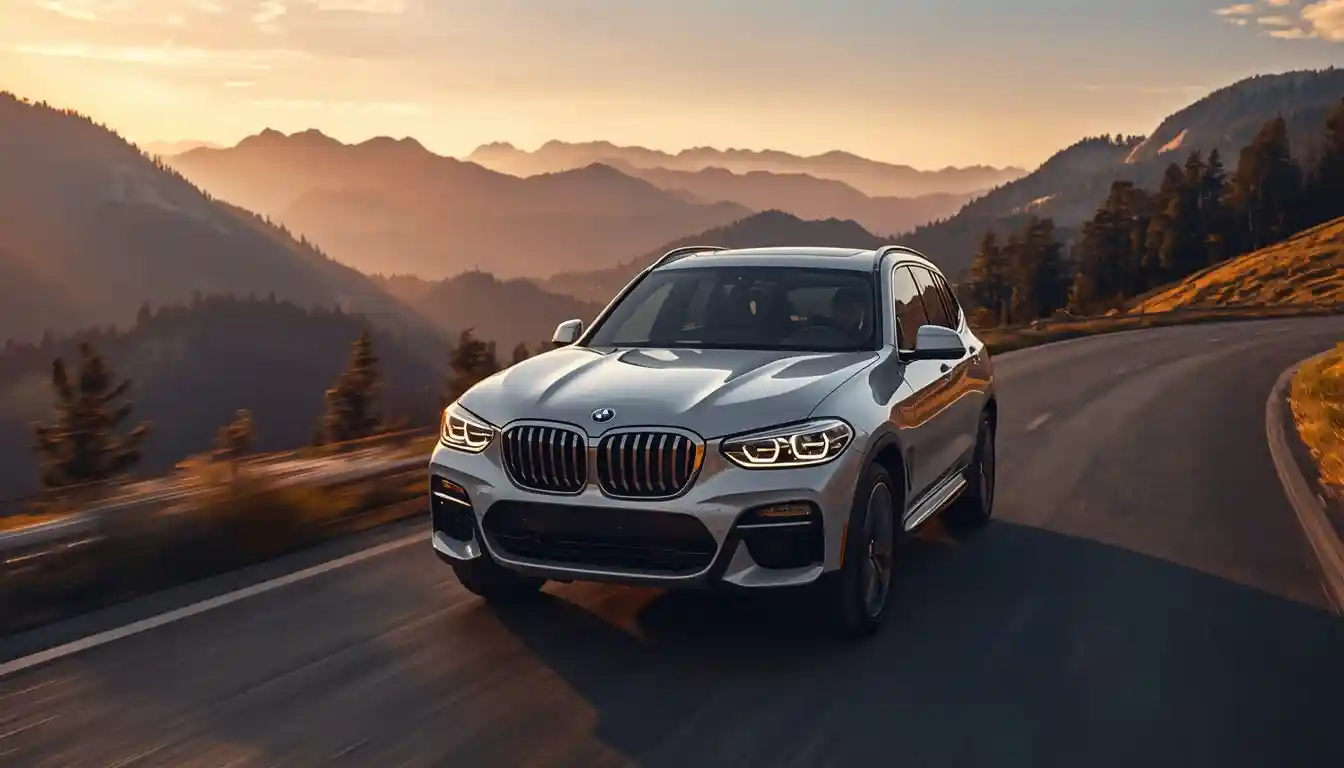
Sixty thousand dollars is a lot to ask for any SUV. BMW asking it for the iX3 made sense the moment the specs came out: 400 miles of real EPA range, a 21-minute charge from 10 to 80 percent, and a dedicated electric platform built from nothing.
This isn’t a combustion X3 with a battery wedged in. It’s a completely different car, and after going through every test result and first-drive report available, the iX3 earns that price in ways most electric SUVs in this segment don’t.
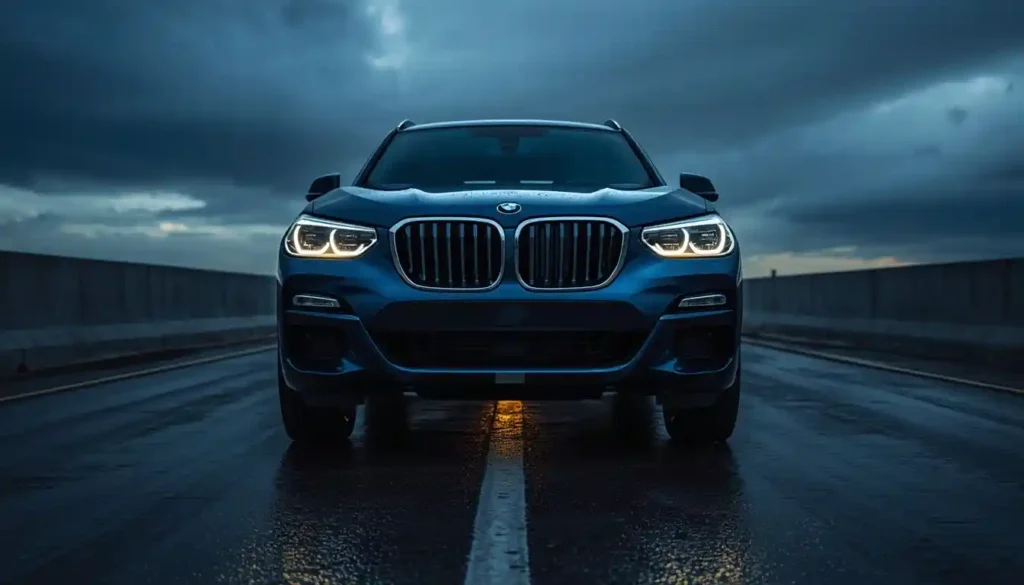
The old iX3 was a combustion X3 with a battery stuffed underneath. BMW never tried to hide that. The 2027 BMW iX3 is a different machine entirely. It runs on a dedicated electric platform called Neue Klasse, built from scratch for battery power.
New cylindrical cells, new motors, four new computers, a new operating system. BMW says it’s the biggest step they’ve taken since the 1960s. After going through what this car can do, I think that claim is fair.
What Is the New BMW iX3 Electric SUV?
The BMW iX3, model code NA5, is a fully electric compact luxury SUV. It’s the first car off BMW’s Neue Klasse architecture. Between now and 2027, BMW plans around 40 models on this same platform. The BMW iX is being discontinued, and the iX3 takes its place as the brand’s main electric SUV in the compact class.
What separates this car from the iX and i4 before it is the computing setup. Four dedicated computers run the car. BMW calls them superbrains. One handles nothing but driving behavior. BMW calls it the Heart of Joy, and honestly, the name fits.
It processes inputs in 1 millisecond. A standard car takes 10 to 50 milliseconds for the same job. You feel that gap the moment you steer into a corner. The car moves with your hands before you finish the input.
BMW iX3 Price 2026: Every Trim and What You Pay
At launch, the iX3 50 xDrive runs you about $60,000 in the US. That’s the launch trim and the only one available at first. Reservations opened May 6, 2026. First deliveries land in late September or early October 2026. Cars are assembled at BMW’s Debrecen plant in Hungary.
In early 2027, the iX3 40 joins the US lineup. That’s the single rear-motor version with an 82.6 kWh battery, priced below the 50 xDrive. An M Performance version is confirmed for later with a quad-motor setup expected, but no price or date is set yet.
In the UK, the iX3 40 starts at £53,250, the iX3 50 xDrive at £58,755, and the M Sport Pro at £62,755.
At the $60,000 mark, you get 463 horsepower, a 108.7 kWh battery, and 400 kW DC charging. The Audi Q6 e-tron starts at $65,095 and tops out at 321 miles of range. That comparison shows exactly where the BMW iX3 price lands in this market.
BMW iX3 Specs: Full Numbers for the 50 xDrive
Battery: 108.7 kWh liquid-cooled lithium-ion, 800V system.- Front motor: 165 hp induction AC.
- Rear motor: 322 hp synchronous AC.
- Combined output: 463 hp and 476 lb-ft of torque.
- 0-60 mph: 4.7 seconds BMW claims 4.2 seconds. Car and Driver’s estimate.
- Top speed: 130 mph.
- Peak DC charging: 400 kW.
- Standard AC charging: 15.4 kW, optional 22 kW.
- 10-80 percent charge time: 21 minutes.
- EPA range estimate: up to 400 miles.
- WLTP range: up to 500 miles.
- Towing capacity: 4,400 lbs.
- Curb weight: 5,050 lbs.
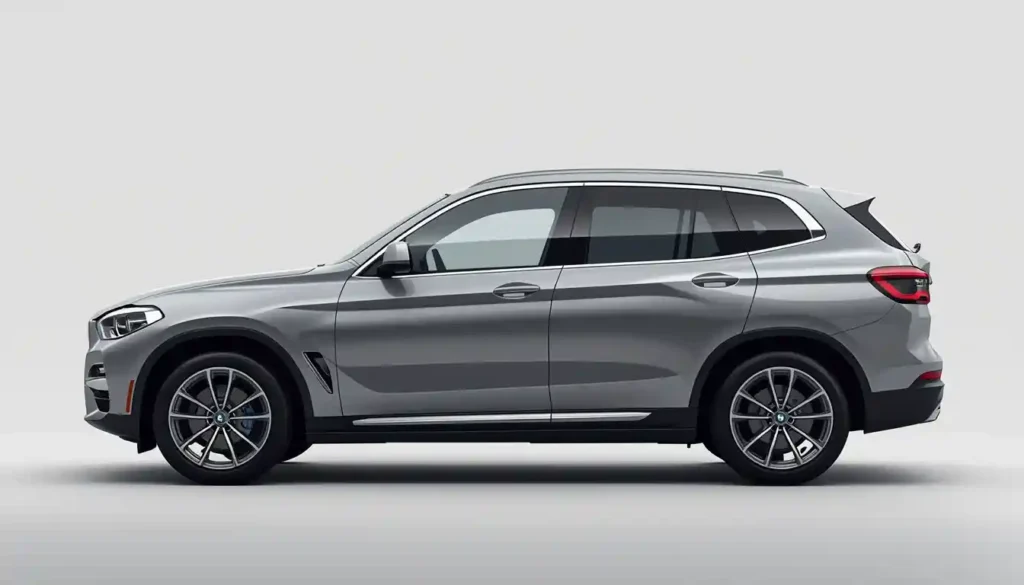
- Length: 188.3 in, Width: 74.6 in, Height: 64.4 in, Wheelbase: 114.1 in.
The 800V system is what makes that 400 kW charging rate possible. At an 800V-capable station, 10 minutes of plug time adds roughly 230 miles.
The typical 15.4 kW charger at home uses a 240V Level 2 outlet to fully charge the battery in roughly 7.5 hours. The optional 22 kW onboard unit cuts that time on compatible AC posts.
BMW iX3 Range: EPA vs WLTP vs Real World
Here’s how all three test cycles compare. The US EPA estimate sits at up to 400 miles. BMW briefly updated that to 434 miles on their website before reverting to 400 miles. The UK and European WLTP figure runs from 421 to 500 miles depending on wheel size.
Twenty-inch wheels hit 500 miles; 21-inch wheels drop that by about 14 miles. China’s CLTC standard puts the BMW iX3 at 559 miles, the most generous of the three cycles.
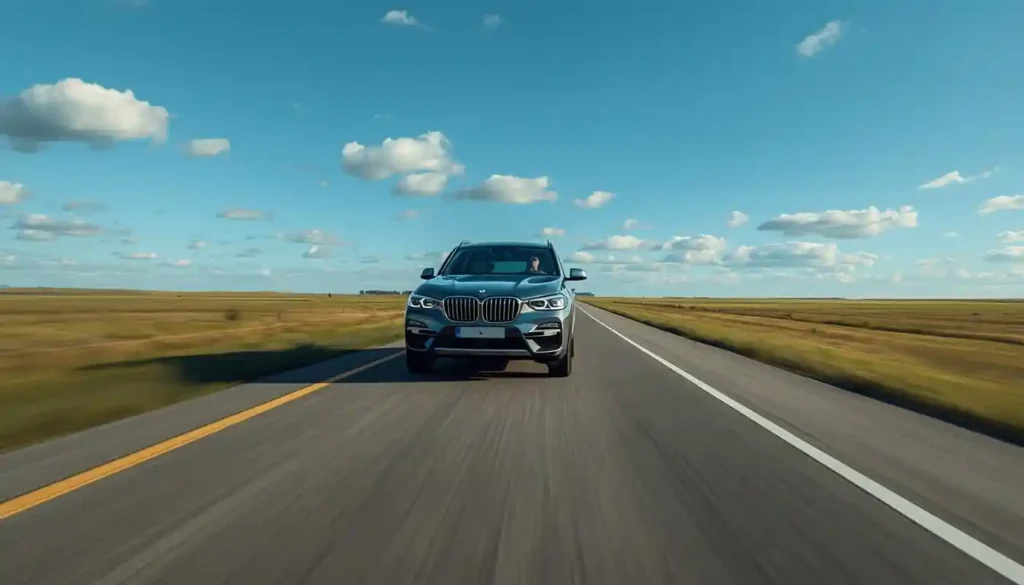
On winter UK motorway runs, the Electrifying.com team logged 3.4 miles per kWh, which works out to around 360 actual miles. In warmer weather, 420 to 450 miles is what most owners will see in normal driving.
Bjorn Nyland ran his 1,000 km highway test on the new ix3 in 8 hours 55 minutes on 21-inch wheels at near-freezing temperatures. That is the best time he has ever logged for any electric SUV. He believes summer conditions would put it in his all-time top three.
BMW iX3 Winter Range: Cold Weather Performance
Cold weather cuts range on every EV. Based on Nyland’s test and UK owner reports, plan for around 360 miles in winter motorway conditions. City driving in the cold holds up better because lower speeds and more regen braking keep the battery working.
The 800V battery also warms up faster at charging stops than older 400V packs, which cuts time spent waiting in cold weather.
How the BMW iX3 Drives: My Honest Take
It has not been true of BMW’s recent EVs. The iX felt capable but cut off from the road. The i4 was good, but the platform was never built purely for electric use. The new BMW iX3 does not carry those issues.
The steering is precise and quick. It runs lighter than I’d want even in sport mode, but it gives real corner-entry confidence and road feedback. Car and Driver found the power delivery biased toward the rear axle.
In sport mode, the car lets the rear step out when exiting a corner hard. That’s sports-sedan behavior in a 5,050-lb SUV. I’ve read no other electric SUV in this price range that behaves this way on a twisting road.
The Heart of Joy computer reads grip at each tire contact patch in real time and shifts torque between axles in 1 ms bursts. MotorTrend logged 1.24g of peak cornering force at Circuito Ascari on standard road tires.
For a heavy electric SUV on everyday rubber, that figure is hard to picture until you sit behind the wheel and feel the body stay flat through a fast corner.
The detail that kept coming back across every review I read is the Soft Stop function. When you brake to a standstill using regen, the BMW iX3 settles with zero head bob. No final lurch.
No whiplash at the last second. It works on hills and bends. Sounds like a minor detail until you have lived with the jerky stops of other EVs in daily city traffic for a week straight.
Drive Modes and Regen Braking
The iX3 runs four modes: Personal, Sport, Silent, and an energy-saving mode BMW names Efficient. That mode is the best pick for daily driving.
It holds full steering feel and suspension balance while giving the cleanest one-pedal behavior from the regen system. Sport mode brings out the full 463 hp with optional driving sounds you can switch off if you want silence.
Regen settings run from adaptive through low, medium, high, and B mode for a full one-pedal stop. The honest criticism here is that changing regen levels takes too many screen taps.
GM solves this with a visible icon and paddles on the wheel. BMW will likely fix it over the air, but at launch it takes a few days to memorize the menu path.
BMW iX3 Interior: Space, Screen, and What I Found
The inside of the new BMW iX3 makes the sharpest break from BMW tradition the brand has ever delivered. The rotary iDrive controller is gone. The instrument cluster behind the steering wheel is gone.
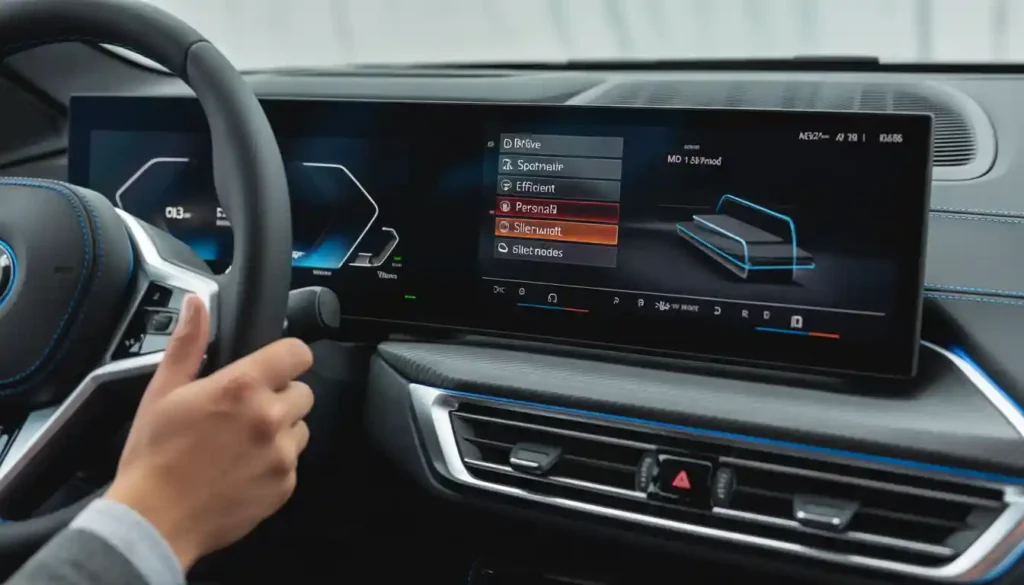
Replacing both is Panoramic iDrive, a full-width display running edge-to-edge along the bottom of the windshield. It shows speed, navigation, and up to six widgets you configure yourself. Next to it sits a 17.9-inch central touchscreen in a rhombus shape, tilted toward the driver.
BMW’s operating system X runs everything. Edmunds wrote that it is the fastest-responding touchscreen they had ever used in a car, quicker than Tesla’s. I’ve seen that backed up in every review I read.
The learning curve is real for the first week. Once you set shortcut icons, most functions are two taps away. Voice commands through “Hey BMW” work well once you learn the right phrasing. Say “engage sport mode,” and it works. Say sport mode on its own, and it pulls up sports scores.
BMW iX3 Interior Space and Cargo
The Neue Klasse platform gives the back seat more room than the outside dimensions suggest. The iX3 is close to X3-sized on the outside but feels closer to an X5 inside. No transmission tunnel means a flat rear floor.

Three adults can sit across the back without squeezing. A six-foot person sitting behind their own driving position still has real knee room left over.
Cargo runs 30.4 cubic feet behind the rear seats and expands to 65 cubic feet with the 40/20/40 seats folded flat. The front trunk holds about 2 cubic feet in the US spec, enough for charging cables.
UK specs list a larger 58-liter frunk. The standard kit includes a 13-speaker Harman/Kardon audio system, wireless Apple CarPlay and Android Auto, a panoramic glass roof, ambient lighting, and heated front seats.
The steering wheel ships with a squircle design that most reviewers swap out for the optional M Sport wheel. Climate controls go through the touchscreen, which is slower than turning a physical knob. Those two points appear in almost every BMW iX3 review written so far.
BMW iX3 vs Tesla Model Y: Numbers Side by Side
The Tesla Model Y is still the top-selling electric SUV on the planet. The iX3 runs a 108.7 kWh battery against 75 kWh for the Model Y Long Range. Range sits at 400 miles versus 320. Peak DC charging hits 400 kW against 250 kW for the Tesla. On every road test metric, the BMW leads.
The steering, ride control, and cornering behavior are not in the same bracket. BMW’s lane-keeping and adaptive cruise systems are smoother and less prone to sudden corrections.
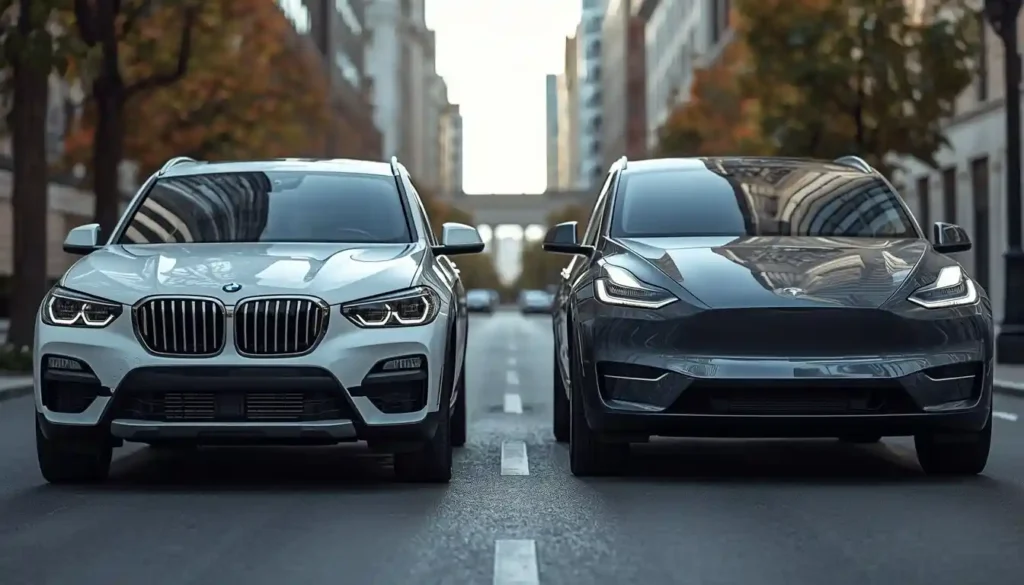
The Model Y wins on starting price at $45,000 against $60,000 for the BMW iX3 electric. Tesla also has more Supercharger stations, faster software updates, and stronger brand recognition in North America.
But the iX3 comes with a NACS port built in, so Supercharger access is already there. If the $15,000 price gap doesn’t bother you, the BMW iX3 is the stronger car across every technical measure.
BMW iX3 vs Audi Q6, Mercedes GLC EV, and Porsche Macan
Within the $60,000 luxury EV bracket, the BMW iX3 leads on range. The Audi Q6 e-tron starts at $65,095 and tops out at 321 miles. The Cadillac Lyriq hits 326 miles.
The Mercedes GLC Electric matches the iX3 on price but hasn’t published final range figures yet. The Porsche Macan Electric sits at $82,650 for 290 to 332 miles.
In 2026, no rival gives you the same range, charging speed, and driving quality that the new BMW iX3 does for this money.
BMW iX3 Charging: Home, Public, and Tesla Supercharger
The US-spec BMW iX3 comes with a NACS port as standard. That means any Tesla Supercharger works without an adapter. A CCS adapter is also included for every other Level 3 public charger in the US.
BMW’s ChargingNetwork app flags stations by actual charging speed and reliability and drops charging stops into your route planning automatically.
At home, the included multifunctional charger runs on both 120V and 240V outlets. The BMW Wallbox gives a faster hardwired 240V install. All US-spec iX3 models support vehicle-to-home bidirectional charging.
You can run appliances or keep lights on during a power cut directly from the car’s battery. Most $60,000 EVs in 2026 still don’t offer that.
BMW iX3 US Release Date and 2027 Lineup
The BMW iX3 US release date is summer 2026, with first deliveries expected in late September or early October 2026. The configurator opened June 2026. The iX3 40, a single rear motor with an 82.6 kWh battery, arrives in early 2027.
The M Performance version follows after that with no confirmed date. BMW Individual paint finishes and frozen matte colors are confirmed for mid-2026 across markets.
What the BMW iX3 Gets Wrong
Climate controls through the touchscreen are slower than a physical dial for temperature changes. The squircle steering wheel ships as standard, but most people want the M Sport wheel instead.
The US-spec front trunk at 2 cubic feet is too small. Adaptive dampers are not available at launch. The regen menu takes too many taps to change. At 5,050 lbs., the car is heavy, which shows up under hard braking on a track but not much in daily use.
BMW iX3 M Sport: Worth the Extra Cost?
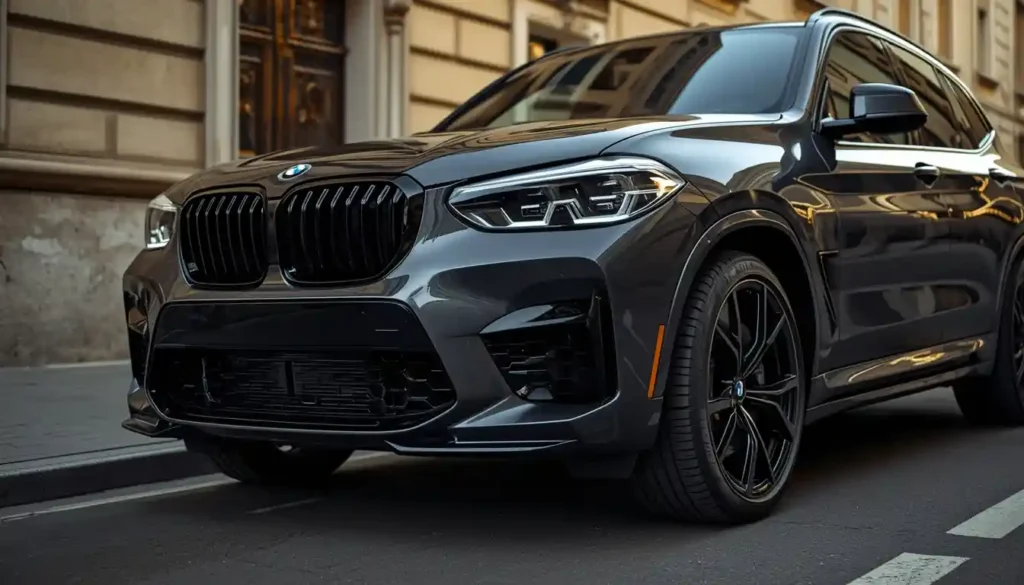
The BMW iX3 M Sport pack adds blacked-out trim, more aggressive bumpers, gloss-finished details, and the M Sport steering wheel that fixes the squircle issue at the same time.
For US buyers, I’d put the Driving Assistance Professional package at the top of the options list. It adds hands-free adaptive cruise with automatic lane changes, approved by a quick glance at the mirror.
Anyone who has used this system on a long motorway run will tell you it changes how the car feels on long trips entirely.
FAQ
Q: What is the BMW iX3 price in 2026?
A: The BMW iX3 price starts at around $60,000 in the US for the iX3 50 xDrive. In the UK it starts at £53,250 for the iX3 40 and £58,755 for the 50 xDrive. Lower-priced single-motor trims arrive in early 2027.
Q: How far does the BMW iX3 go on one charge?
A: Up to 400 miles on the US EPA estimate. The European WLTP figure goes up to 500 miles. In real-world motorway use, 360 to 420 miles is a realistic number depending on temperature and wheel size.
Q: How long does the BMW iX3 take to charge?
A: At a 400 kW DC fast charger, 10 to 80 percent takes 21 minutes. At a home 240V Level 2 outlet on the standard 15.4 kW charger, a full charge takes about 7.5 hours. The optional 22 kW charger cuts that on compatible AC posts.
Q: Does the BMW iX3 work on Tesla Superchargers?
A: Yes. The US-spec BMW iX3 comes with a NACS port as standard. No adapter needed for Tesla Superchargers. A CCS adapter is also included for all other Level 3 chargers in the US.
Q: How does the BMW iX3 compare to the BMW X3?
A: The BMW iX3 is not an electric X3. It runs on a completely different Neue Klasse electric platform. The outside size is similar, but the iX3 has more interior room, a flat rear floor, and a driving character that the combustion X3 cannot match.
Q: What is the BMW iX3 0-60 mph time?
A: BMW claims 4.7 seconds for the iX3 50 xDrive. Car and Driver estimates 4.2 seconds. Either number is fast for a family SUV at this weight.
Q: Is there a BMW iX3 M version coming?
A: Yes. An M Performance variant is confirmed. A quad-motor setup is expected but not officially announced. BMW hasn’t locked in specs or a date as of mid-2026.
Q: When does the BMW iX3 go on sale in the US?
A: Summer 2026, with first deliveries in late September or early October 2026. Reservations opened May 6, 2026.
Q: Can the BMW iX3 tow a trailer?
A: Yes. With the optional hitch, it tows up to 4,400 lbs. Towing cuts range, so plan for more charging stops when hauling.
Q: Does the BMW iX3 have bidirectional charging?
A: Yes. All US-spec BMW iX3 models support vehicle-to-home charging. You can power appliances or run your home during an outage from the car’s battery.
Q: What are the BMW iX3 dimensions?
A: Length 188.3 in, width 74.6 in, height 64.4 in, wheelbase 114.1 in. Similar footprint to the combustion X3 on the outside, but the electric platform gives the cabin far more usable room inside.
The Bottom Line on the 2026 BMW iX3
The BMW iX3 is the best electric SUV BMW has ever built and one of the strongest options in its class in 2026.
The $60,000 BMW iX3 price is fair for what you get. The 400-mile range leads the class. The 21-minute charge time is among the fastest in any production EV. The driving character is something no other electric SUV in this segment matches.
At $60,000, you get 400 miles of range, a 21-minute fast charge, and a car that actually behaves like a BMW on a twisting road. Nothing else at $60,000 gives you all three of those together right now.
There are no reviews yet. Be the first one to write one.
