
Electric SUVs
Tesla Roadster 2026: See Specs, Price and Release Date
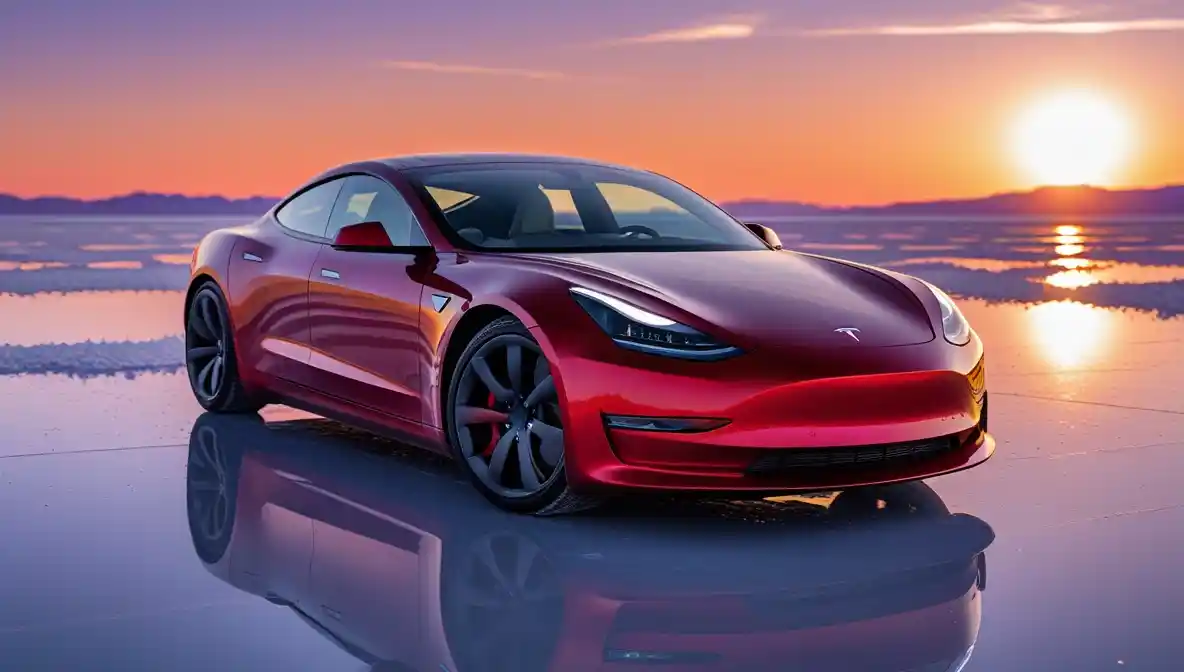
The Tesla Roadster reveal is locked in for late April 2026. After nine years of delays, most people ask me the same two questions: is it actually happening, and can it still beat the competition?
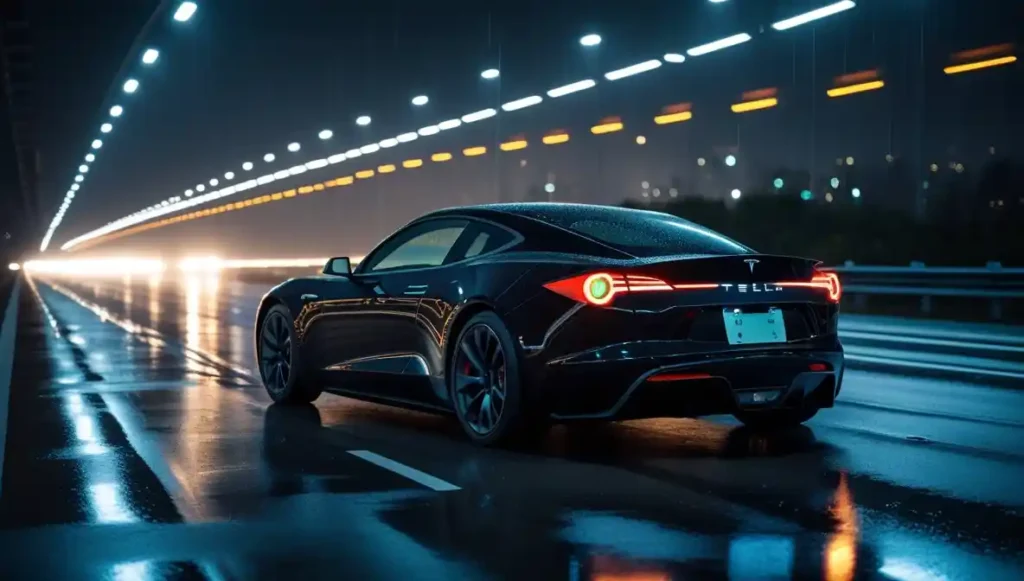
I’ve tracked every confirmed spec, gone through every official statement, and cross-checked the engineering updates to give you a straight picture before that reveal date arrives. Here’s what I found.
What Is the Tesla Roadster 2026?
The Tesla Roadster is a second-generation all-electric sports car, first shown as a concept in November 2017 alongside the Tesla Semi. It shares nothing with the original 2008 model except the name.
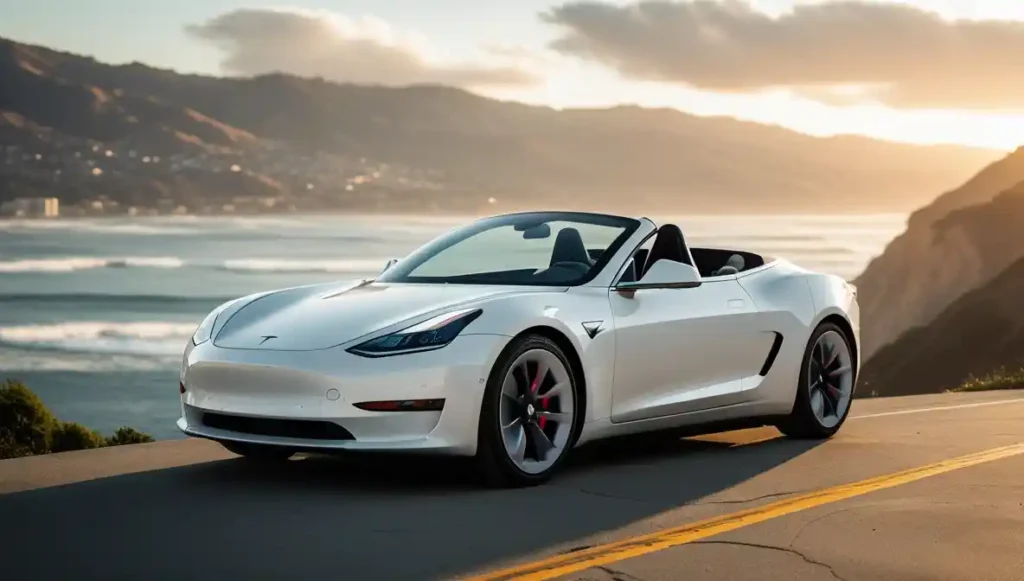
That first Roadster was a two-seater built on a Lotus Elise chassis. This one sits on a brand-new platform built from scratch, adds two small rear seats, and pushes performance numbers that no production car has matched in an electric package at this price point.
Tesla calls it a 2+2 supercar with a removable glass roof that stores in the trunk. The rear seats work for shorter passengers, not for adults on a long trip. Think Porsche 911 rear seats, and you’ll have the right mental picture. It’s a driver’s car first.
If you want to see where the Roadster sits in Tesla’s current lineup, check out our Tesla Model S review.
Tesla Roadster First Gen vs Second Gen: What Changed
The original Roadster, produced from 2008 to 2012, did 0-60 in about 3.9 seconds and carried a 53 kWh battery good for roughly 245 miles. Impressive for its time. The second-generation car makes that look like a warm-up lap.
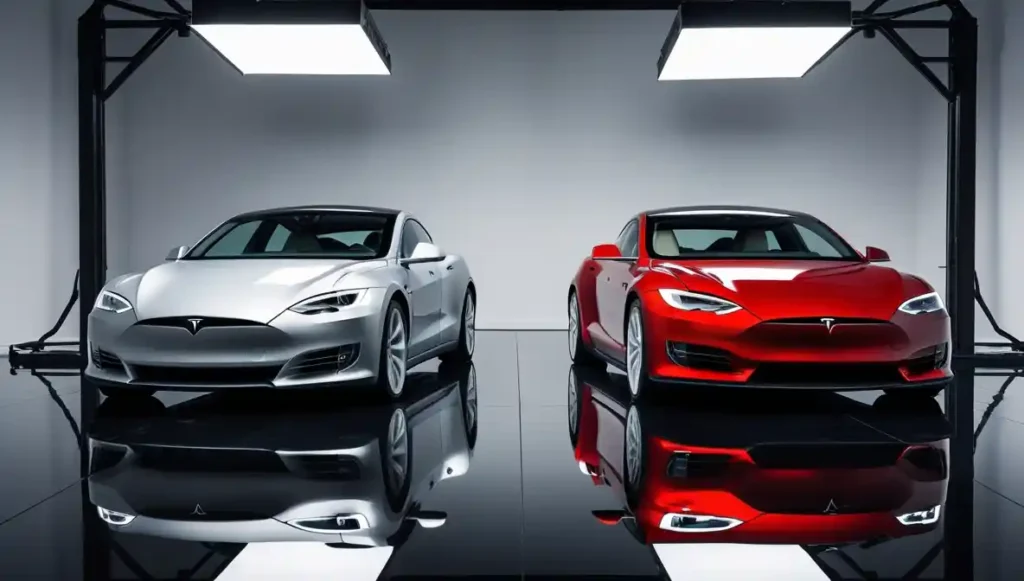
The battery alone jumped from 53 kWh to 200 kWh. The motor count went from one to three. The claimed range nearly tripled.
And the performance target dropped from under 4 seconds to under 2 seconds, with the SpaceX package pushing that closer to 1 second flat.
The other big change: four seats instead of two, and a fresh design language that matches the current Tesla lineup rather than borrowing from Lotus.
Tesla Roadster 2026 Specs
Here are the official figures Tesla has published. I’ve also included what Musk has confirmed publicly over the past year:
- 0-60 mph: 1.9 seconds (base model)
- 0-60 mph with SpaceX package: under 1.0 second
- 0-100 mph: 4.2 seconds
- Quarter mile: 8.8 seconds
- Top speed: over 250 mph
- Horsepower: approximately 1,360 hp (estimated, three-motor setup)
- Wheel torque: 10,000 Nm (7,376 lb-ft)
- Range: 620 miles
- Battery: 200 kWh (4680 cell format)
- Charging: 350 kW DC (adds ~200 miles in 15 minutes)
- Drivetrain: All-wheel drive, torque vectoring (one front motor, two rear motors)
- Seating: 4 (2+2 layout)
- Roof: Removable glass panel, stored in trunk
Tesla posted these numbers in 2017 and has not walked them back. If anything, Musk went further in February 2024, posting on X that the team had “radically increased the design goals” and calling it something you could “barely even call a car. ” We’ll see what that means at the April reveal.
The 200 kWh Battery Problem
Squeezing a 200 kWh pack into a low sports car body is not easy. The GMC Hummer EV uses a similarly sized battery, but that truck has a body-on-frame structure with room to spare.
Tesla plans to use its 4680 cell format, which delivers better energy density per kilo than older cell designs. At 350 kW DC charging, you’re adding around 200 miles in 15 minutes at a Tesla Supercharger.
Steer-by-Wire and the New Steering Patent
Tesla filed a patent in early 2026 covering a steer-by-wire system with a 340-degree steering rotation and F1-grade steering ratios at speed.
This means no physical connection between the steering wheel and the front wheels, the same setup used in some Formula 1 cars. The system adjusts the steering ratio based on speed, making the car responsive at low speeds and stable at high ones.
If this makes it into the production Roadster, it would be one of the most advanced steering setups in any road car available today.
Tesla Roadster SpaceX Package
The SpaceX package adds cold gas thrusters around the car’s body. The target is a 0-60 time under one second and better braking and cornering through the same thruster system.
Musk has mentioned the possibility of the car briefly lifting off the ground, though that’s never been confirmed as a production spec.
At the X Takeover event in 2026, Tesla VP of Vehicle Engineering Lars Moravy said this is one of the hardest parts of the whole program.
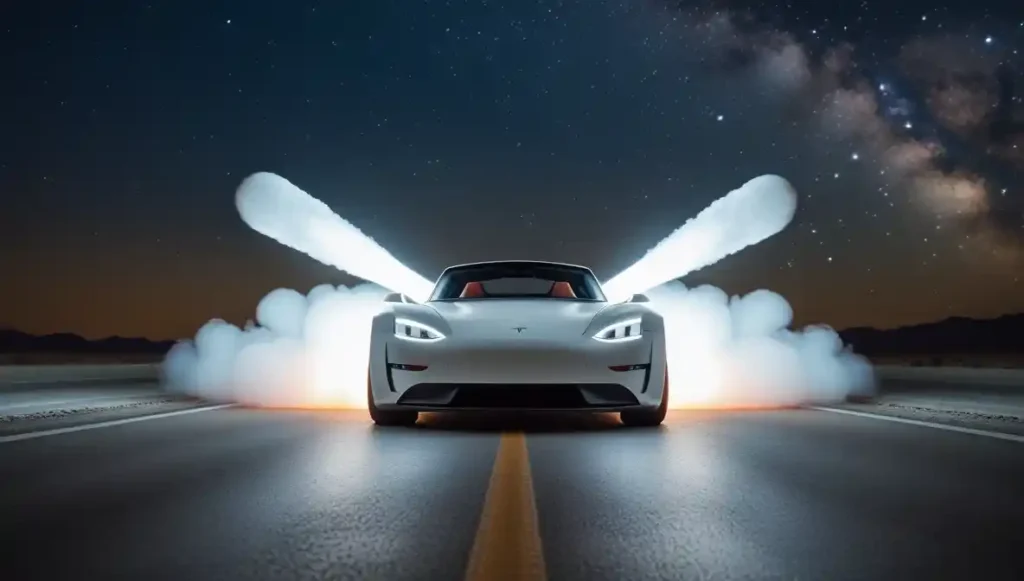
Rocket systems have a high fuel-to-weight ratio, and fitting that inside a production car without wrecking the weight balance is a real problem. Tesla and SpaceX engineers have been reworking the mass placement to make the system work as claimed.
Worth saying: the base car without any thrusters already targets 1.9 seconds to 60 mph. That’s faster than every car you can walk into a showroom and buy right now. The SpaceX package is the extra layer on top, not the reason to buy it.
Tesla Roadster Price and Trims
Tesla set two tiers when reservations first opened:
- Base model: $200,000
- Founders Series (1,000 units only): $250,000
Production is expected to be capped at roughly 10,000 units per year. This is not a volume model. The Cybertruck launched above its originally stated price, so don’t treat $200,000 as locked in.
Tesla pulled pricing from its website, which usually means a number update is coming closer to launch.
How to Reserve the Tesla Roadster: Step by Step
If you want to get in line, here’s exactly how the reservation process works based on Tesla’s current setup:
- Go to the official Tesla Roadster reservation page.
- Pay a $5,000 deposit by credit card upfront.
- Within 10 days, complete a $45,000 wire transfer to hold your spot.
- Total deposit: $50,000 (reportedly refundable, but some holders have had trouble getting it back)
- Founders Series reservation requires the full $250,000 upfront and is capped at 1,000 units.
One thing I’d flag: do not rush this before the April 2026 reveal. Tesla has missed every production deadline since 2020. Wait to see the final production specs first, then decide if it’s worth the commitment.
Tesla Roadster Release Date: What’s Confirmed for 2026
At Tesla’s Q4 2026 earnings call on January 28, 2026, Musk said, “I think long-term really the only vehicle we would make is autonomous vehicles with the exception of the next-generation Roadster, which we’re hoping to debut in April.
Hopefully.” On March 17, 2026, he posted on X that the reveal is “probably in late April.” Production is expected to start 12 to 18 months after that, pointing to a 2027 start date.
Note: At the November 2026 shareholder meeting, Musk said the production version will look “very different” from the 2017 concept.
Tesla also filed a new Roadster silhouette trademark in February 2026, which supports that. The car you’ll see in April 2026 won’t look like the red car from the 2017 Tesla Semi reveal event.
The car was originally planned for 2021. Since then, it has missed every announced date. That’s a six-year streak of delays. Keep that in mind before putting money down on a reservation.
Tesla Roadster Design and Exterior
The 2017 concept had a low front hood, sharp headlights, muscular rear fenders, and a clean rear spoiler integrated into the body. It came in red at the reveal.
Tesla’s typical color range covers white, black, silver, grey, red, and blue, and that’s likely what the Roadster will offer at launch, though no colors have been confirmed officially.
The production version is confirmed to look different from the concept. Tesla’s new trademark filing shows a changed silhouette. Musk described the new design as more extreme than 2017, with ground-effect aerodynamic work that wasn’t in the original concept.
Tesla Roadster Interior and Tech
The interior keeps Tesla’s no-buttons approach throughout. A curved portrait touchscreen runs from the dashboard down into the center console, with a storage section cut into the bottom.
The steering setup uses a yoke-style wheel, carbon fiber trim runs across the dash, and there’s no traditional instrument cluster. The removable glass roof panel is stored in the rear trunk.
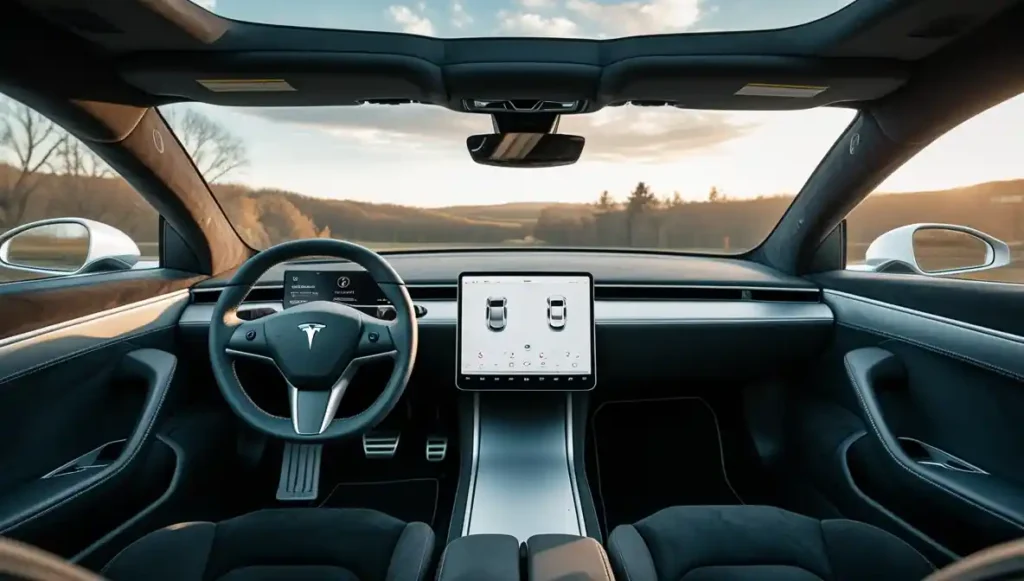
There’s no Apple CarPlay, no Android Auto, and no Amazon Alexa. Tesla has never put any of those in its cars, and the Roadster won’t be the exception. You get Spotify, Netflix, and YouTube while parked; a Wi-Fi hotspot; and Tesla’s own navigation.
Full Self-Driving will likely be an option, though Musk has been clear that the Roadster is built to be driven, not to drive itself.
Wireless Charging Possibility
Tesla’s chief designer, Franz von Holzhausen, mentioned in an interview that Tesla is building wireless EV charging technology where the car charges automatically over a pad installed in your garage. The Roadster may be the first Tesla model to get this feature.
Tesla Roadster vs Competition: Can It Still Win in 2026?
When the Roadster concept came out in 2017, those specs had no competition. That’s changed. Here’s how the base Roadster stacks up against cars you can actually buy today, based on my research:
- Rimac Nevera: 0-60 in 1.74s, quarter mile in 8.58s, price $2.4 million
- Pininfarina Battista: 0-60 in 1.79s, price $2.25 million
- Aspark Owl: 0-60 claimed 1.72 s, price $3.5 million
- Tesla Roadster base: 0-60 claimed 1.9 s, price $200,000
The base Roadster’s 1.9-second figure sits behind all three rivals on straight-line acceleration. That’s the honest cost of nine years of delays.
The only claim that still has no rival is the sub-one-second SpaceX package number, and that hasn’t been independently tested yet.
Where the Roadster wins outright is the price gap. At $200,000, it costs roughly one-tenth of what the Nevera asks for, with slightly quicker times.
The upcoming Chevrolet Corvette Electric and Polestar 6 are closer in price but nowhere near these performance numbers. No other electric car on the market offers this level of acceleration at anything near $200,000.
For a broader look at the fastest electric cars available right now, see our best electric cars guide.
Is the Tesla Roadster Actually Going to Be Built?
The evidence in early 2026 points to yes. Tesla filed new Roadster trademark applications in February 2026.
In late 2026, the company posted three Roadster-specific job listings for battery manufacturing engineers and production engineers at Fremont and Palo Alto.
Musk directly named the Roadster as the one driver-focused car Tesla plans to keep building while the rest of the lineup shifts to autonomy.
The honest counterpoint: this car has been delayed since 2020, has missed every announced production date, and still hasn’t been shown in its final production form.
The April 2026 reveal will be the first real test of whether Tesla is serious this time. Wait for that before committing $50,000 to a reservation.
Tesla Roadster FAQ
Q: What is the Tesla Roadster 0-60 time?
A: The base model hits 60 mph in 1.9 seconds. Under 1.0 seconds with the SpaceX package. No independent test has confirmed that second figure yet.
Q: How much does the Tesla Roadster cost?
A: Base: $200,000. Founders Series (1,000 units): $250,000. Tesla pulled pricing from its site, so a price update at the April 2026 reveal is possible.
Q: When is the Tesla Roadster release date?
A: Reveal: late April 2026. Production: 2027, roughly 12 to 18 months after the reveal.
Q: What is the Tesla Roadster range?
A: 620 miles from a 200 kWh battery. If confirmed in testing, that’s the longest range of any production EV sold today.
Q: What is the SpaceX package?
A: Cold gas thrusters around the car, built with SpaceX. Targets sub-one-second 0-60, better braking, and cornering. Still in development as of early 2026.
Q: How many seats does the Tesla Roadster have?
A: Four. Two full bucket seats up front, two small rear seats. It’s a 2+2 layout, not a true four-seater.
Q: Is the Tesla Roadster actually going to be produced?
A: Tesla has trademark filings, manufacturing job listings, and a confirmed April 2026 reveal. The car has been delayed since 2020. Wait for the reveal before putting down a deposit.
Final Thoughts on the Tesla Roadster 2026
The Tesla Roadster is either the most exciting car Tesla has ever built or the longest-running promise in EV history. Probably both. In my view, at $200,000, nothing else gives you this level of electric performance anywhere near that price.
The Rimac Nevera beats it on paper but costs 12 times more. The SpaceX package, if it ships, has no competition at all.
The April 2026 reveal is the moment that matters. Nine years of delays end there, or they don’t. Watch what Tesla actually shows, check the confirmed production specs, and then decide if the reservation deposit makes sense for you.
The car on paper is worth the excitement. Whether the production version matches it is what we’re all about to find out.
Interested in Tesla’s other bold bet? Read our full Tesla Cybertruck review.
