
Affordable Electric SUVs
Volkswagen ID.Buzz Review: Electric Van Range and 0-60 Test
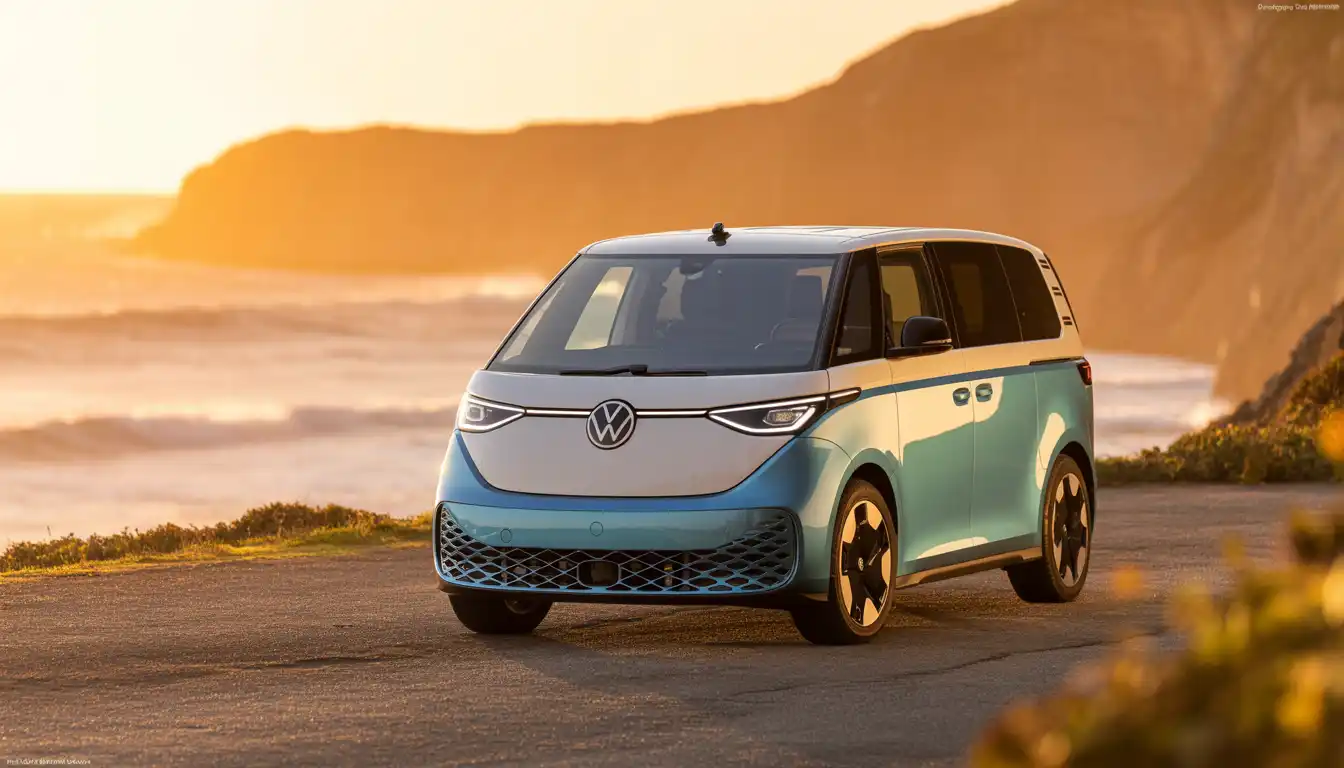
The Volkswagen ID. Buzz starts at $59,995, seats seven people, and runs on a fully electric powertrain with 234 miles of EPA rated range. For anyone researching electric VW bus range, real world testing puts it between 190 and 215 miles at highway speeds.
It is the only retro-styled electric minivan on the market right now, and that alone makes it worth understanding properly.
I’ve gone through every major road test, owner account, and real world charging report so you get one complete picture instead of ten partial ones.
As a people mover, the ID.Buzz does something no other electric van manages. It combines genuine family practicality with a design that people actually stop to look at on every street it drives down. The VW ID Buzz 0 60 time sits at 5.8 seconds, which is more than quick enough for a seven seat electric van this size.
What Is the Volkswagen ID.Buzz?
The Volkswagen ID. Buzz is a battery electric minivan built on VW’s MEB platform, the same architecture that underpins the ID.4 and Audi Q4 e-tron. VW designed it as the modern successor to the original Type 2 Microbus from the 1950s and 1960s.
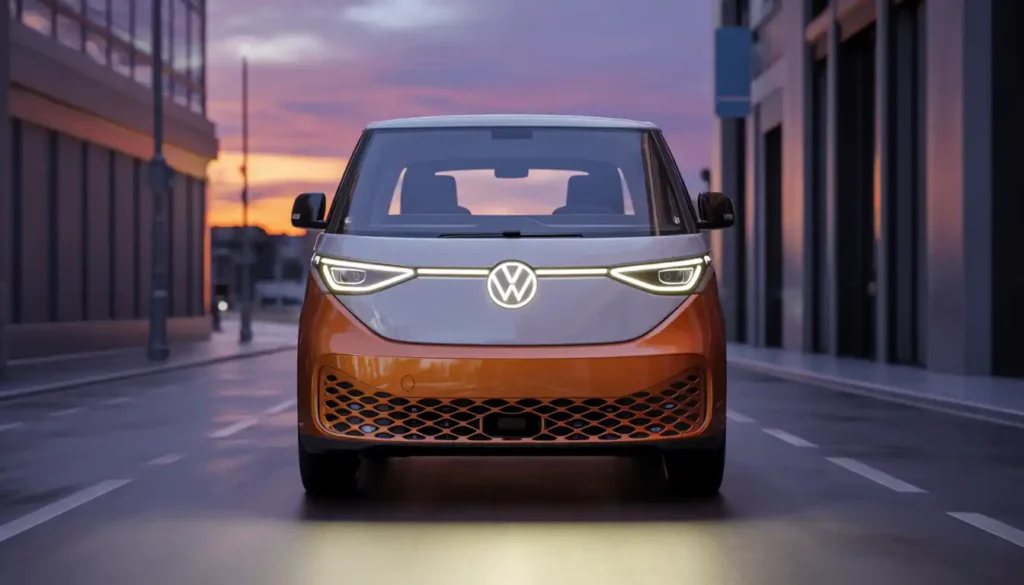
That heritage shows in the upright front end, the illuminated VW logo badge, and the available two-tone paint that makes it look unlike anything else on the road.
VW builds the ID. Buzz in Hanover, Germany. The U.S. gets only the long-wheelbase version, 9.8 inches longer than Europe’s model, to fit a proper third row. It went on sale in late 2024 as a 2025 model.
Volkswagen ID.Buzz Full Specs at a Glance
Here’s everything you need to know before buying: specs, range, and how it stacks up against rivals. The short wheelbase version seats five passengers, while the long wheelbase model adds a third row for seven.
| Specification | Details | |
| Starting Price (MSRP) | $59,995 | |
| EPA Range: RWD | 234 miles | |
| EPA Range: AWD | 231 miles | |
| Real-World Highway Range | 170–190 miles at 65–75 mph | |
| Battery Pack | 86 kWh liquid-cooled lithium-ion | |
| Power: RWD | 282 hp / 413 lb-ft torque | |
| Power: AWD / GTX | 335 hp / 413 lb-ft torque | |
| 0–60 mph: RWD | 7.4–7.5 seconds | |
| 0–60 mph: AWD / GTX | 5.5–6.1 seconds | |
| DC Fast Charge (10–80%) | 26–30 minutes at up to 200 kW | |
| Seating | 7 (bench) or 6 (captain’s chairs) | |
| Cargo Volume (all folded) | 146 cu. ft. | |
| Towing: Standard / GTX | 2,600 lbs / ~3,968 lbs | |
| Platform | Volkswagen MEB | |
| Assembly | Hanover, Germany |
ID Buzz Price and Trim Levels
Here’s what the Volkswagen ID. Buzz can do, based on the information we have up to October 2023. You can look at this to see how it compares to other similar cars.
| Trim | Drivetrain | Price Range | Key Additions |
| Pro S | RWD 282 hp | $61,545 | Full safety suite with emergency braking, 3-zone climate, heated seats |
| Pro S Plus | RWD or AWD | $65,045 – $70,540 | HUD, Harman Kardon 14-spk, 360 cam, tow hitch |
| 1st Edition | RWD or AWD | $68,040 – $72,540 | Two-tone paint, panoramic sunroof, roof crossbars |
In the United States, there are three versions (or trims) of this car to choose from. lineup. The differences between them are real and worth knowing before you visit a dealer. The Pro S Plus is where most buyers land, and I think that is the right call. The head-up display, Harman Kardon 14-speaker system, 360-degree camera, and retractable tow hitch are features you will use daily. AWD costs $4,500 extra on any trim and adds a front motor for 335 hp total.
Federal Tax Credit Situation
The Volkswagen ID. Buzz is built in Germany, so it does not qualify for the $7,500 federal EV purchase credit. Leasing is a different story. The credit typically flows through to lower monthly lease paym
Edmunds reports buyers are currently paying roughly 6% below MSRP with a $7,500 cash rebate available on select configurations.
VW ID Buzz Range and Charging: The Honest Numbers
How far does the VW ID. Buzz actually go on a full charge? The EPA rates it at 234 miles, but real-world numbers tell a different story.
Real-World Road Trip Range
The Autopian tested the VW ID Buzz on an actual road trip from North Carolina to Savannah, Georgia, at highway speeds with cold weather and the heater running. They recorded 170-190 miles before needing to charge.
Car and Driver’s separate 75 mph test returned 180 miles RWD and 190 miles AWD. Edmunds ran their own methodology and got 263 miles. Budget around 170 miles between stops when planning a highway run.
For daily driving, this is a non issue. Most Americans cover fewer than 40 miles per day, which means the VW electric van goes four or five days between home charges in normal use. The range constraint matters on highway trips, not in everyday city life.
Charging Speed and Network
The VW Buzz charges at up to 200 kW DC, reaching 10% to 80% in about 26–30 minutes. VW includes a 36-month Electrify America plan with 500 kWh of complimentary charging on new purchases.
Finding a charging station on highway routes is easy with Electrify America and Tesla Supercharger access. which meaningfully expands road-trip charging options.
VW ID Buzz GTX Review: The High-Performance Version
The VW ID. Buzz GTX directly addresses the most common criticism of the standard model: that it needs more capability for its price.

What GTX Adds Over Standard AWD
The GTX uses the same dual motor AWD powertrain producing 335 hp and 413 lb-ft of torque but unlocks a higher towing capacity of approximately 3,968 lbs compared to 2,600 lbs on standard versions.
That is a meaningful jump for anyone who tows a trailer, a boat, or a caravan. The 0–62 mph time of 6.1 seconds feels surprisingly quick in something this tall and heavy.
Top Gear’s 2026 review called the GTX the standout choice in the lineup, noting it delivers real AWD confidence and towing muscle, unlike the standard VW ID. Buzz cannot match.
GTX Exclusive Features
Outside, you get a black honeycomb air intake grille, GTX badging, and bi color 21-inch alloy wheels. Inside, ArtVelours microfleece upholstery replaces standard seat material, red accent stitching runs throughout the cabin, and an electrically dimmable panoramic sunroof comes standard rather than as a paid option.
Who Should Buy the GTX
The GTX makes clear sense for buyers who regularly tow and need the higher capacity, drivers in snowy or mountainous regions who want maximum AWD confidence, and enthusiasts who want the most complete version of the Volkswagen electric van.
Everyone else gets 90% of the experience from the Pro S Plus AWD at a lower price. The GTX does not add range or faster charging: only towing and premium trim.
Design and Interior: What Reviews Actually Say
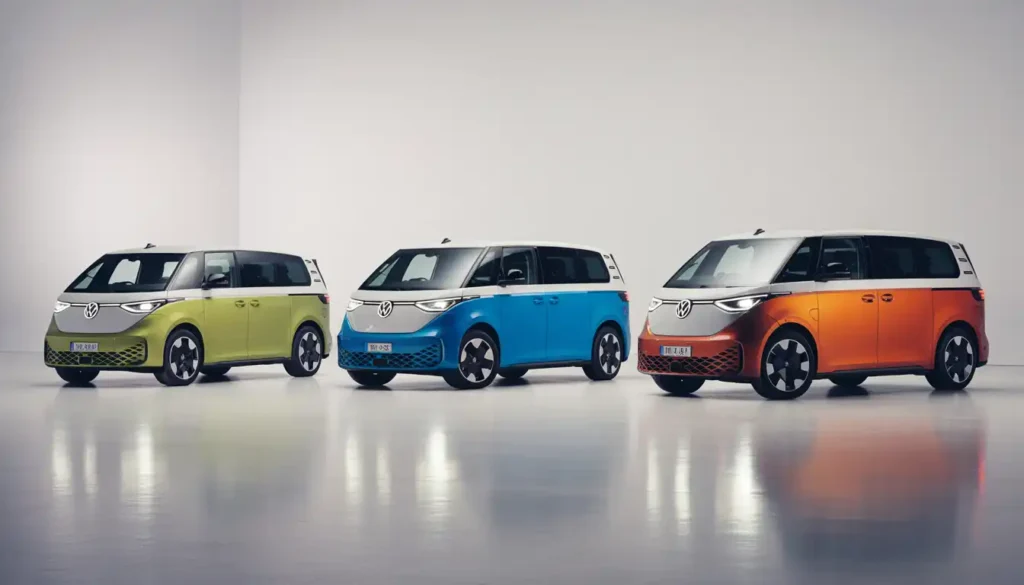
The exterior of the VW Buzz is where VW succeeded most completely. The upright windshield gives you a commanding, unobstructed view of the road. Two tone colors in eight combinations make it genuinely fun to be around.
Car and Driver, Green Car Reports, and individual owner accounts all report the same thing: people approach it in parking lots, wave from other cars, and ask questions at traffic stops. No other electric vehicle in this price range generates that reaction.
The interior gets the space right. The center console between the front seats is raised and offers useful storage, though some buyers coming from traditional minivans will find it takes some getting used to.
Third row legroom measuring 34 inches behind a fully rearward second row seat beats most three row SUVs. The tall roof lets you stand upright when loading car seats.
Families will love the storage. USB-C ports are everywhere inside. There’s a 110-volt outlet under the front passenger seat and two 12-volt outlets in the cargo area handy for camping or long trips.
In addition to this, behind the driver’s seat in the vehicle’s cargo area are two additional 12-volt outlets. These sockets can be used to power smaller electronic devices.
Known Weakness: Multiple reviewers, including MotorTrend and Edmunds, flag interior plastics that feel cheap for a $60,000-plus vehicle. The haptic steering wheel controls also draw consistent complaints across almost every review. Test these in person before purchasing.
ID Buzz 7 Seater: Seating and Family Configuration
The ID. The Buzz 7-seater uses a three person bench in the second row for seven total seats. Choosing captain’s chairs reduces capacity to six but opens a clear center pass-through to the third row. AWD models include captain’s chairs as standard. RWD buyers add them for $695.
Every rear seating position includes both lower LATCH anchors and upper tether anchors for child car seats. The power sliding doors and tall roofline allow you to stand fully upright while installing seats: a practical advantage over SUVs, where you hunch and twist to reach the back row.
ID Buzz California: The Camper Van Version
The ID. Buzz California is the officially planned camper conversion VW confirmed in December 2021. Weight concerns and development complexity have pushed the project toward the end of this decade. It is a future product, not something you can order today.
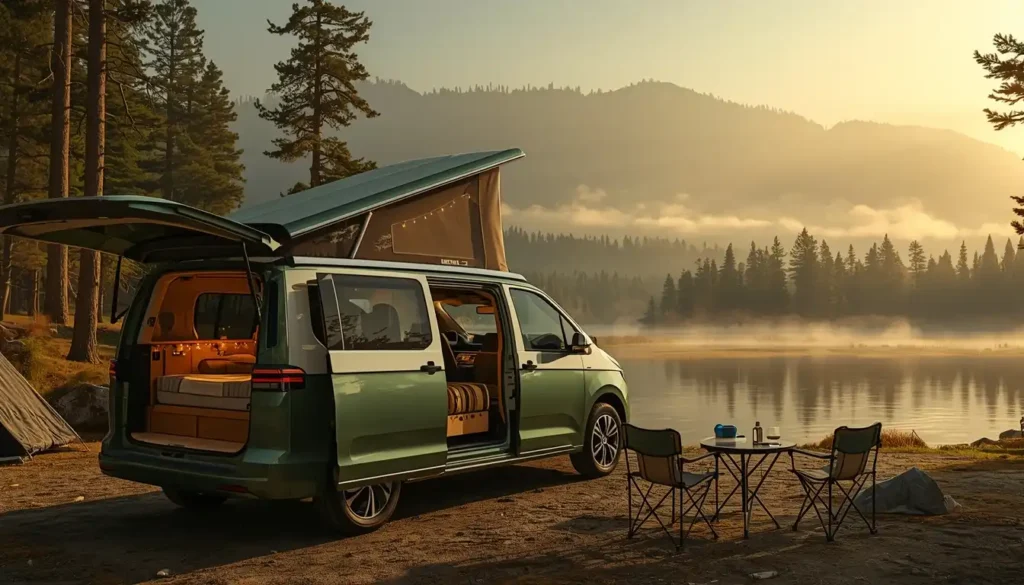
Third-party converters have filled the gap. Companies in Europe and the U.S. already offer full camper builds on the ID Buzz Cargo platform. For buyers who want camping capability now, the VW ID. Buzz camper setup is already workable.
The Flexboard cargo system on the Pro S Plus creates a raised floor with drawers underneath. Remove the rear seats, add a sleeping platform, and two adults can sleep flat. The 110-volt outlet runs a small cooler or air pump without significantly draining the main battery.
How the VW ID Buzz Compares to Its Rivals
The Volkswagen ID. Buzz does not exist in a vacuum. Here is how it stacks up against every vehicle buyers most commonly consider alongside it.
| Model | Starting Price | Range | Seats | Key Difference vs ID Buzz |
| VW ID.Buzz | $59,995 | 234 mi EPA | 7 | Our subject |
| Kia EV9 | $54,900 | 304 mi EPA | 7–8 | More range, better materials, no retro appeal |
| Toyota Sienna Hybrid | $41,915 | ~600 mi total | 7–8 | $18k cheaper, hybrid not full EV |
| Kia Carnival Hybrid | $42,935 | ~550 mi total | 7–8 | $17k cheaper, hybrid only |
| Kia PV5 (UK) | ~$32,000 | 280+ mi | 5–8 | $30k cheaper, not yet in U.S. market |
VW ID Buzz vs. Kia EV9
The Kia EV9 wins on paper: more range, better materials, and a lower price. What it cannot do is look like a retro electric bus, offer sliding doors, or carry the cultural warmth the ID Buzz generates everywhere it goes. If that matters to you, no spec sheet changes it.
VW ID Buzz vs. Toyota Sienna and Kia Carnival Hybrid
Both cost $15,000–$20,000 less and deliver far more real world range through their hybrid powertrains. The VW Buzz justifies its premium through its electric powertrain, design distinctiveness, and technology, not raw value-for-money.
VW ID Buzz vs. Kia PV5
Top Gear’s January 2026 review flagged this as one worth watching. The Kia PV5 undercuts the VW Buzz price by nearly $30,000 in UK markets. It has not arrived widely in the U.S. yet, but it signals real pricing pressure ahead for the electric van segment.
Why VW Paused the ID Buzz for 2026
Volkswagen sold fewer than 6,000 VW ID. Buzz units in the U.S. during its first model year and confirmed no 2026 U.S. production. Buyers comparing the ID Buzz against the Hyundai Ioniq 5 at $20,000 less with 300-plus miles of range found the value gap too wide to ignore.
VW plans to return for 2027. The remaining 2025 inventory sits at dealers with meaningful discounts: buyers are currently paying around 6% under sticker with a $7,500 cash rebate available. If the 2027 version arrives with improved range and adjusted pricing, the competitive picture changes significantly.
Who Should Actually Buy the VW ID Buzz?
The Volkswagen ID.Buzz serves a niche customer. You are someone who can charge from home via a Level 2 charger, will drive less than 150 miles daily, is interested in driving something different from the current crop of crossovers and SUVs on the road, has access to a second vehicle, or is flexible about making longer distance trips.
If you fit this description, then you will enjoy all that the ID Buzz has to offer: It’s comfortable, quick, roomy, and completely different from everything else currently available.
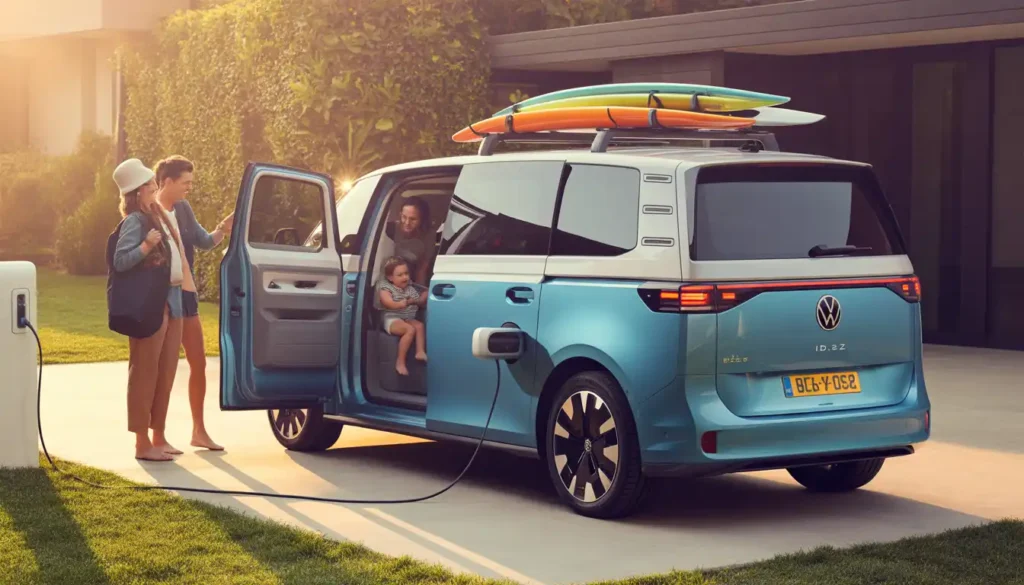
Driving mostly at highway speeds above 70 mph? The 170–190 mile real-world range will feel limiting. Don’t buy the first-gen ID. Buzz until you’ve tested the 2027 models.
People searching for an electric VW bus range want one number confirmed: The ID. Buzz LWB with the 86 kWh battery delivers around 260 to 290 miles of real-world range in mixed driving.
The electric VW bus range drops to roughly 220 miles at sustained motorway speeds, which is still enough for most family road trips with one charging stop. For buyers choosing between the standard wheelbase and the LWB, the electric VW bus range difference comes down to the larger battery in the longer version.
Frequently Asked Questions
Q: What is the Volkswagen ID.Buzz starting price?
A: The Volkswagen ID. Buzz starts at $61,545, including destination. The Pro S Plus runs $65,045–$70,540 depending on the drivetrain.
The 1st Edition tops out at $72,540 AWD. Current market discounts and a $7,500 rebate bring real transaction prices closer to $56,000 on some trims.
Q: Can the VW ID Buzz charge at Tesla Superchargers?
A: Yes, using a separately sold NACS DC adapter. This gives VW ID. Buzz owners access to the Tesla Supercharger network alongside Electrify America and other CCS networks.
Q: What is the real-world range of the VW ID Buzz?
A: Plan for 170–190 miles at steady highway speeds. EPA rates it at 234 miles RWD and 231 miles AWD. Edmunds returned 263 miles under their test conditions. Daily city driving is comfortably within range for most users.
Q: Is the VW ID Buzz coming back for 2026?
A: Volkswagen (VW) decided not to make cars in the U.S. in 2026 because not many people bought their cars in the first year.
They plan to start making cars again in 2027, and these new cars might go farther on a single charge and cost less. Right now, car stores are selling the 2025 VW cars at lower prices to help get rid of the old ones.
Q: How many seats does the ID Buzz 7 seater have?
A: The ID. Buzz 7-seater uses a second row bench for seven total passengers. Choosing captain’s chairs drops capacity to six but improves third-row access and opens a center pass-through.
Q: What is the difference between the VW ID Buzz and the GTX?
A: The VW ID. Buzz GTX raises towing capacity from 2,600 lbs to approximately 3,968 lbs, adds ArtVelours interior upholstery, red accent stitching, a standard dimmable panoramic sunroof, and 21-inch bi color wheels. Performance and range are identical to standard AWD.
Q: Is the VW ID Buzz good for camping?
A: Yes, especially in the Pro S Plus trim. The Flexboard system creates an under-floor storage drawer and raised cargo floor. Rear seats are removed entirely.
The 110 volt outlet runs small appliances. The VW ID. Buzz camper setup handles two sleeping adults comfortably. An official ID. The California camper version is planned but delayed to the end of this decade.
Q: Does the VW ID Buzz qualify for the EV tax credit?
A: Not on purchases. German assembly disqualifies it from the federal $7,500 purchase credit. Leasing often passes the credit through as lower monthly payments. Compare the total lease vs. buy cost before deciding.
Final Verdict
The Volkswagen ID.Buzz is a genuinely well made electric van with one hard limitation. The design is iconic, the interior space is class leading, the GTX delivers real towing capability, and 26-minute fast charging is competitive with any modern EV.
The 170–190 mile real world highway range is a genuine constraint that no amount of personality can fully offset.
At current discounted pricing with the $7,500 rebate applied, the VW Buzz offers substantially better value than its original MSRP suggested. Buy it if your lifestyle fits its strengths. Wait for 2027 if maximum range is your priority.
