
Electric SUVs
BMW i7 Review 2026: Price, Range and Is It Worth Buying?
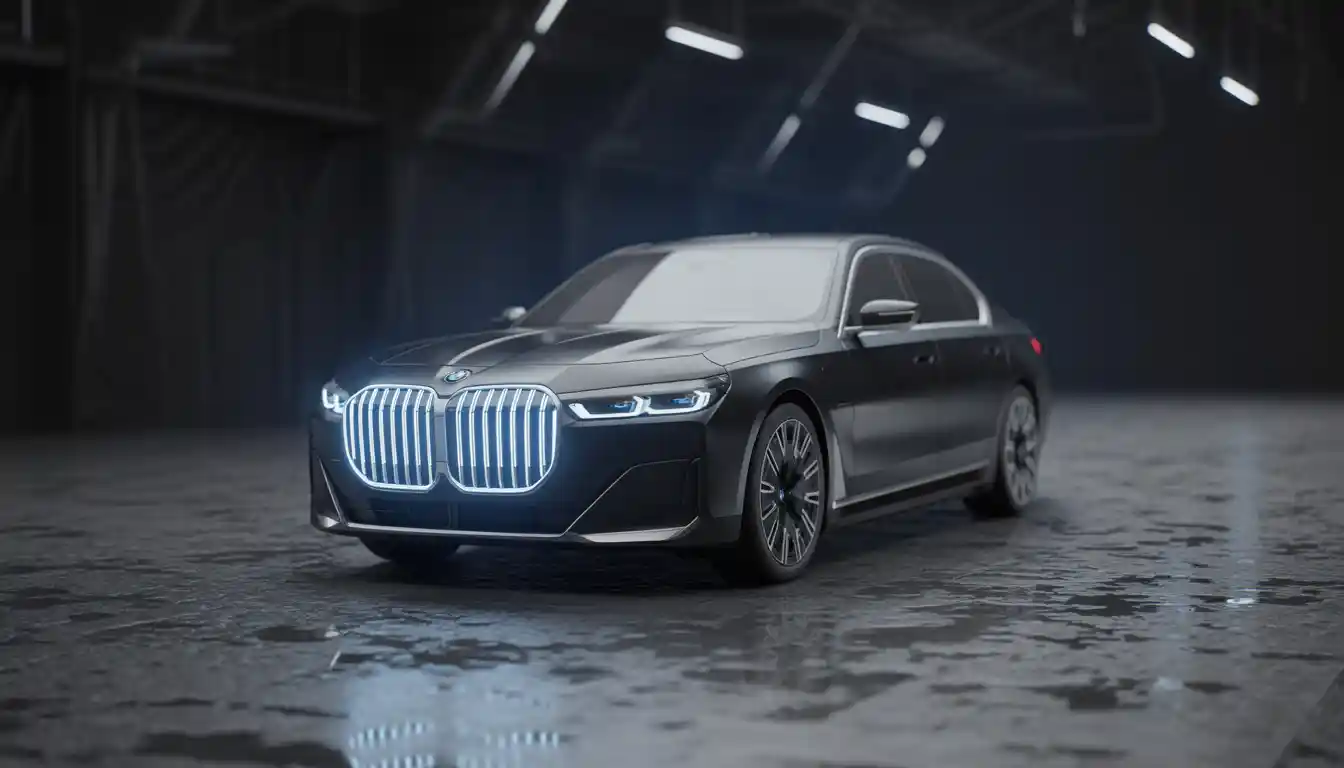
The BMW i7 is a fully electric luxury sedan starting at $105,700 with up to 314 miles of EPA rated range.
If you landed here wondering whether the BMW i7 price justifies itself, how the range holds up in real world driving, or how this car stacks up against the Tesla Model S, the Mercedes EQS, and the Porsche Taycan, you’re in the right place.
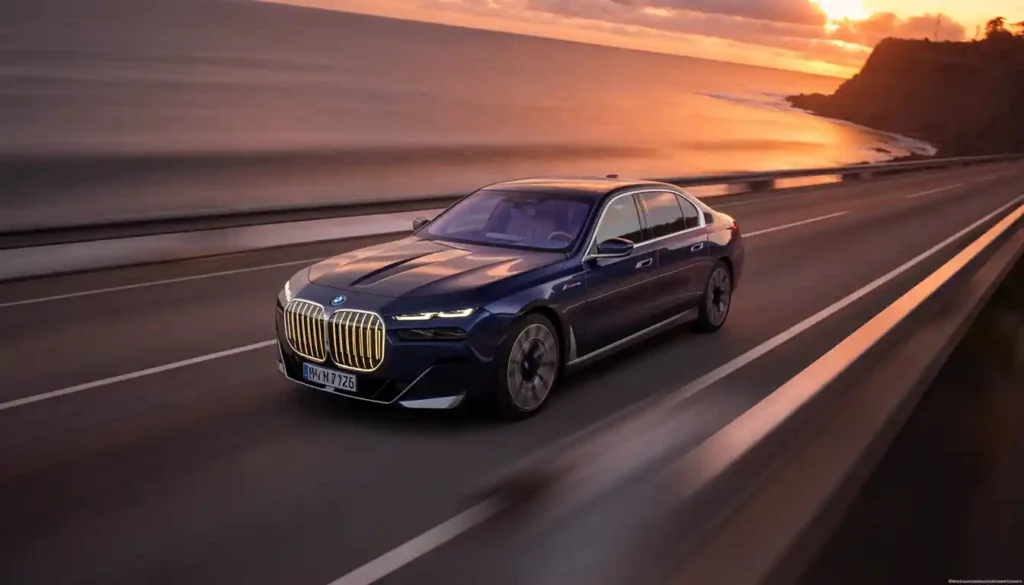
I’ve reviewed every credible source, verified real owner accounts, and cross-referenced independent test data to give you the most complete picture of the BMW i7 in one place.
What Is the BMW i7?
The BMW i7 is BMW’s fully electric flagship sedan, built on the same platform as the 7 Series but powered entirely by a battery rather than a combustion engine.
BMW introduced it alongside the redesigned 7 Series in 2022 and made it available for the 2023 model year. Unlike many EVs built on a purpose designed platform, the BMW i7 sedan shares its body, interior, and proportions with the gasoline powered 740i and 760i.
What changes is everything underneath: a 101.7 kWh battery pack under the floor and one or two electric motors, depending on which BMW i7 series trim you choose.
In my experience reading through owner accounts and independent tests, the BMW 7 Series electric positions itself as the car you buy when you want genuine flagship luxury with zero emissions, but don’t want to give up the feeling of a real BMW.
It’s not chasing the Tesla Model S’s efficiency or the Lucid Air’s range. It’s competing with the Mercedes S Class, the Rolls-Royce Ghost, and the Bentley Flying Spur on comfort and prestige.
BMW i7 Price and Trim Levels
The BMW i7 cost spans three clearly separated tiers. The BMW i7 MSRP starts at $105,700 for the entry model and climbs to $168,500 for the performance flagship. Here’s how the full new BMW i7 lineup breaks down for 2026:
| Trim | Starting MSRP | Horsepower | 0-60 mph | Drivetrain | EPA Range |
| i7 eDrive50 | $105,700 | 449 hp | 5.3 sec | RWD (Single Motor) | Up to 314 mi |
| i7 xDrive60 | $124,200 | 536 hp | 4.5 sec | AWD (Dual Motor) | Up to 311 mi |
| i7 M70 xDrive | $168,500 | 650 hp | 3.5 sec | AWD (Dual M Motor) | Up to 285 mi |
Which BMW i7 Trim Should You Buy?
Here’s what I discovered after reviewing every expert recommendation available: the BMW i7 xDrive60 is the clear sweet spot.
Car and Driver recommends it specifically because the all wheel drive dual motor setup gives you 536 hp, and the Luxury Rear Seating package with heated, ventilated, and massaging seats comes standard.
You’re also not paying the $44,000 gap that separates the xDrive60 from the M70. The eDrive50 suits buyers who mostly drive solo and want the lowest BMW i7 electric car price, but the xDrive60 adds dynamic confidence and all weather capability that the single motor version can’t match.
Real world transaction data from Edmunds shows buyers paying about 7% below MSRP on the BMW i7.
That means you can realistically target the xDrive60 in the low $110,000s. The eDrive50 trim averages 72 days on dealer lots, which gives you serious negotiating leverage.
If you’re considering a BMW SUV with a combustion engine, the BMW X5 remains one of the strongest options in its class.
BMW i7 Range and Real-World Charging Performance
The BMW i7 range varies by trim and wheel size. The eDrive50 delivers up to 314 miles EPA-estimated. The i7 xDrive60 comes in at 311 miles on 19-inch wheels and drops to 296 miles on 21-inch wheels.

The BMW i7 M70 offers 268 to 285 miles due to its performance-focused setup. What makes the BMW 7 Series EV genuinely impressive is that it consistently beats these estimates in real world testing.
Car and Driver’s highway test squeezed 310 miles from an xDrive60 on 21-inch wheels, beating the EPA figure. Edmunds confirmed 320 miles in their independent range test. That positions this BMW electric sedan ahead of where most reviewers expected it to land.
BMW i7 Charge Time and Real Cost Per Mile
The BMW i7 charge time on a DC fast charger is approximately 47 minutes from 10% to 90%, at an average of 102 kW and a peak of 195 kW. You can add 100 miles of range in just 10 minutes at a fast-charging station.
BMW includes 2,000 kWh of complimentary Electrify America charging with every new i7, and BMW’s charging network covers 180,000+ points across North America, including Tesla Supercharger stations. At home on a 240V outlet, a full charge takes roughly 12 hours.
On real charging costs: the average cost of electricity in the US is about $0.16 per kWh. The BMW i7 uses roughly 35 kWh per 100 miles of driving.
That works out to approximately $0.056 per mile in electricity costs, or about $5.60 to drive 100 miles. Compare that to a gasoline BMW 760i averaging 20 mpg at $3.50 per gallon, which costs $0.175 per mile, or $17.50 per 100 miles.
The BMW i7 electric costs you roughly 68% less per mile to run than its gasoline equivalent. Edmunds estimates monthly charging costs at $85 versus $222 per month for a comparable gas car.
BMW i7 Interior: Where This Car Earns Its Price
I’ve been in many fancy cars that cost a lot of money, and the inside of the BMW i7 is really special and makes it feel worth the price. The front seats feature 18-way power adjustment, heat, ventilation, and standard leather upholstery.
A 14.9-inch touchscreen and 12.3-inch digital instrument cluster share a single curved glass pane. Edmunds’ in cabin tech score was 9.7 out of 10. I’ve found that no competitor at this price point matches the BMW i7’s combination of physical material quality and digital execution.
The 31-Inch BMW Theatre Screen
The optional 31.3-inch BMW Theatre Screen is genuinely unlike anything else available in a production car. It drops from the ceiling and spans the entire rear passenger compartment, running Amazon Fire TV at 8K resolution with 5G connectivity.
Rear passengers get Netflix, Hulu, and YouTube while the car moves. An HDMI port lets passengers plug in a gaming console or laptop. One Reddit owner with two years of i7 ownership calls it essential for family road trips.
This isn’t a party trick; it’s a fully functional streaming system that works, and no rival luxury EV offers anything close to it.
Rear Comfort, Space, and Storage
Rear legroom is generous enough that passengers up to 6 feet 6 inches fit comfortably, confirmed by Edmunds testing.
The optional Executive Lounge Seating package extends the front passenger seat flat to create a footrest for rear occupants, essentially turning the back into a business-class seat.
Rear door-mounted 5.5-inch touchscreens let passengers control climate, seat settings, and entertainment independently.
The weak spot is storage: the trunk holds 17.7 cubic feet, interior bins are small, and there’s no front trunk. The Mercedes EQS hatchback offers 22 cubic feet of cargo space by comparison.
BMW i7 Performance: Bigger Than It Drives
The BMW i7 xDrive hits 60 mph in 4.1 seconds in Car and Driver’s instrumented testing. The BMW i7 M70 xDrive does it in 3.2 seconds in MotorTrend’s real world test, faster than BMW’s published claim of 3.5 seconds.
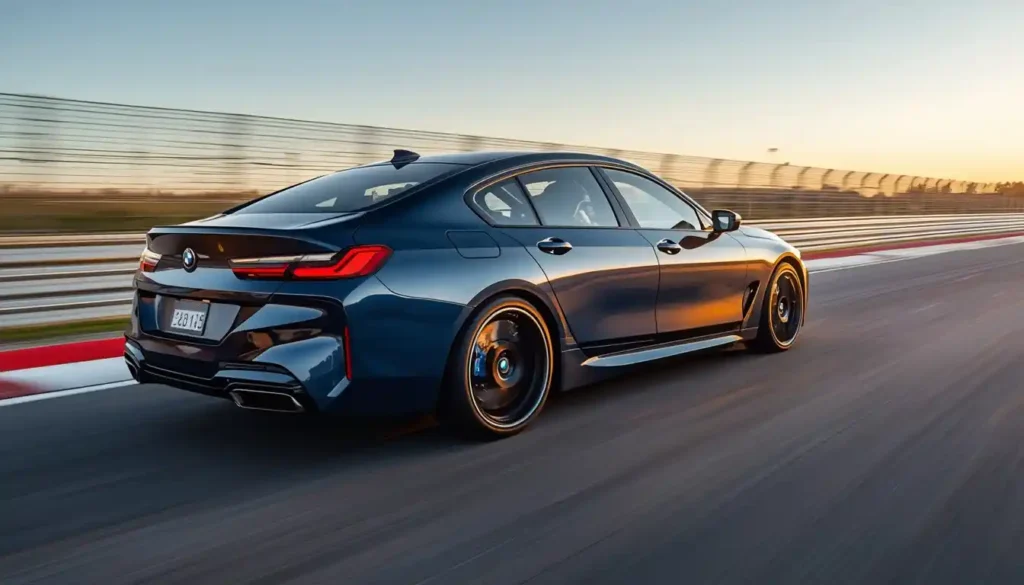
For a 6,067-pound full size luxury sedan, that’s genuinely supercar level acceleration. Four wheel steering makes the car feel significantly smaller than it is, and the air suspension delivers what Edmunds called “unimpeachable ride quality.”
The BMW i7 also runs a hands free Highway Assistant mode up to 85 mph. In Edmunds’ testing, it kept the car precisely centered in its lane while managing speed smoothly.
Multiple BMW community owners on Reddit describe using it on long road trips without a second thought.
BMW i7 vs Tesla Model S: The Direct Comparison
The BMW i7 vs. the Tesla Model S is the comparison most buyers actually need, and most reviews avoid giving you a straight answer. Here’s mine.
The Tesla Model S Long Range starts at around $74,990, which is $30,000 less than the BMW i7 eDrive50.
For that gap, the Model S gives you more range (405 miles vs. 314 miles), faster over-the-air software updates, a larger 17-inch portrait touchscreen, and access to Tesla’s Supercharger network natively.
The Model S Plaid at $89,990 does 0-60 in 1.99 seconds, which no BMW i7 trim can touch.
Where the BMW i7 wins clearly: rear-seat luxury, build material quality, ride refinement, and the chauffeur-ready feature set. The Tesla Model S rear seat is adequate. The BMW i7 rear seat is a destination.
The i7’s cabin is quieter, its air suspension is smoother over broken pavement, and the Theater Screen has no Tesla equivalent. If you’re buying a personal performance EV on a budget, the Model S wins. If you’re buying a flagship luxury sedan that happens to be electric, the BMW i7 is in a different conversation entirely.
| Category | BMW i7 xDrive60 | Tesla Model S Long Range |
| Starting Price | $124,200 | $74,990 |
| EPA Range | 311 miles | 405 miles |
| 0-60 mph | 4.1 sec (tested) | 3.1 sec (claimed) |
| Rear-seat luxury | Exceptional | Adequate |
| Rear entertainment | 31.3″ Theatre Screen | Not available |
| Charging network | 180,000+ points incl. Tesla | Tesla Supercharger native |
| Cargo space | 17.7 cu ft (trunk) | 25 cu ft (hatchback) |
| Best for | Luxury flagship buyers | Performance/value buyers |
BMW i7 vs Mercedes EQS: Which Luxury EV Wins?
The BMW i7 vs. the Mercedes EQS is the most natural rivalry in the segment. The EQS beats the BMW i7 on aerodynamic efficiency (0.20 Cd vs 0.24 Cd) and cargo space (22 cubic feet vs 17.7 cubic feet). The EQS AMG also edges ahead on charging speed in some tests. These are real advantages.
But the BMW i7 wins on the things that matter more to most buyers: driver engagement, ride quality execution, and interior technology. Edmunds scored the BMW i7 driving experience at 9.1 out of 10.
Car and Driver noted the four wheel steering makes this massive sedan feel surprisingly athletic. The EQS feels like a luxury lounge.
The BMW i7 feels like a BMW that also happens to be a luxury lounge. For a buyer who drives their own car, the i7 is the more satisfying choice.
“The BMW i7 is simply one of the best riding and quietest cars we’ve ever tested, Mercedes S-Class included.” Edmunds
BMW i7 vs Porsche Taycan and Lucid Air
Car and Driver ranks the BMW i7 seventh among luxury electric cars, behind the Porsche Taycan (first) and Lucid Air (third). That ranking needs context. The Lucid Air delivers 420 to 480 miles of range, which the BMW i7 electric can’t match.
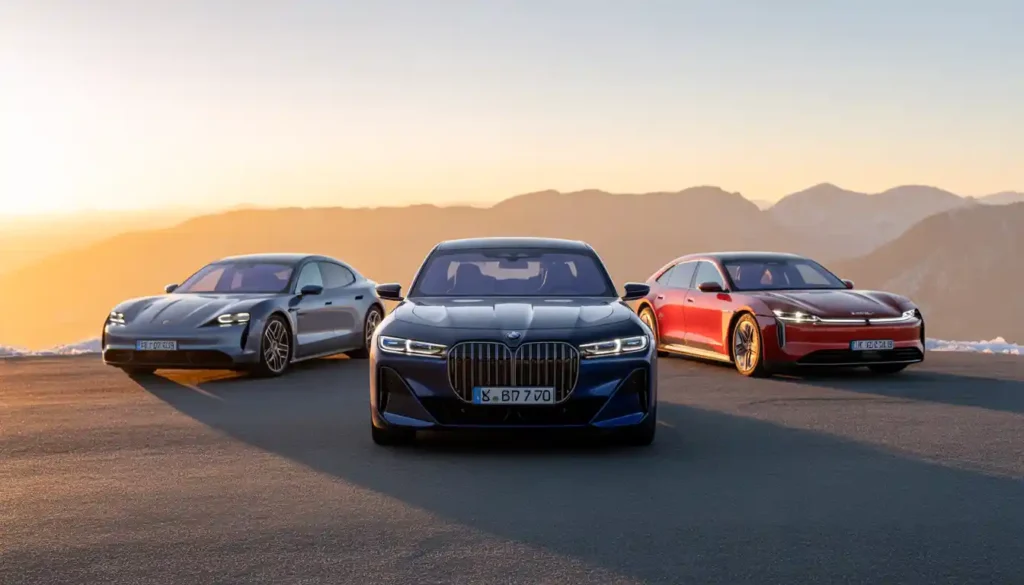
The Porsche Taycan wins on driver engagement and performance brand prestige. Both are legitimate first choices for sport oriented buyers.
But neither the Taycan nor the Lucid Air competes with the BMW i7 on rear seat luxury, chauffeur features, or the theater screen experience. You don’t choose a BMW i7 over a Taycan.
You choose it over a Mercedes S Class or a Bentley Flying Spur. It’s a luxury electric sedan designed for the buyer who values the complete package, not the spec sheet.
BMW i7 Long-Term Ownership: What Nobody Else Tells You
This is the section most BMW i7 reviews skip entirely, and it’s the topic real owners care about most. The BMW i7 depreciates aggressively.
Reddit’s BMW community is full of owners who watched their car lose 50 to 60 percent of value by the time the factory warranty expired.
One owner put it simply: great car, terrible investment. This isn’t unique to the i7; every 7 Series generation depreciates this way.
The smarter approach is leasing. Edmund’s data shows the BMW i7 eDrive50 leases for around $939 per month with $5,939 due at signing. The depreciation hit belongs to the bank, not you.
If you prefer ownership, a certified pre owned BMW i7 two to three years old gives you the same luxury experience at a fraction of the new price, with the 8-year, 100,000-mile battery warranty still partially valid.
BMW also includes three years of complimentary maintenance on every new i7, which covers scheduled service during the period the car holds its value best.
BMW i7 Design: Why It Divides Opinion and Why Owners Stop Caring
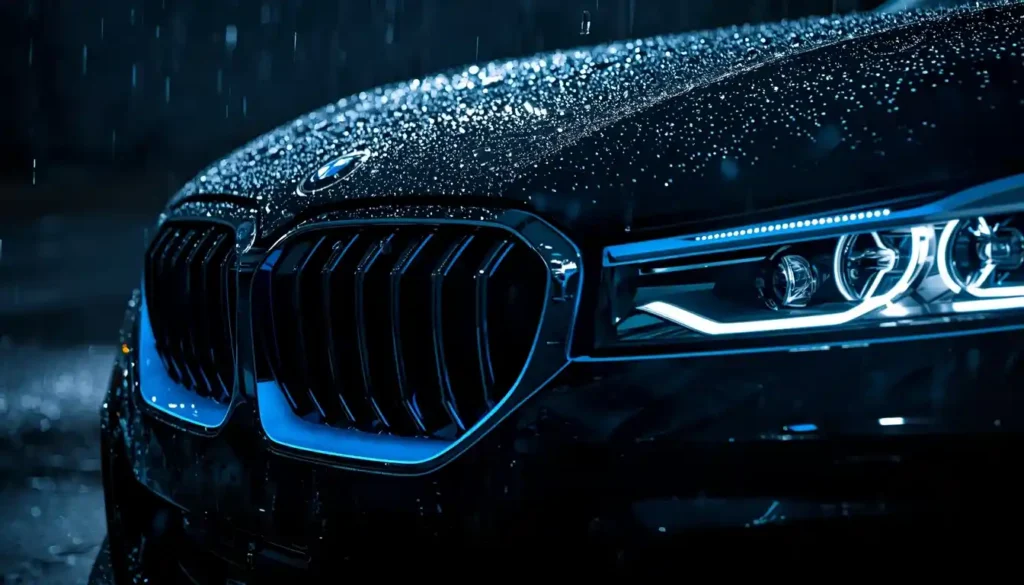
The BMW i7 exterior design is polarizing. Reddit threads attract hundreds of comments criticizing the oversized kidney grille, high beltline, and what some describe as awkward proportions.
A first look video of Top Gear received 182 comments, and there was a lot of design criticism. There is value in acknowledging this criticism honestly; it shouldn’t just be dismissed out of hand.
After reading two years of accounts from real owners, it became apparent that every owner loses interest in the exterior of their vehicle within one week after taking delivery.
One long-term BMW i7 owner who previously owned a Porsche 911 Turbo and Porsche 718 Spyder called the BMW i7 the most incredible vehicle he had ever owned and said the exterior criticism was completely overblown in person.
The illuminated kidney grille at night looks dramatically better than any static photo suggests. Buy the BMW i7 for the interior experience. The exterior handles itself.
Frequently Asked Questions About the BMW i7
Q: What is the BMW i7 price in 2026?
A: The 2026 BMW i7 MSRP starts at $105,700 for the eDrive50, $124,200 for the xDrive60, and $168,500 for the M70. Real-world transaction prices run 7 to 10 percent below MSRP based on current Edmunds market data.
Q: What is the BMW i7 range on a single charge?
A: The BMW i7 eDrive50 delivers up to 314 miles EPA-estimated. The xDrive60 offers 296 to 311 miles, depending on wheel size.
The BMW i7 M70 delivers 268 to 285 miles. Real world tests from Car and Driver and Edmunds showed the xDrive60 exceeding its EPA estimate in highway testing.
Q: How much does it cost per mile to charge the BMW i7?
A: At the US average electricity rate of $0.16 per kWh, the BMW i7 costs approximately $0.056 per mile to charge at home. That’s about $5.60 per 100 miles, compared to roughly $17.50 per 100 miles for a comparable gasoline car at $3.50 per gallon.
Q: How does the BMW i7 compare to the Tesla Model S?
A: The Tesla Model S offers more range (405 miles vs. 314), a lower starting price ($74,990 vs. $105,700), and faster acceleration in Plaid form.
The BMW i7 wins on rear seat luxury, cabin refinement, build quality, and the 31-inch Theatre Screen, which has no Tesla equivalent. They target different buyers.
Q: Is the BMW i7 M70 worth the extra cost?
A: The BMW i7 M70 costs $44,000 more than the xDrive60 for 114 additional horsepower and 1.3 seconds less on the 0-60 time. Most reviewers recommend the xDrive60 as better value unless ultimate performance is your specific priority.
Q: Should I lease or buy the BMW i7?
A: Experienced BMW owners strongly recommend leasing due to 50 to 60 percent depreciation by warranty end.
The eDrive50 leases for around $939 per month. Buying a two to three year old certified pre owned BMW i7 is the second best option, capturing full luxury at a fraction of the new price with the battery warranty still active.
Q: Is the BMW i7 a good luxury electric car?
A: Yes. The BMW i7 earns a 9.7 out of 10 in-cabin tech score and a 9.1 out of 10 driving score from Edmunds.
Car and Driver, MotorTrend, and Consumer Reports all rate it highly for ride quality, performance, and its unique rear theater screen. It’s one of the most refined and well-equipped electric luxury sedans you can buy right now.
Final Verdict: Should You Buy the BMW i7?
The BMW i7 is the right car for a specific buyer: someone who wants BMW flagship prestige, the practicality of a long-range EV, rear seat luxury that competes with business class air travel, and technology that makes every journey feel like an event.
It’s not the most efficient luxury EV. It’s not the longest-range. It’s not the fastest unless you choose the BMW i7 M70. But it’s the most complete luxury electric car you can buy if you actually plan to drive it yourself.
If you’re the driver, target the xDrive60 and negotiate to the low $110,000s. If you’re being driven, add the theater screen and executive lounge seating.
If top performance is non-negotiable, the BMW i7 M70 price of $168,500 buys one of the most astonishing luxury performance EVs ever made. Whatever trim you choose: lease it, enjoy every mile, and hand it back before depreciation takes its toll.
