
Affordable Electric SUVs
Ford F-150 Lightning 2026 Review: Range, Towing and Value
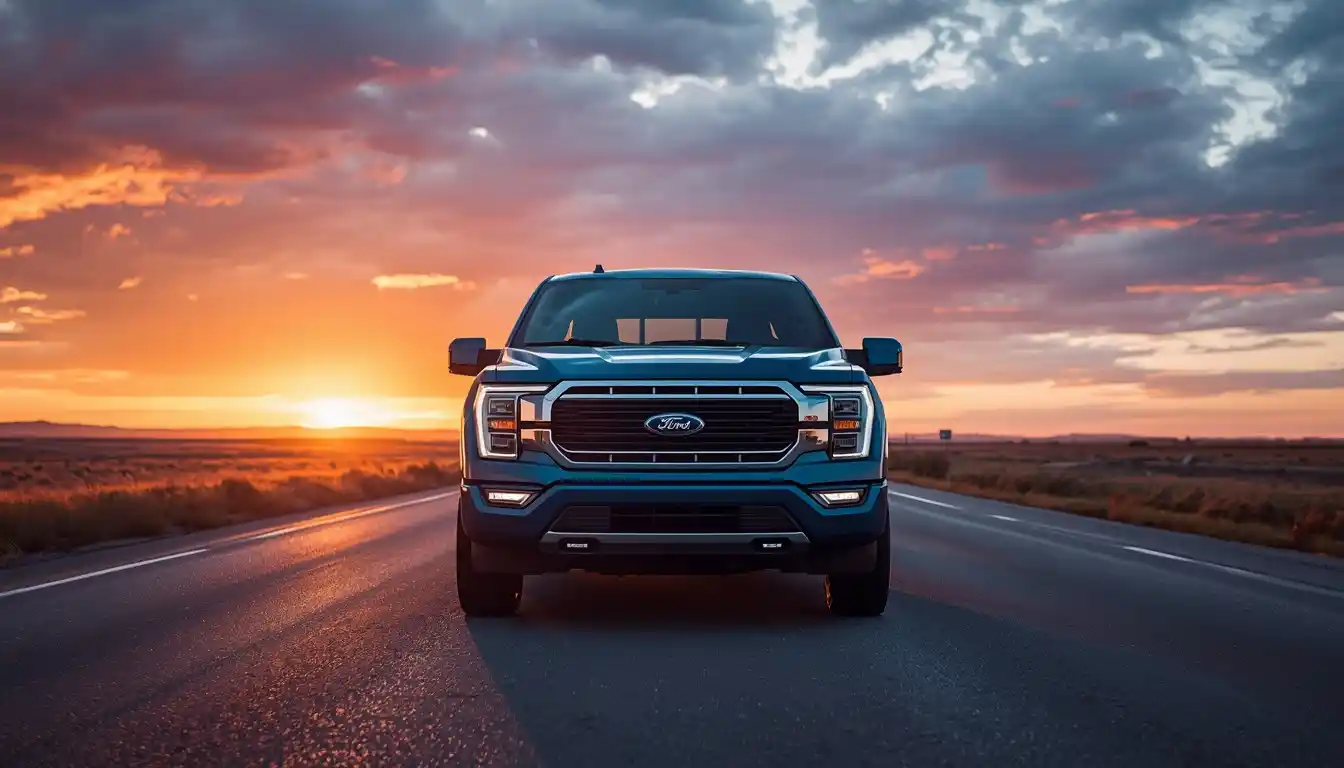
The F-150 Lightning is Ford’s all electric full size pickup truck. It delivers up to 580 hp, 320 miles of range, 10,000 lbs towing capacity, and a built in ProPower Onboard system that can power your home.
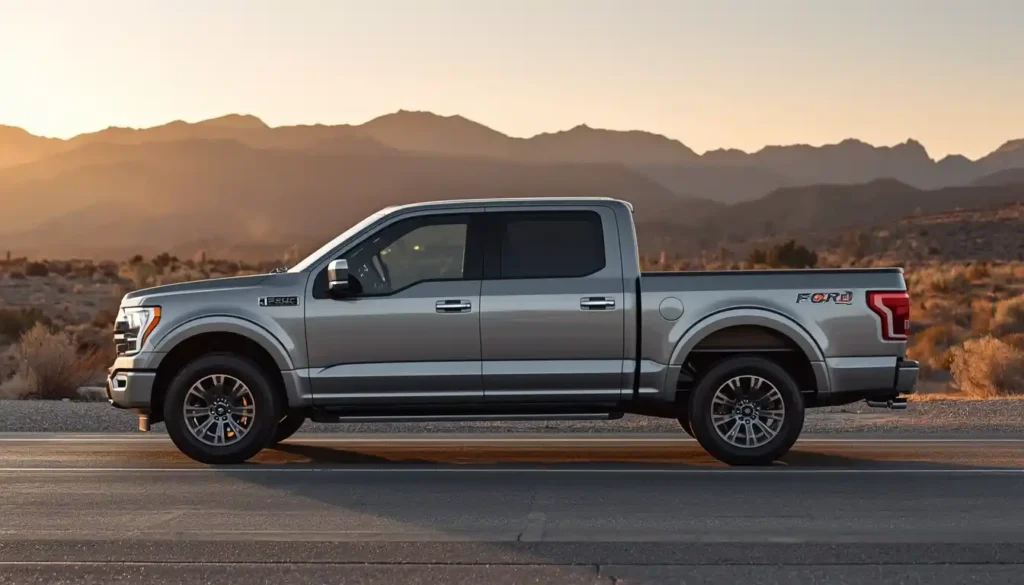
This review covers real specs, honest towing data, pricing, and everything you need to decide if it’s worth buying.
Key Takeaways
- The F-150 Lightning starts at $52,375 and goes up to $87,590 depending on trim.
- Range varies from 240 miles (standard battery) to 320 miles (extended battery, Lariat trim).
- With the Max Trailer Tow package, the vehicle can pull up to 10,000 ibs, just like being able to tow really big trailers or lots of heavy things.
- ProPower Onboard provides up to 9.6 kW through 11 outlets, including a 240V outlet in the bed.
- Ford discontinued the all-electric Lightning in December 2026, making used models a strong buying opportunity.
- The Rivian R1T is a similar vehicle, but it costs $22,000 more. It has nicer software (like better computer systems), but it’s more expensive and harder to afford.
What Is the Ford F-150 Lightning?
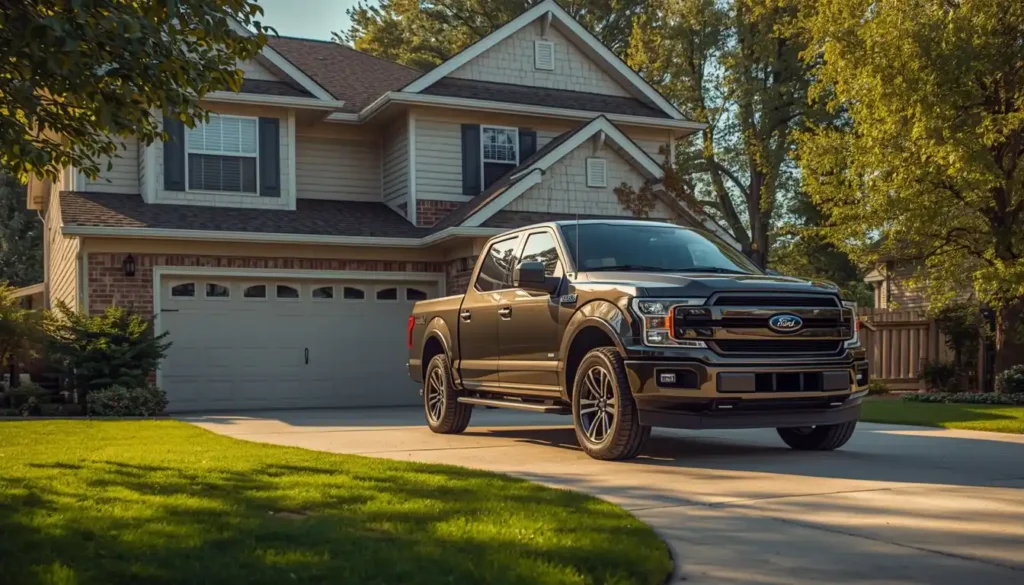
The Ford F-150 Lightning is a full-size, battery-electric pickup truck built by Ford Motor Company. It is based on the same F-150 platform that has been America’s best selling vehicle for over four decades, which means it looks and feels like a regular F-150 from the outside.
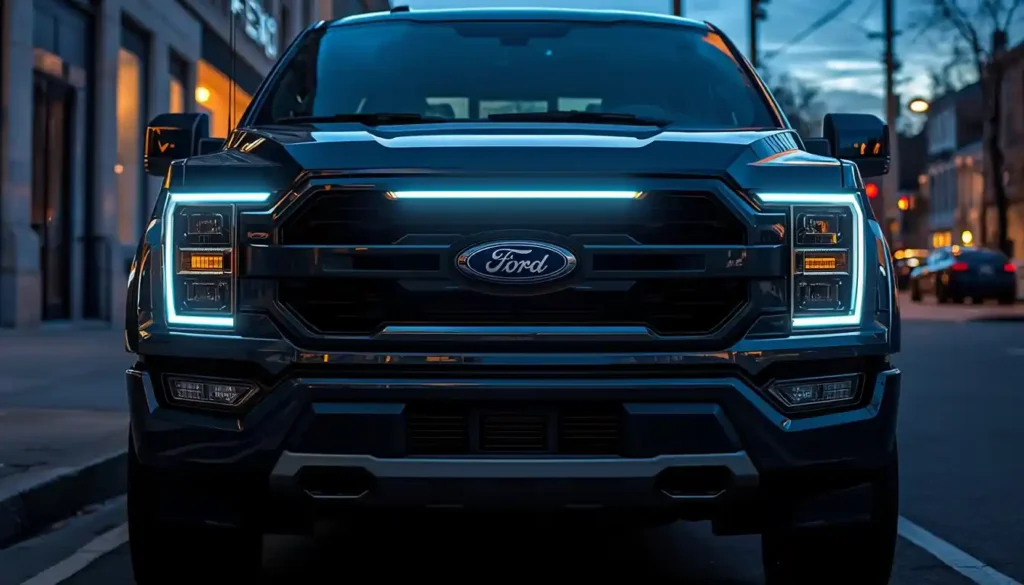
It’s a simple electric truck that doesn’t look like a spaceship and doesn’t have any confusing or strange designs. It’s just a regular truck that runs on electricity.
Ford produced the Lightning from April 2022 through December 2025, when the company officially discontinued the all electric version. Used models are widely available, and a next-generation EREV version is in development.
So if you are researching the Ford F-150 Lightning today, there is still plenty of reason to care.
The truck comes with dual electric motors and standard four wheel drive across all trims. You can get it in Pro, XLT, Flash, Lariat, or Platinum configurations, each with different battery options and feature sets.
F-150 Lightning Specs: The Numbers That Actually Matter
Here is what the F-150 Lightning specs look like across the two main battery configurations:

Standard Range Battery (98 kWh)
- Horsepower: 452 hp
- Torque: 775 lb-ft
- EPA Range: 240 miles
- Towing Capacity: up to 7,700 lbs
- Payload: up to 2,000 lbs
- 0-60 mph: approximately 4.2 seconds
Extended Range Battery (131 kWh)
- Horsepower: 580 hp
- Torque: 775 lb-ft
- EPA Range: up to 320 miles (Lariat trim)
- Towing Capacity: up to 10,000 lbs with Max Tow package
- Payload: up to 1,800 lbs
- 0-60 mph: under 4.0 seconds
Those torque numbers are not a typo. At 775 lb-ft across all trims, the Ford Lightning delivers more low end grunt than almost anything in the full-size segment.
Car and Driver tested the Platinum and hit 60 mph in just 4.0 seconds, putting it within striking distance of the F-150 Raptor R supercharged V-8. That is genuinely surprising for a truck weighing between 6,015 and 6,893 pounds, depending on trim.
F-150 Lightning Range: What to Expect in Real Life
The F-150 Lightning range figures look great on paper, but real world numbers vary. Here is what I found after reviewing multiple owner reports and independent tests.
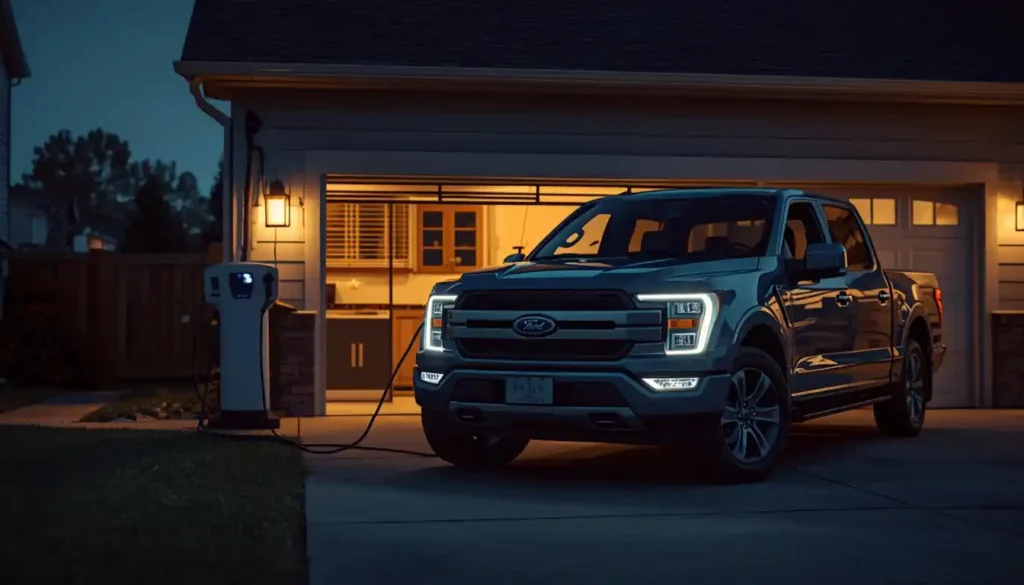
If you drive about 40-60 miles a day for your commute, using only that amount of energy will barely put a dent in your battery. If you charge your truck at home every night then you do not need to worry about anything because this vehicle is the best way to use this truck.
The real challenge appears when towing heavy loads over long distances. In a MotorTrend towing test, the Lightning Platinum dropped from a 300-mile unladen estimate to just 90 miles while pulling a 7,218-pound camper at highway speeds.
That is a two thirds reduction, and it is the single biggest criticism from truck buyers who do heavy towing regularly.
Cold weather also cuts into the Ford Lightning battery performance. Owners in the Midwest report losing up to 30% of range in winter. Ford’s battery preconditioning feature helps. You can pre-warm the battery through the FordPass app before driving, but winter range loss is still a real factor to plan around.
F-150 Lightning Towing Capacity: Honest Assessment
The F-150 Lightning towing capacity tops out at 10,000 pounds when equipped with the optional Max Trailer Tow package and the extended-range battery. The standard range model handles up to 7,700 pounds. Both figures compete directly with gasoline powered F-150s on paper.
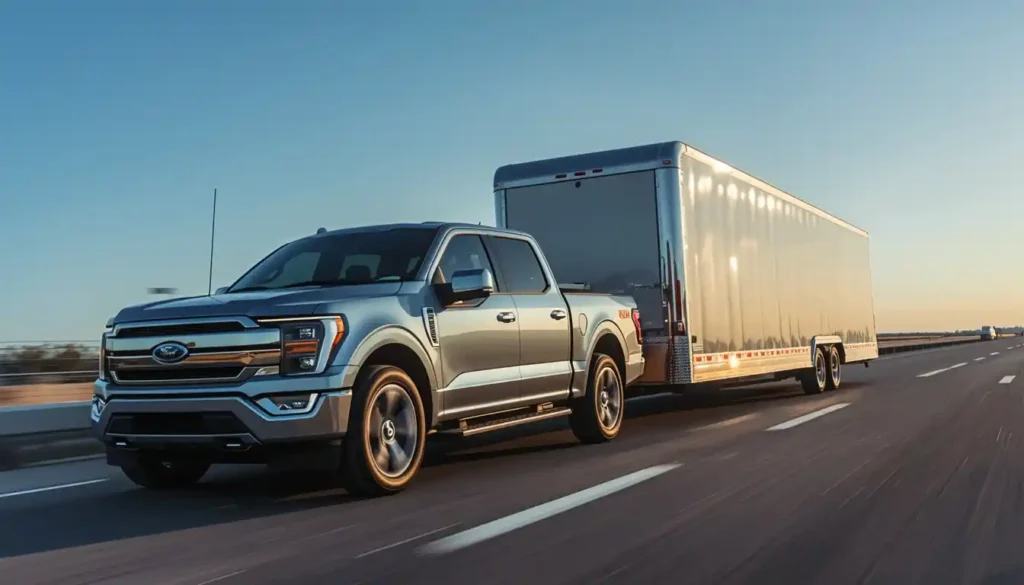
In practice, the Lightning handles shorter hauls very well. Pulling a trailer to a job site 30 miles away or to a campground on the weekend works smoothly. The instant torque from electric motors makes getting a heavy load moving easier than any comparable gas truck.
With the NACS adapter now included, Lightning owners can also access Tesla Superchargers, which helps on popular routes.
F-150 Lightning Price and Trims
The F-150 Lightning price for the 2025 model year ran from $52,375 for the base Pro to $87,590 for the Platinum. Here is the full breakdown:
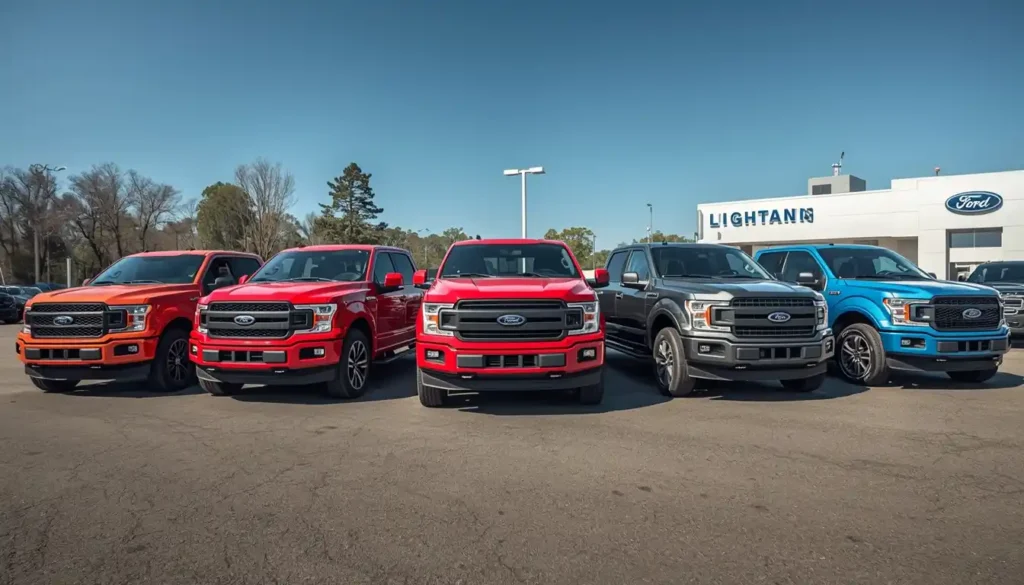
- Pro: $52,375 – work-focused features, standard range battery
- XLT: $65,940 – LED lighting, heated cloth seats, Mega Power Frunk
- Flash: $72,590 – extended range battery, 15.5-inch touchscreen, BlueCruise
- Lariat: $79,590—highest EPA range at 320 miles, moonroof, heated and ventilated seats
- Platinum: $87,590 – 22-inch wheels, B&O 18-speaker audio, Premium Nirvana leather
The Lightning MSRP listed above does not include dealer fees, taxes, or options. Among all trims, the Flash offers the best balance of features and price for most buyers.
ProPower Onboard: The Feature Nobody Else Has
The Ford Pro Power Onboard system is genuinely one of the most practical features in any pickup truck available today. Ford built up to 11 electrical outlets directly into the truck, including 120V outlets in the frunk, the bed, and the cab, plus a 240V outlet in the bed for heavy equipment.
Here is how the onboard power configurations break down:
- 2.4 kW: Entry Pro trim, covers basic tools and device charging
- 7.2 kW Pro Power Onboard: Mid-tier, runs saws, compressors, and generators on a job site
- 9.6 kW Pro Power Onboard: Top configuration, runs most workshop equipment simultaneously
The 9.6 kW setup means you can run a full size dryer, charge another EV, or power a construction site directly from the truck bed.
Owners in Texas have used their Lightning as a whole home backup generator during power outages, with the extended range battery supplying an average home for three to ten days without recharging.
No gas F-150 can match this. The PowerBoost hybrid version offers a 7.2 kW generator, but the all electric Lightning’s F-150 Pro Power Onboard system is more flexible, completely silent, and requires no fuel at all.
For contractors, ranchers, or anyone living in areas with unreliable grid power, this feature alone justifies serious consideration.
F-150 Lightning Interior: Surprisingly Familiar
The F-150 Lightning interior will feel immediately familiar to anyone who has spent time in a recent F-150. Ford kept the cabin largely unchanged from the gas version, with the same SuperCrew four door layout and 5.5-foot bed. There is no adjustment period for existing F-150 owners.
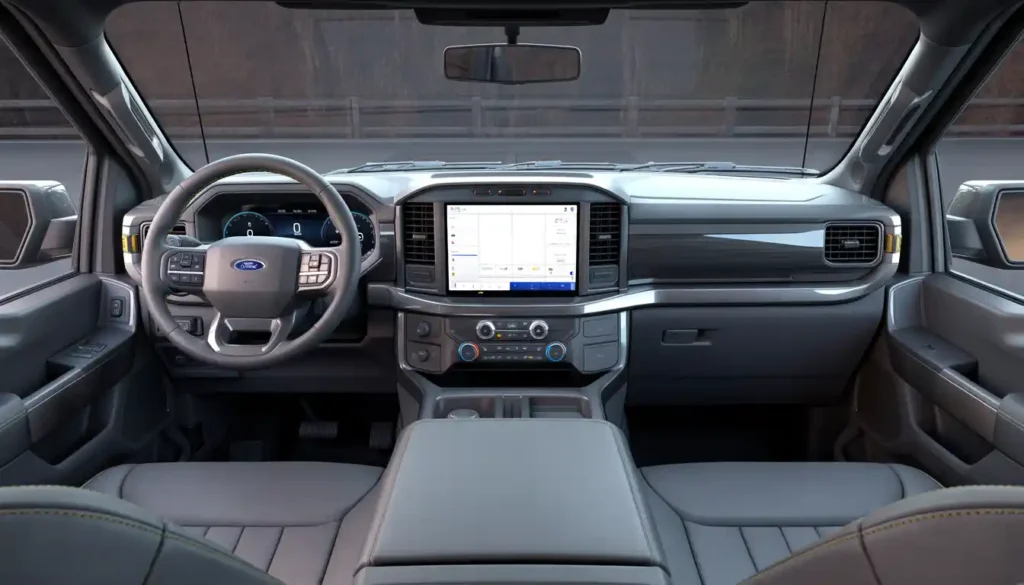
What is different is the technology layer. XLT and Flash models get a 12-inch center touchscreen. Lariat and Platinum models upgrade to a 15.5-inch display running Ford Sync 4 software.
All versions of the car come with wireless Apple CarPlay and Android Auto, so you can easily connect your phone without needing wires.
The Mega Power Frunk replaces the engine bay with a large lockable storage compartment that holds up to 400 pounds of cargo. It includes four 120V outlets and two USB ports, making it genuinely useful as a mobile workspace.
The Ford F-150 Lightning interior also offers 43.9 inches of front legroom and 43.6 inches in the second row, enough for five adults to ride comfortably.
One consistent criticism from owners: Ford’s infotainment software feels sluggish compared to Tesla or Rivian. The built-in charging route planner is less accurate than third-party apps like A Better Routeplanner. It works, but tech forward buyers may find it frustrating.
Rivian vs Ford Lightning: Which Electric Pickup Wins?
The Rivian truck, specifically the Rivian R1T, is the Lightning’s most direct competitor in the electric pickup segment. Car and Driver currently ranks the Rivian R1T first and the Lightning second among EV trucks, and the gap is real.
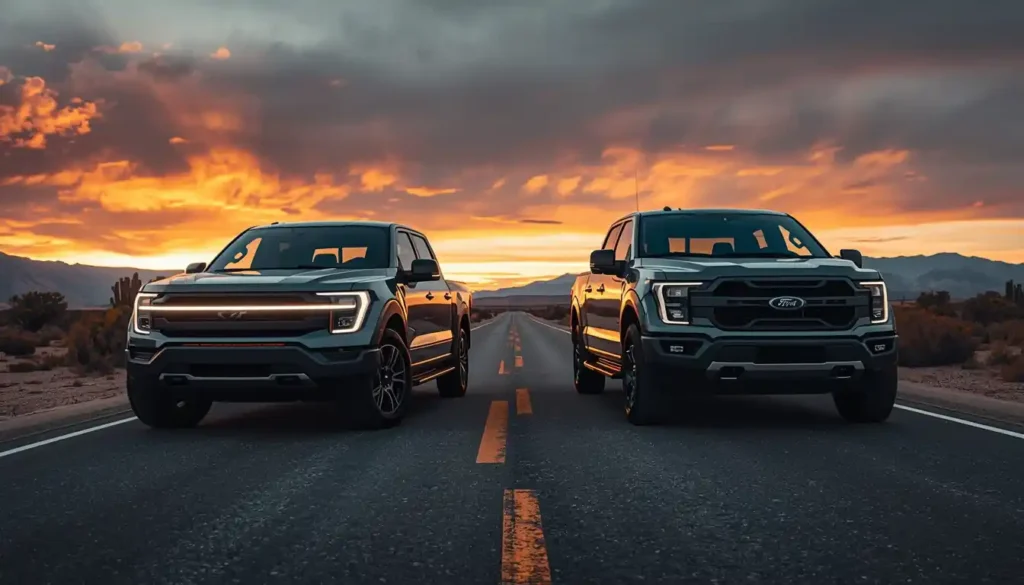
The Rivian R1T starts at $74,885 versus the Lightning’s $52,375 entry point. It has a purpose built EV platform, more refined software, and a quad motor option that no other electric pickup offers.
Rivian vs. Ford Lightning comes down to priorities. The Lightning is more affordable, more familiar, and has broader dealer support across the United States. The R1T is more technologically advanced and better built for serious off road use.
For the Silverado EV comparison, the Chevrolet Silverado EV charges faster at public DC stations, but it does not match the Lightning’s frunk space, ProPower system, or familiar truck feel.
Among hybrid trucks, none offer the same combination of towing power, mobile energy output, and driving range in one package.
Ford Lightning Discontinued: What It Means for Buyers
The production of the Ford all electric F-150 Lightning came to an end five years ago in December of 2025; Ford made this announcement due to excessive continued losses on each sale of the truck, even when the price had exceeded the original announcement of $40,000.
The end of Ford’s production of the Lightning and the elimination of all incentive programs (such as tax credits) that the Trump administration repealed also removed the financial pressure on automakers with respect to producing electric vehicles that are being sold at or below cost and suffering from large, negative financial results.
Ford is now developing a next-generation Ford eREV truck with a range-extending gas generator targeting over 700 miles of total range. Parts and warranty support for existing Lightning owners continue without interruption.
For buyers today, this discontinuity creates a real opportunity. Used 2022, 2023, and 2024 Lightning models are entering the market at reduced prices, and the 8-year/100,000-mile battery warranty transfers to used owners automatically.
Should You Buy the F-150 Lightning?
Here is my honest take after reviewing everything.
Buy it if you charge at home, drive mostly within 150 miles daily, occasionally tow moderate loads, and want mobile power capability. Lower fuel and maintenance costs make real financial sense for this profile over the long term.
Skip it if you tow heavy loads over long distances regularly, live in a rural area with sparse charging infrastructure, or need a work truck that can refuel anywhere in five minutes.
Ready to Buy or Research Further?
If you are seriously considering the F-150 Lightning, here is what to do next:
- Check used inventory – Search “f 150 lightning for sale” on Ford’s official site or trusted dealer listings.
- Use Ford’s Build and Price tool – Visit ford.com to see Ford Build and Price lightning options on remaining new inventory.
- Get a test drive – Nothing replaces sitting in the f150 lightning interior and feeling the instant torque yourself. Ask your local Ford dealer specifically for a Lightning test drive.
- Calculate your charging savings – Most Lightning owners save $150 to $200 per month on fuel alone compared to a gas F-150.
Frequently Asked Questions
Q: What is the F-150 Lightning range?
A: The standard range battery delivers about 240 miles EPA estimated. The extended-range battery reaches up to 320 miles on the Lariat trim. How far a car can go on a trip depends on how fast you’re driving, the weather, and how much stuff you’re carrying.
Q: What is the F-150 Lightning towing capacity?
A: If you have the Max Trailer Tow package and a bigger battery, you can pull (tow) things that weigh up to 10,000 ibs. If you don’t have those, the regular models can pull up to 7,700 pounds.
Q: Is the Ford F-150 Lightning discontinued?
A: Yes. Ford stopped production in December 2025. A next-generation EREV version is in development with over 700 miles of total projected range.
Q: What is ProPower Onboard?
A: It is Ford’s built in electrical system providing up to 9.6 kW of power through 11 outlets on the truck. You can run power tools, appliances, or power your home during an outage.
Q: How long does it take to charge the F-150 Lightning?
A: At a DC fast charger, 15% to 80% takes 32 to 44 minutes, depending on battery size. Home Level 2 charging takes approximately 10 hours for a full charge.
Q: What is the F-150 Lightning payload capacity?
A: Standard range models support up to 2,000 lbs. Extended-range models support up to 1,800 lbs.
Q: How does the Lightning compare to the Rivian R1T?
A: The Lightning starts $22,000 lower and has wider dealer support. The Rivian has better software, more off-road capability, and a purpose-built EV platform.
